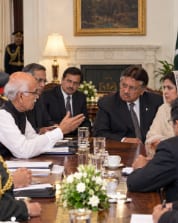
CNN Central News & Network-ITDC India Epress/ITDC News Bhopal: The Agra summit between India and Pakistan in July 2001 was a significant diplomatic development in relations between the two countries. Then Prime Minister Atal Bihari Vajpayee had invited Pakistan President Pervez Musharraf to India for talks. It was expected that the meeting could produce some agreement on issues such as Kashmir and cross-border terrorism, but the talks ended without a joint declaration. The roles of Atal Bihari Vajpayee and Lal Krishna Advani later became the subject of several political and diplomatic discussions.
Why did the Dawood Ibrahim issue come up? Before the Agra summit, Advani, during a meeting with Musharraf, raised the issue of handing over fugitive underworld don Dawood Ibrahim to India. According to Advani, while discussing the possibility of an extradition treaty between India and Pakistan, he suggested that Dawood be sent to India. Musharraf responded by saying that Dawood was not in Pakistan. Later, Advani questioned this response in his memoir.
Why did the Agra talks fail? During the negotiations, differences remained between the two countries over Kashmir and cross-border terrorism. India wanted the issue of terrorism to be clearly included in the agreement, while Pakistan insisted on making Kashmir the central issue. Because of these differences, no consensus could be reached on a joint declaration, and Musharraf’s visit ended.
It would not be appropriate to link the failure of the Agra talks to the decision of one person alone. Deep mistrust between the two countries, political priorities and negotiation strategy all played an important role.
Hashtags: #NationalIndia #Bhopal #AgraSummit #Vajpayee #Advani #Musharraf #DawoodIbrahim #AtalBihariVajpayee #LalKrishnaAdvani #PervezMusharraf