


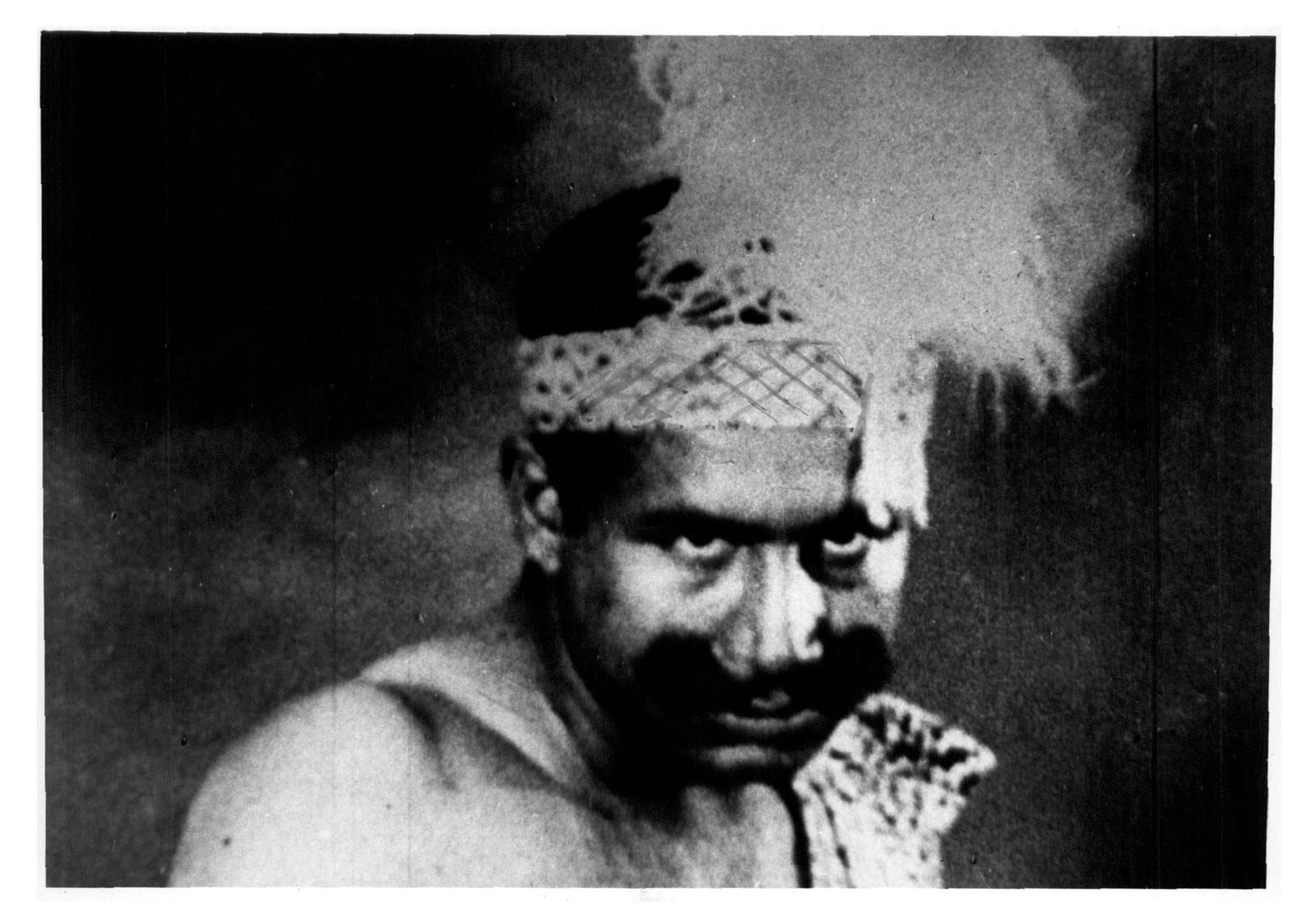
NFAI / Shruti Swamy (Mahal Movies), CC BY 2.0
The film that helped make songs inseparable from Indian cinema can no longer be watched. Alam Ara, Ardeshir Irani’s pioneering 1931 talkie, survives in photographs, publicity material and accounts of its making, rather than as a film available to audiences. Its place in history is secure; the work itself is lost.
It opened at Bombay’s Majestic Cinema on March 14, 1931. The Hamraaz Hindi Film Database records its censor certificate three days earlier and an initial seven-week run. Produced by Imperial Movietone, it brought spoken Hindi-Urdu dialogue and seven songs into a full-length Indian feature.
That combination mattered as much as the novelty of speech. The National Film Archive of India’s catalogue describes Alam Ara as a foundation for cinema’s enduring use of music, song and dance. Wazir Mohammed Khan’s song, ‘De De Khuda Ke Naam Pe Pyare’, became part of that history. The cast also included Zubeida, Master Vithal and Prithviraj Kapoor.
Making a talking picture required a different kind of set. According to the Film Heritage Foundation, image and sound were captured together using a single-system camera. Its account describes filming at night to keep railway noise out of the recording at Bombay’s Jyoti Studios. Microphones had to pick up dialogue without appearing in the frame, while musicians provided accompaniment from concealed positions.
Those details reveal how physical the early sound process was. Silence around the actors, the position of a microphone and a passing train could affect what reached the screen. A technology that promised a new freedom also imposed new limits on the crew.
The story itself drew on Parsi theatre, with rival queens, palace intrigue and romance. Sound did not arrive as a break with every older performance tradition. It gave familiar theatrical material another medium, and helped establish songs as part of a film’s storytelling rather than an occasional addition.
The British Film Institute, too, identifies the now-lost Alam Ara as an early foundation of the Hindi musical tradition. But its surviving reputation cannot replace the missing film. Still photographs can preserve a costume or a face; they cannot show how a scene moved or how a voice sounded within it. Alam Ara’s legacy is therefore also a precise reminder of what film preservation protects: not just a famous title, but the experience that made it famous.



