


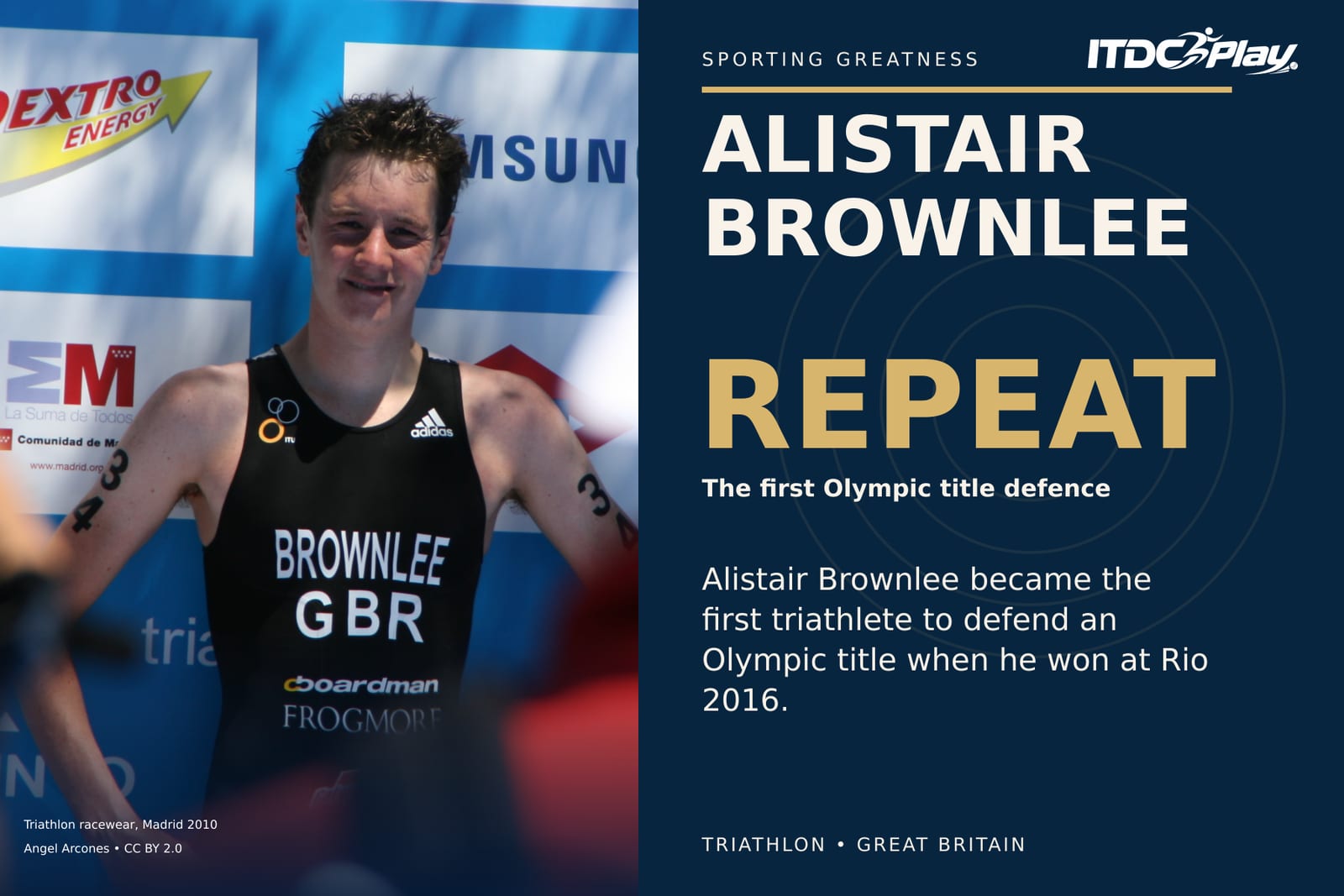
Photo: Angel Arcones / CC BY 2.0. Cropped and composed by ITDC.
Alistair Brownlee reached the finish of the Rio Olympic triathlon on 18 August 2016 in one hour, 45 minutes and one second. Six seconds later, his younger brother Jonathan followed. The result produced a British gold-and-silver double, but the older brother had also achieved something unprecedented: he became the first triathlete to defend an Olympic title successfully.
Brownlee had won at London 2012. Rio required him to do it again in a different city, on a different course and against another field determined to take the title. Four years of status as Olympic champion offered no head start when the athletes entered the water off Copacabana.
The race combined a 1.5km swim, 40km on the bicycle and a 10km run. Its demands were cumulative. A fast runner could lose contact before reaching the final discipline, while a strong swimmer still had to negotiate the cycling course and preserve enough energy for the finish.
Both Brownlees emerged from the swim in a good position. On the bicycle they helped drive a leading group, using the challenging course to establish a meaningful advantage over the chasers. The race was being shaped before the running shoes went on: maintaining contact at the front mattered as much as producing a fast final leg.
The brothers then moved clear during the run. Alistair separated from Jonathan and had enough of an advantage to slow on the finishing straight. Jonathan took silver in 1:45:07, improving on his London bronze, and South Africa’s Henri Schoeman completed the podium in 1:45:43.
Those results are a useful corrective to treating the event simply as a family celebration. The medals came from a full triathlon performance, with position, pace and effort managed across three disciplines. The brothers shared a podium because they had each completed the necessary sporting work.
The title defence also carried a particular historical meaning. Olympic triathlon was still a relatively young part of the Games programme, having debuted in 2000. Brownlee’s second gold established a new kind of continuity in an event whose earlier editions had produced different champions.
Rio did not repeat London exactly: Jonathan moved up a place, the course posed its own challenges, and the final times belonged to that day’s conditions. What Brownlee repeated was the most important outcome. He finished first again, turning a successful home Olympics into a pair of consecutive titles and giving triathlon its first Olympic champion who had returned to retain the crown.




