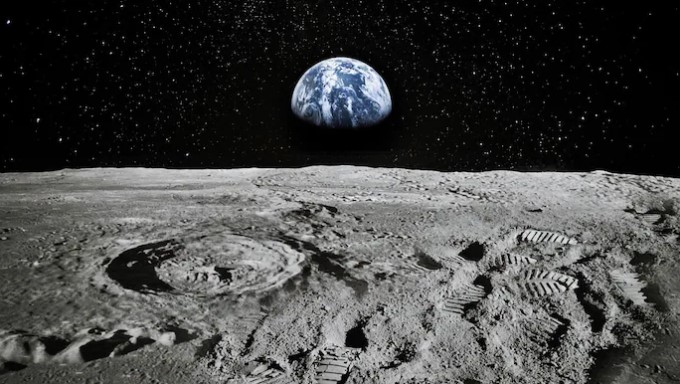
CNN Central News & Network-ITDC India Epress/ITDC News Bhopal: NASA’s Artemis II astronauts witnessed brief flashes of light on the Moon’s darkened surface while flying around the lunar far side in April 2026. NASA has now confirmed that the flashes were caused by rocky fragments striking the lunar surface at high speed.
The astronauts reported seeing five extremely faint, pinprick-like bursts from the Orion spacecraft, which was about 46,000 miles from the Moon at the time. Scientists initially considered other possible explanations, including cosmic rays and reflections from the spacecraft, before confirming that the observations were genuine lunar impact flashes.
Unlike Earth, the Moon has no atmosphere to burn up or slow incoming space debris. As a result, meteoroids can hit the lunar surface directly. The collisions generate short-lived flashes of light known as impact flashes, which can be observed from spacecraft or from Earth using telescopes.
The Artemis II observations were part of a planned lunar science programme. The astronauts had been specifically asked to watch for these flashes because tracking such impacts can help scientists understand how frequently the Moon is struck and the size and speed of objects hitting its surface.
NASA estimates that the objects responsible for the observed flashes were no more than a few inches across. Despite their small size, they were travelling thousands of miles per hour, producing enough energy and light to become visible against the dark lunar landscape.
The observations could also have implications for future lunar exploration. Better knowledge of the Moon’s meteoroid impact environment will help scientists assess potential risks to astronauts, habitats and equipment planned for future missions, including NASA’s Artemis programme.
Hashtags: #ScienceTechnology #Bhopal #Artemis #Astronauts #Witnessed #Meteorite #Flashes #Moon #Nasa #ArtemisIIAstronautsWitnessed