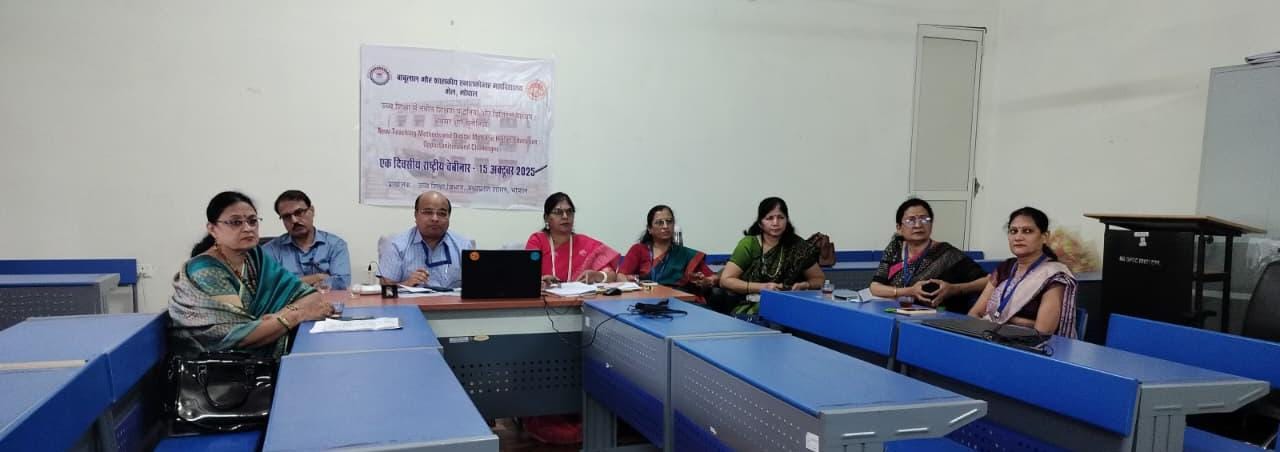
CNN Central News & Network–ITDC India Epress/ITDC News Bhopal: Digital platforms have made higher education global, and both the central and state governments are actively promoting them. The use of digital tools in administrative work is also growing rapidly. Although there is no true alternative to classroom teaching, modern times demand that higher education methods evolve quickly through digital means. These views were expressed by subject experts during the National Webinar on “Innovative Teaching Methods and Digital Medium in Higher Education: Opportunities and Challenges” held at Babulal Gaur Government Postgraduate College, BHEL, Bhopal, under the auspices of the Department of Higher Education, Government of Madhya Pradesh.
Keynote speaker Dr. Vikram Singh from Government Degree College, Tappal (Aligarh) stated that both central and state governments are attentive to the expansion of digital education. Digital tools have made a remarkable contribution to research. Since 2015, initiatives like SWAYAM Portal, MOOCs, e-Content, Virtual Classes, and e-Libraries have become popular. For differently-abled learners, digital platforms have proven to be a blessing. Although classroom teaching cannot be replaced, digital higher education is the need of the hour.
Subject expert Akash K. Soni from Shyam Lal College, University of Delhi, emphasized that post-COVID, digital education in higher learning has expanded rapidly. It transcends geographical barriers, making learning more effective and engaging. It is also a comparatively affordable medium offering flexibility, innovation, and globalization. The National Education Policy (NEP) has effectively incorporated digital learning through the credit system, and innovative approaches like flipped classrooms, AI-based learning, e-learning, and project-based education represent its best forms.
Welcoming all participants, Principal Dr. Sanjay Jain remarked that digital platforms have made higher education global and more accessible across disciplines such as engineering, commerce, medicine, architecture, arts, music, dance, and photography—making it more beneficial to humanity.
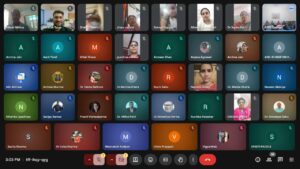
Convener Samta Jain informed that over 200 participants—including principals, professors, researchers, and digital media professionals—from states like Maharashtra, Chhattisgarh, Haryana, Uttar Pradesh, Rajasthan, Gujarat, and Madhya Pradesh, as well as international participants, attended the national webinar. A total of 28 research papers were received, and a commemorative publication featuring selected papers will be released.
In the opening remarks, IQAC Coordinator Dr. Kirti Srivastava introduced the college, highlighting that it represents a “Mini India” due to its diverse student base in the BHEL region. Research scholars presented their papers, followed by interactive sessions with subject experts. The event concluded with a vote of thanks by Dr. Meeta Badal, Head of the Home Science Department, who expressed gratitude to all speakers, researchers, and participants.
#BabulalGaurCollege, #NationalWebinar, #DigitalEducation, #InnovativeTeaching, #HigherEducation, #OnlineLearning, #TeachingInnovation, #AcademicGrowth