Balendra Shah’s India Visit: A New Chapter of Trust and Closer India–Nepal Relations?
By ITDC News Desk
New Delhi, November 22, 2026. Nepalese Prime Minister Balendra Shah’s first official visit to India is being viewed as a significant opportunity to strengthen relations between the two neighbouring countries. Arriving in New Delhi on Sunday for a two-day visit, Shah has sent an important diplomatic signal by choosing India for his first bilateral foreign visit since assuming office in March 2026.
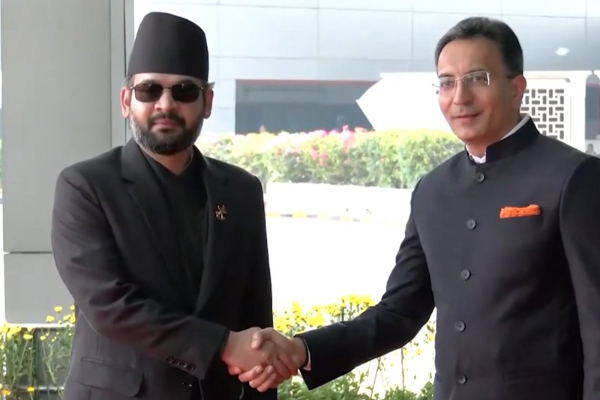
At the invitation of Prime Minister Narendra Modi, Shah was received at the airport by Union Minister Jitin Prasada. External Affairs Minister S. Jaishankar also met the Nepalese Prime Minister on Sunday evening. Their discussions focused on expanding cooperation in trade, transportation, energy, education, culture and people-to-people relations. Shah is scheduled to hold bilateral talks with Prime Minister Modi on November 23.
India and Nepal share a relationship that extends far beyond conventional diplomacy. An open border, common cultural traditions, religious connections, family ties and economic interdependence have created a unique bond between the two nations. Millions of Nepalese citizens maintain close connections with India through employment, education, business and social relationships.
The visit is particularly important because both countries are seeking to translate their historical friendship into stronger economic and strategic cooperation. Hydropower development, cross-border electricity trade, railway connectivity, road infrastructure and expanded commercial partnerships offer substantial opportunities for mutual growth.
Nepal’s vast hydropower potential can contribute to regional energy security, while improved transportation networks could facilitate trade, tourism and economic development. Cooperation in rebuilding infrastructure damaged by recent floods is another area where India can play a constructive role.
However, the relationship has not been without challenges. Border disagreements involving Kalapani, Lipulekh and Limpiyadhura remain sensitive issues. Political differences and Nepal’s growing engagement with China have occasionally complicated bilateral relations.
For India, maintaining a strong partnership with Nepal requires respect for its sovereignty, political independence and development priorities. A relationship based on mutual confidence rather than geopolitical competition would offer greater long-term stability.
Balendra Shah represents a new generation of Nepalese political leadership. His government faces growing public expectations concerning employment, economic opportunities, transparent governance and infrastructure development. India has an opportunity to emerge as a reliable partner in addressing these challenges.
Shah’s decision to visit India early in his tenure suggests an intention to strengthen engagement with New Delhi. Yet diplomatic symbolism alone cannot guarantee a lasting improvement in relations.
The real significance of the visit will depend on the agreements reached, the willingness to address longstanding differences and the implementation of commitments made during bilateral discussions.
The visit offers a promising opportunity to transform geographical proximity into deeper political confidence and economic partnership. If both governments pursue cooperation with sincerity and mutual respect, it could mark an important turning point in India–Nepal relations.
Ultimately, the strongest foundation of this partnership lies not merely in diplomatic meetings or strategic interests, but in the historical friendship and shared aspirations of the people living on both sides of the Himalayas.
Nepal PM Balendra Shah visits India, signalling an opportunity for closer bilateral ties, stronger economic cooperation and renewed diplomatic trust.