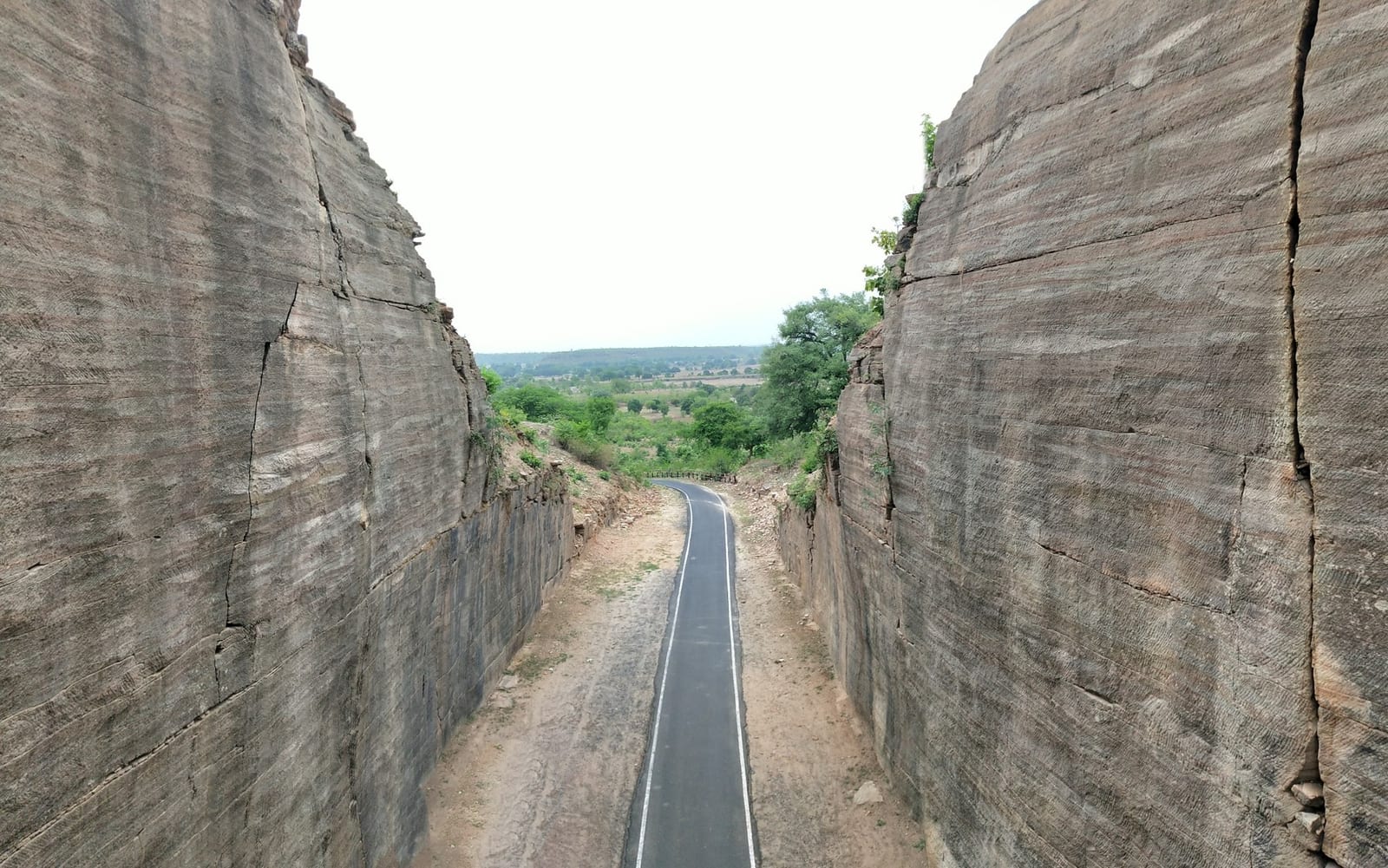
Yasir Ahmed khan / Wikimedia Commons · CC BY-SA 4.0
What do you write on the door when you don’t want a ghost to visit? In the 2018 film Stree, the residents of Chanderi settle for a postponement: “O Stree, kal aana.” Come tomorrow. It sounds like a screenwriter’s joke. Co-writer Raj Nidimoru had actually read that request on walls back home in Tirupati, only the words were in Telugu.
He remembered a Shivratri bike ride through town and that line: “O Stree, repu raa.” When he asked who the warning was for, nobody agreed: a woman without a head, said one person; someone who stole babies, said another. Nidimoru and his writing partner, Krishna DK, changed the question. What if the people disappearing after dark were men?
Director Amar Kaushik went looking for a place to put them. He scouted the mountains before remembering a night he’d spent as a child in Chanderi, Madhya Pradesh. To Nidimoru, the town’s fort walls looked familiar, too: they reminded him of Chandragiri, near Tirupati. A tailor’s shop and a bookshop from his school-day memories also found their way into the film.
At Family Cinema in Chanderi, reporter Poulomi Banerjee heard “Dholiya Darwaza!” as Rajkummar Rao jogged past. Another viewer recognised the house used as Vicky’s home.
Hashtags: #ItdcCinema #ITDCCinema #Stree #RajNidimoru #KrishnaDK #AmarKaushik #Chanderi #Tirupati #HindiCinema #StreeTirupatiWallWarning