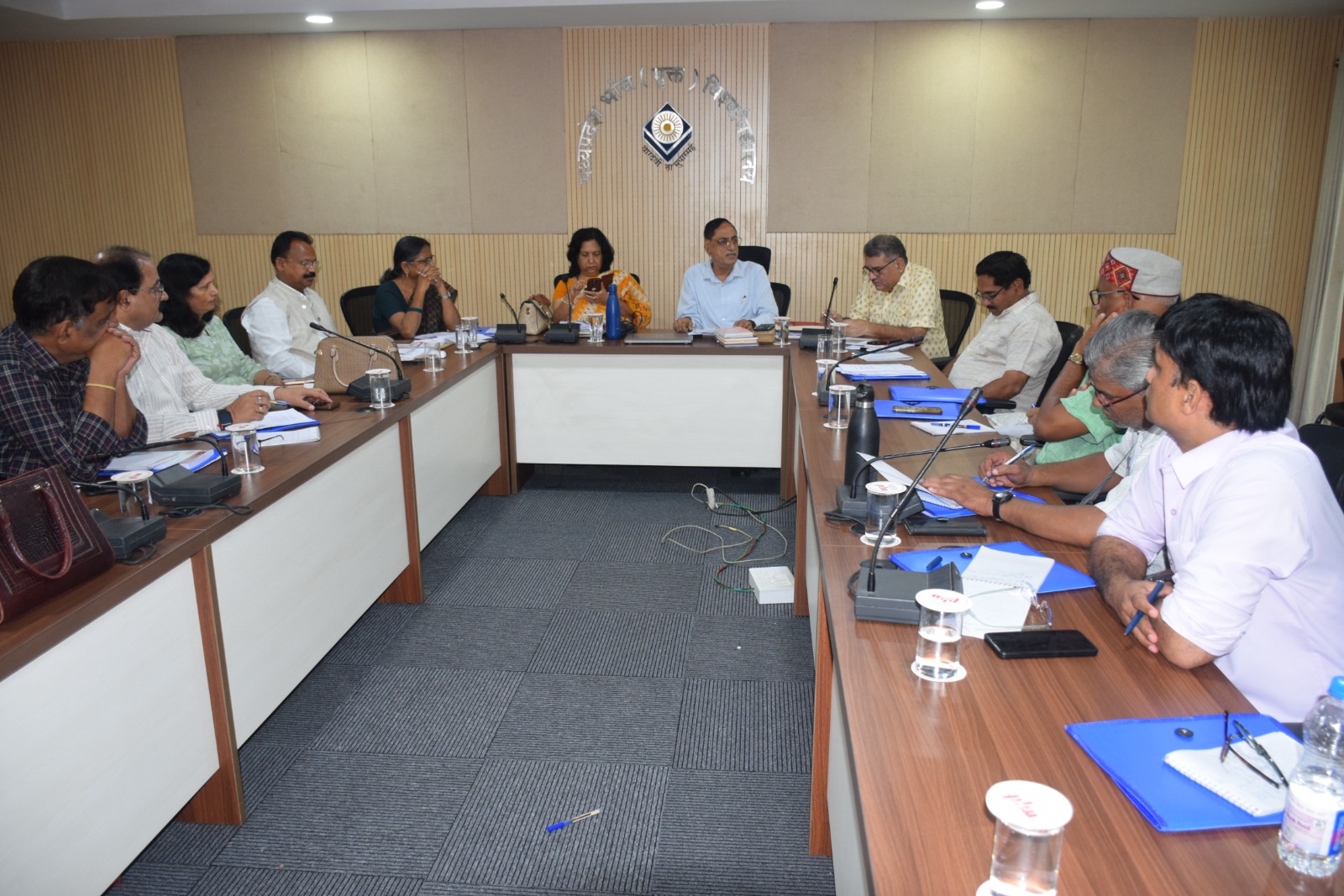
CNN Central News & Network–ITDC India Epress/ITDC News Bhopal: A two-day curriculum development workshop on Political Science was successfully conducted at Madhya Pradesh Bhoj Open University. Presiding over the closing session, Professor of Practice B.B. Sharma from the university stated that India has produced many great thinkers who have guided numerous civilizations. He noted that the principles of warfare described in Kautilya’s Arthashastra are unprecedented. Subsequent rulers who applied these principles were victorious in battles, whereas those who did not were defeated.
Prof. Sharma further said that when Max Müller studied and translated Indian Vedas, Puranas, and Upanishads, the world became acquainted with Indian knowledge and was illuminated by its wisdom. He added that prior to this, the British had nothing comparable to Shakespeare’s influence. The British ruled India for 200 years through their policy of “divide and rule.” Today, however, we enjoy political freedom, and the importance of the study of Political Science remains ever relevant.
Former Pro-Vice-Chancellor of Central University of Haryana, Sushma Yadav, speaking at the program, emphasized that while developing curricula, we must reflect on how much Indianness is integrated into political education. She noted that changes made with careful thought would align with the objectives of the National Education Policy (NEP) 2020. She highlighted that the UGC has revised the API score system, where even writing a single chapter in a book now earns teachers academic credit. The primary goal of curriculum revision is to establish Indian knowledge traditions, make Political Science more Indian in approach, and provide students with skills, proficiency, knowledge, and practical experience. She stressed that curriculum design requires not only ideas but also diverse source material, and that the study of Political Science should be conducted with enthusiasm. She also reiterated 13 key points from NEP 2020 relevant to curriculum development.
On this occasion, University Registrar Sushil Manderia remarked that while earlier sayings suggested that wisdom was localized (“house yogi or village sage”), the environment is now changing. India’s education system must assert itself as a model that influences others externally.
Senior Professor S.P. Shukla presented reports on various areas covered during both days of the workshop and highlighted the changes suggested by experts. Professor Uttam Singh Chauhan, Joint Director of the Madhya Pradesh Hindi Granth Academy, also shared his reflections on the two-day workshop.
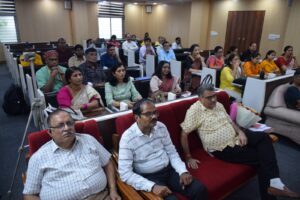
During the morning session, former Vice-Chancellor of Rani Durgavati University, Jabalpur, Professor S.P. Gautam, addressed Political Science faculty on integrating Indian thought and knowledge traditions into the discipline and presenting them comparatively with Western ideas, allowing students to understand Indian intellectual traditions clearly.
The workshop’s nodal officer, L.P. Jharia, Director of the Academic Coordination Department at Bhoj Open University, offered thanks, and the program was conducted under the direction of Ratan Suryavanshi, Director of the Student Assistance Department. University staff, officials, and faculty attended in large numbers.
#BhojOpenUniversity #PoliticalScienceWorkshop #CurriculumDevelopment #AcademicWorkshop #UniversityEducation