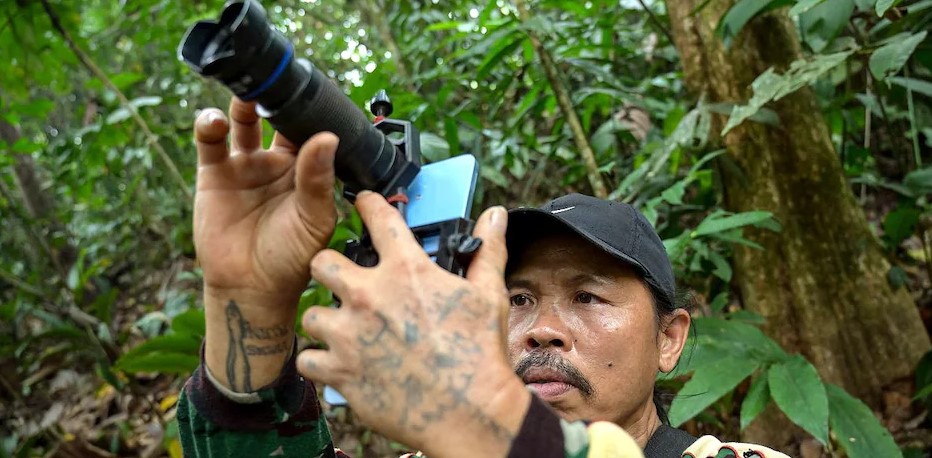
CNN Central News & Network-ITDC India Epress/ITDC News Bhopal: A unique experiment launched for wildlife conservation on Indonesia’s Borneo island is changing the behaviour of local people. Under the Kehatiku project, villagers are being paid to take photographs and record sounds of wild animals instead of hunting them. The aim is to make wildlife more economically valuable alive than dead.
Under the scheme, being implemented in nine villages of West Kalimantan, local people upload wildlife photographs or recordings through a mobile app. About 5,000 Indonesian rupiah is paid for a photograph of a common bird, while up to 130,000 rupiah is paid for a photograph of an endangered orangutan. Successful observers can earn up to 1 million rupiah a month.
More than 350,000 wildlife records have been submitted under the scheme so far. Of these, nearly half were found eligible for payment after verification. A mobile app and artificial intelligence system are used to identify duplicate or incorrect records. The project covers 73 species, including birds, monkeys, wild cats and deer.
The impact of the project is also being seen in conservation. According to the report, two villages have voluntarily enforced a ban on hunting. However, experts say sustained financial support will be necessary for the long-term success of this model. At present, funding for the project is available until 2028.
Hashtags: #ScienceTechnology #Bhopal #Desksource #Borneo #WildlifeConservation #Kehatiku #Science #Technology #DeskSource #BorneoWildlifeConservation