


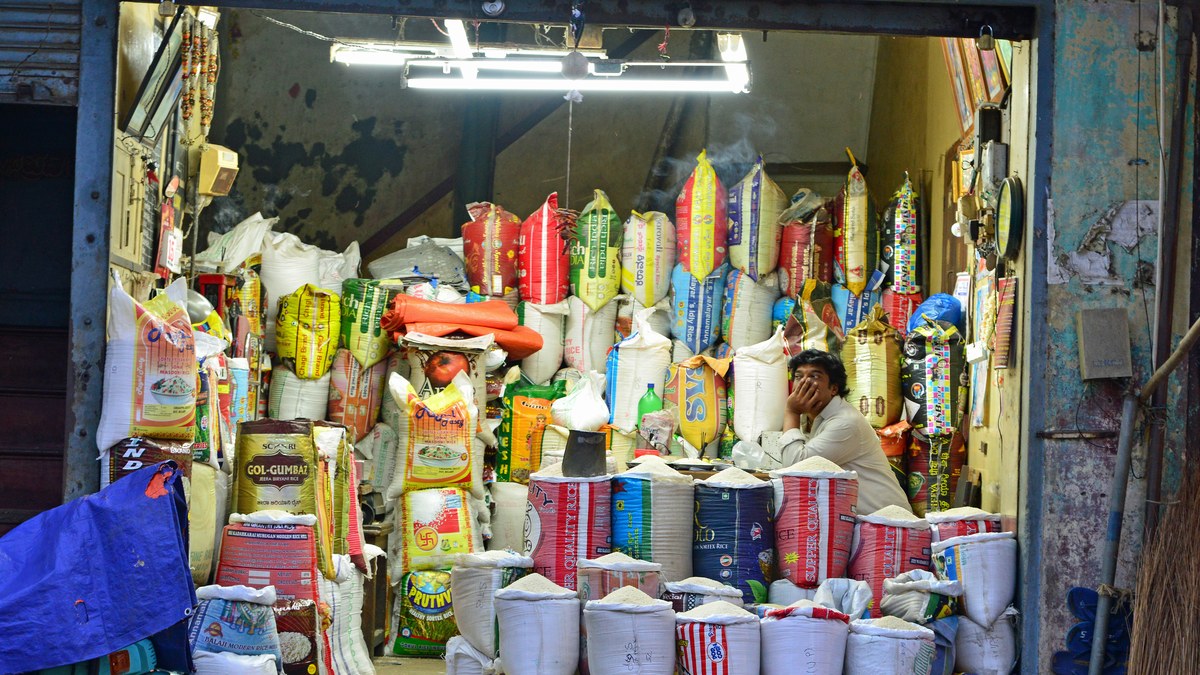
Christopher J. Fynn / Wikimedia Commons (CC BY-SA 4.0). Cropped.
The Centre has doubled the amount of rice it plans to sell in the open market this year and ordered traders, retailers and millers across the country to report their rice and paddy stocks every week, a sign that it sees rice prices as a growing concern.
Under an order dated 6 November, wholesalers, retailers, big chain retailers and processors must declare their stocks each Friday on the Food Stock Portal in six categories, from basmati and parboiled rice to broken rice and paddy. The Food Ministry said entities found unregistered on the portal or breaching stock limits face action under the Essential Commodities Act.
The target for rice sales through e-auctions under the Open Market Sale Scheme for 2026–27 has been raised from 25 lakh tonnes to 50 lakh tonnes. The original target has already been used up: 25 lakh tonnes were sold to private buyers by 31 October, compared with 11 lakh tonnes in the same period last year. The new figure is a ceiling, and how much extra rice reaches the market will depend on future auctions and bids.
The Centre has also allowed Andhra Pradesh, Karnataka, Kerala, Tamil Nadu and Telangana to impose stock limits on rice and paddy where needed, until 31 January 2027. It is giving more subsidised Bharat Rice to NAFED, NCCF and Kendriya Bhandar, mainly for southern states.
The south is where the pressure looks sharpest. The Hindu reported on Sunday that Tamil Nadu's 15 major reservoirs hold about a third of their combined capacity, against around 92% a year ago, raising the risk of lower rice output unless the northeast monsoon picks up.
Hashtags: #BusinessBeyondHeadlines #FoodPrices #Rice #Inflation #कारोबारसुर्खियोंसेआगे #खाद्यकीमतें #चावल #महंगाई #OMSSRice #RicePrices




