


China Used Cloud Seeding 27,000 Times; Can Delhi Do It?
CNN Central News & Networks / ITDC India Epress / ITDC News / Agencies, Bhopal:
Amid rising air pollution in Delhi, artificial rain, or cloud seeding, is once again being seen as an option for relief from pollution. Meanwhile, information has emerged that China has carried out cloud seeding around 27,000 times since 2013. The question being raised is whether this technology can also be used on a large scale in Delhi, as in China.
On the issue, economist Michael Greenstone, who prepares the Air Quality Life Index (AQLI), said China’s experience suggests that rainfall can be increased in targeted areas through cloud seeding. This can also reduce levels of pollutants such as PM2.5 in the air for some time. According to studies conducted in China, a decline in PM2.5 pollution was recorded for about 10 days after some campaigns. However, he refused to treat it as a permanent solution.
What is cloud seeding technology?
In this process, particles such as silver iodide or sodium chloride are released into suitable clouds that already exist. These particles promote the formation of tiny water droplets or ice crystals, which can increase the possibility of rain. Special equipment mounted on aircraft or placed on the ground is used for this. The technology cannot produce rain without clouds.
Why is artificial rain difficult in Delhi?
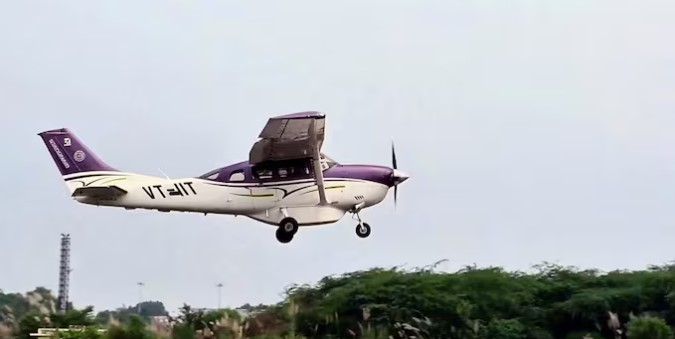
Cloud-seeding trials were conducted in Delhi in October 2025 with the help of IIT Kanpur, but they did not produce the expected rain. Information has also emerged that two trials were conducted around Delhi airport in 2026. According to officials, their purpose was to assess weather conditions and the possible impact on pollution.
According to a study by IIT Delhi, Delhi’s winter atmosphere often lacks sufficient moisture and favourable clouds. In such conditions, the chances of successful cloud seeding become limited. The Government of India had also been told by the meteorological department and other expert institutions that the required weather conditions are generally not available during winter.
Neighbouring areas may also be affected
Michael Greenstone warned that increasing artificial rain in one area can affect the distribution of rainfall in surrounding areas. According to him, this technology can provide temporary relief in an emergency, but it is not a permanent solution to pollution.
Experts believe that long-term improvement in Delhi’s air quality is not possible without controlling vehicles, industries, construction work and other sources of pollution. Cloud seeding should be seen only as a limited support measure that depends on conditions.
Hashtags: #ScienceTechnology #Bhopal #China #CloudSeeding #ArtificialRain #Delhi #AirPollution #PM25 #MichaelGreenstone #ChinaUsedCloudSeeding



