


ITDC / AI illustration
Delhi-NCR’s clean-air response needs a public account of what changed on the ground. Another review meeting may be necessary; it cannot serve as the measure of progress.
The Union environment ministry’s 14 November review supplied a useful starting point. It reported that 3,221 km of a targeted 5,480 km of roads had been redeveloped. States were told to assign senior officials to cities and report weekly to the Commission for Air Quality Management. Those reports should be made useful to residents, not confined to official correspondence.
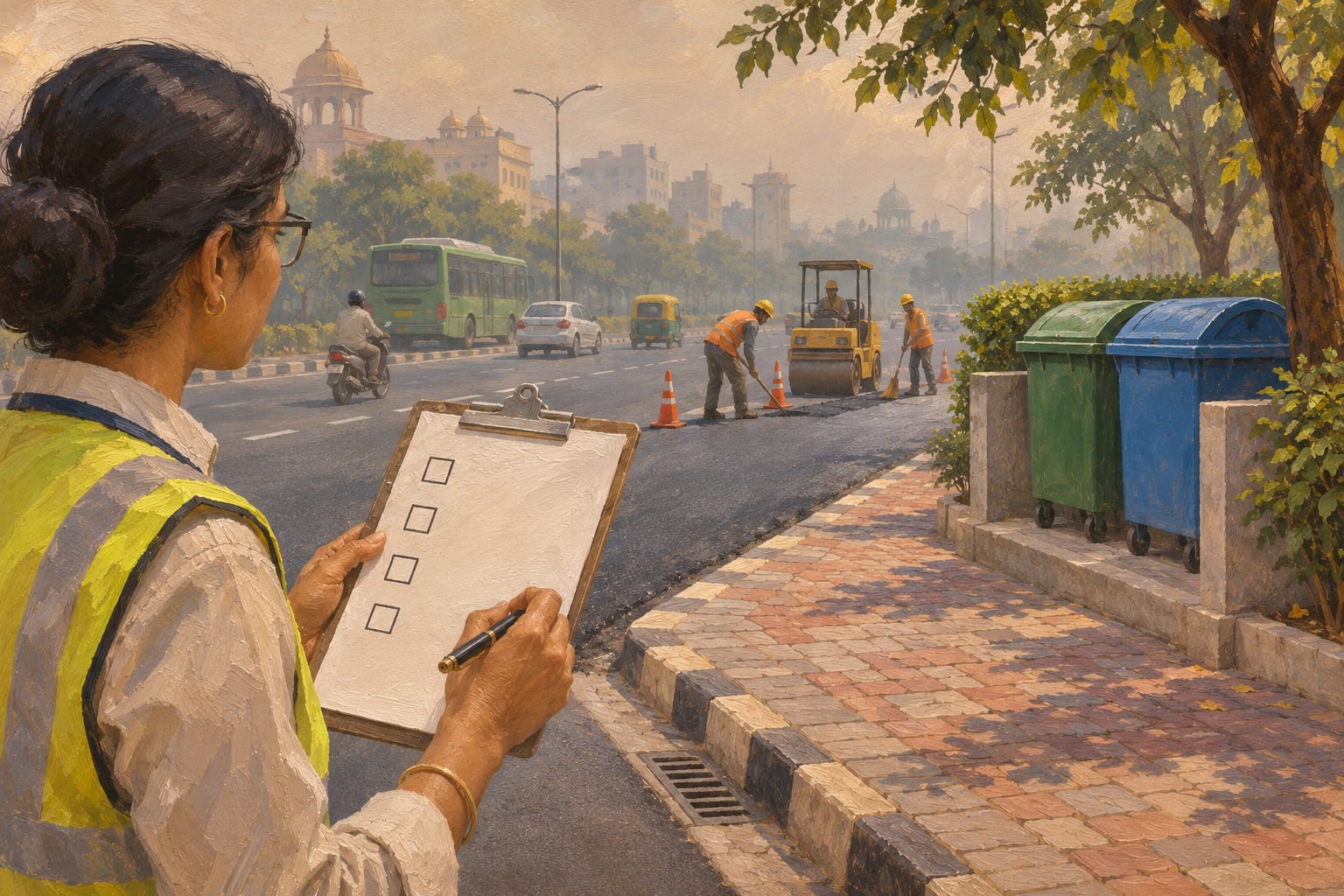
Each city should publish a short weekly account: which dusty roads were repaired, which waste-burning complaints were resolved, which inspections found continuing violations and who must finish the remaining work. A complaint should close when a field check confirms the problem has stopped, not merely when it has been forwarded.
Emergency restrictions still have a place. CAQM’s 30 October order restricted dust-generating outdoor construction and demolition during 5–20 November, with specified exemptions. Acting before a forecast deterioration is more sensible than waiting for visibly filthy air. But restrictions also impose costs on workers and small businesses. Authorities should explain their basis, enforce exemptions consistently and provide practical support rather than leave the weakest to absorb the disruption.
An improvement in air quality cannot automatically be credited to enforcement: weather also affects pollution dispersion. That is precisely why officials should report completed work separately from air readings. Residents need both. The test of the next review is whether a known source of pollution has actually been removed.



