


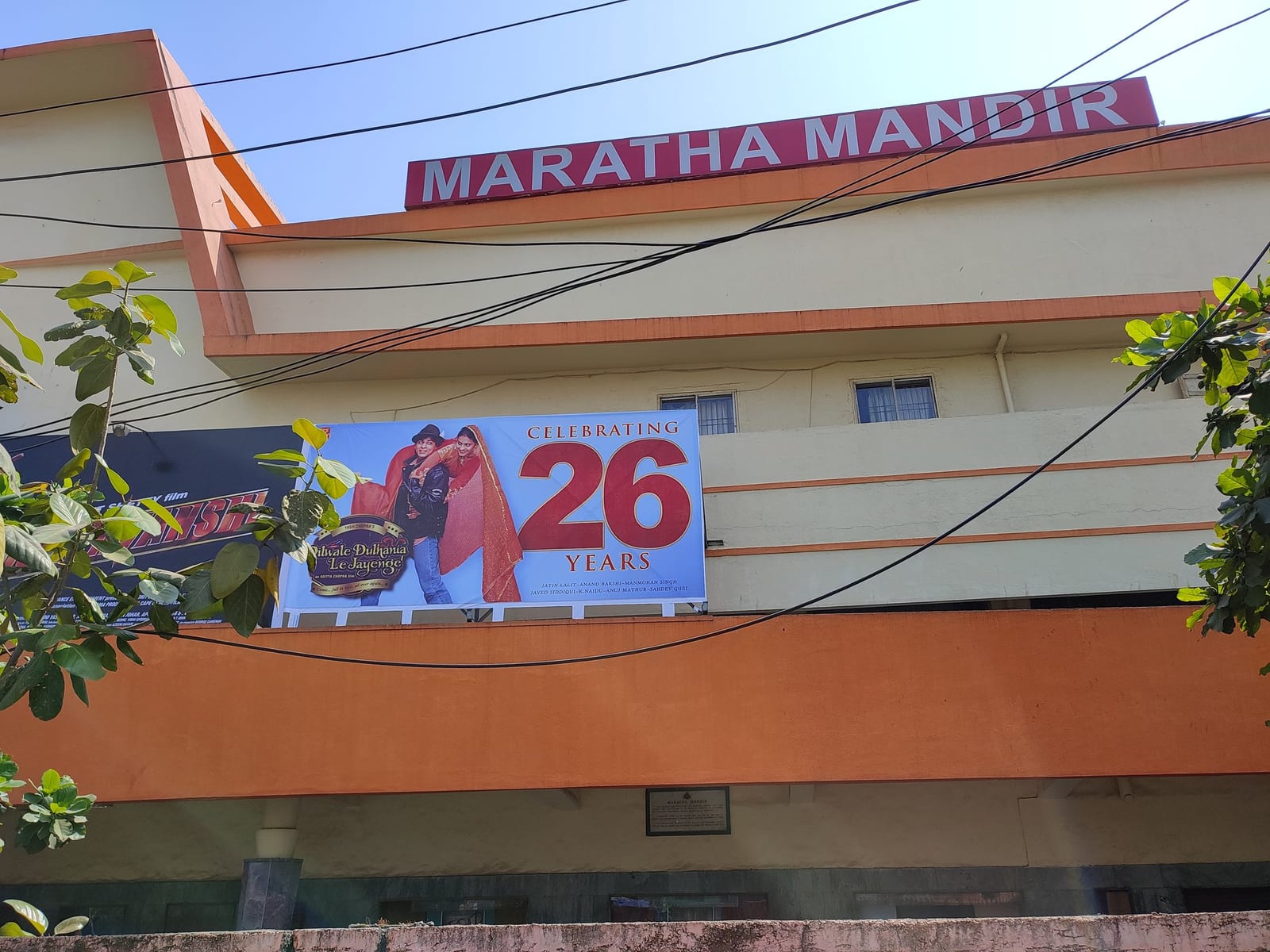
When Maratha Mandir announced that it was dropping Dilwale Dulhania Le Jayenge in February 2015, the trouble was a matter of two hours and fifteen minutes. For years, Mumbai audiences had known where to find Raj and Simran at 11:30 in the morning. The cinema had moved the show to 9:15 to make room for new releases, and the earlier start was proving hard on the staff.
The change came shortly after a celebration that made ending the run particularly awkward. Aditya Chopra’s film, released on 20 October 1995, had reached 1,000 weeks at Maratha Mandir on 12 December 2014. Shah Rukh Khan and Kajol marked the milestone by launching a book about the making of the film. A theatre timetable had become part of the story.
Yash Raj Films’ first announcement said the 9:15 screening would be the last after 1,009 weeks. Then came the calls and requests to the cinema. The producer’s follow-up said the management had reconsidered and the film would return to its familiar 11:30 slot without a break in the run. The experiment with an earlier show had lasted only days.
Most films give way when the next release arrives. Here the theatre had to fit new films around a show audiences still expected to find on the board. The milestone made headlines, but the episode that followed explained how it was possible. For the audience, the hour on the ticket was part of the habit. The film about catching a train had, after all those years, become a film people planned their own mornings around.




