


Bhopal:
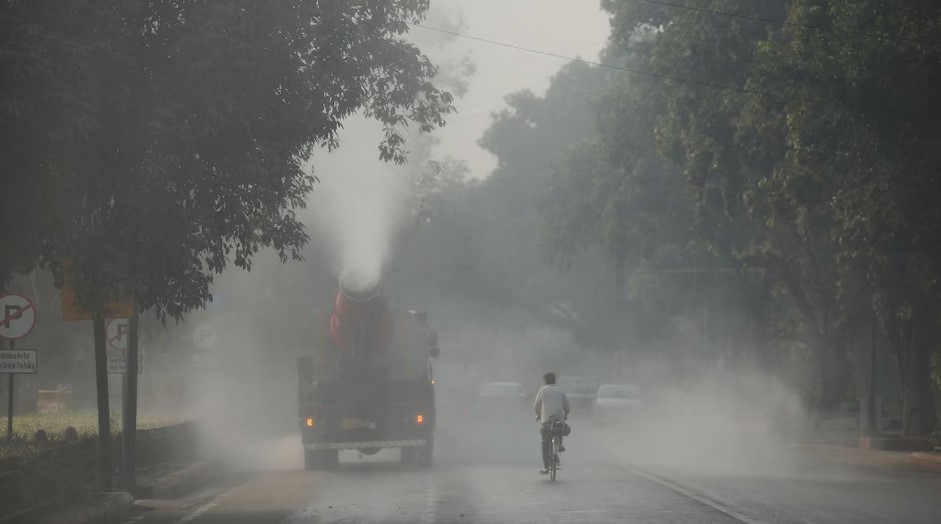
Residents of the national capital have received marginal relief from air pollution, but air quality continues to remain poor in several areas. Strong winds and light drizzle on Monday helped bring down pollution levels. However, on Tuesday morning, the Air Quality Index (AQI) crossed 300 at several monitoring stations, indicating that the health risks from polluted air persist.
According to data from the Central Pollution Control Board (CPCB), Delhi's average AQI stood at 275 at 4 pm on Monday, compared with 290 on Sunday. At 7 am on Tuesday, the city's average AQI was recorded at 246. However, conditions remained concerning at individual monitoring stations. Siri Fort recorded an AQI of 341, falling in the very poor category. Of Delhi's 58 monitoring stations, 11 reported AQI levels above 300.
Experts said stronger winds had helped disperse pollutants, temporarily improving air quality. However, falling temperatures, higher humidity and slower wind speeds during the night and early morning could cause pollution levels to rise again. PM2.5 continues to be the major pollutant in Delhi's air.
Meanwhile, the Commission for Air Quality Management (CAQM) has kept Stage III restrictions under the Graded Response Action Plan (GRAP) in force across Delhi-NCR. Monitoring of construction activities, dust-control measures and vehicular emissions has been intensified.
With no sustained favourable change in weather conditions in sight, residents may have to continue dealing with unhealthy air. Authorities and experts have urged people, particularly vulnerable groups, to take precautions until pollution levels improve.
Hashtags: #NationalIndia #Bhopal #Delhi #Sees #Slight #Improvement #Air #Quality #But #DelhiSeesSlightImprovement



