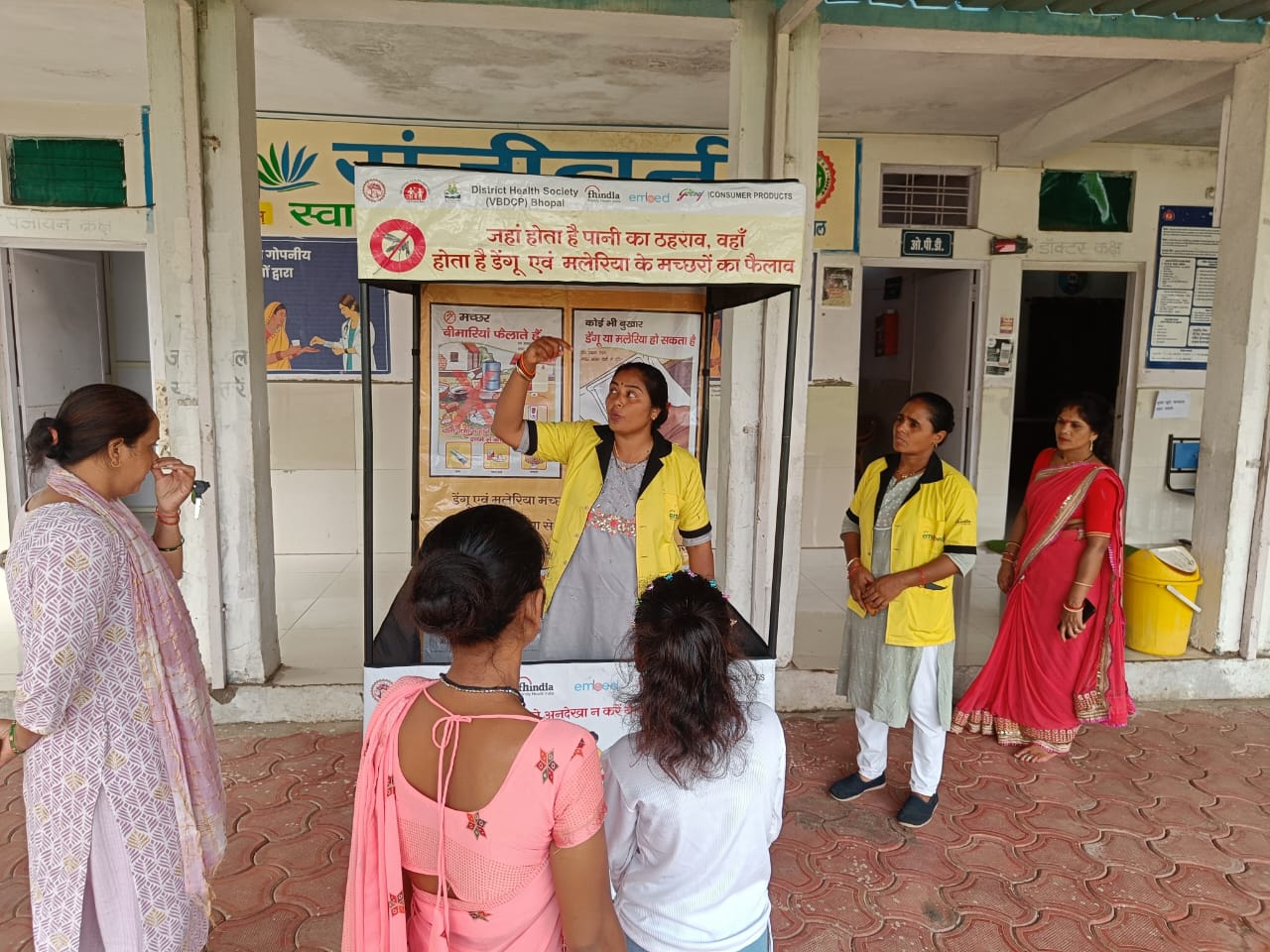
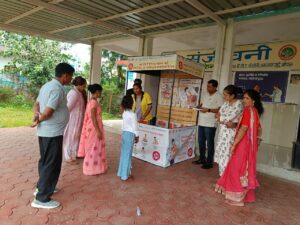
CNN Central News & Network–ITDC India Epress/ITDC News Bhopal : Under the National Vector-Borne Disease Control Program, on Monday, under the guidance of Chief Medical and Health Officer Manish Sharma and District Malaria Officer Smrata Namdev, a canopy session was organized at Amaravad Khurd Sanjivani to educate attendees about the symptoms, prevention, and control of dengue.
During the session, Regional Coordinator of Family Health India, Dr. Santosh Bhargava, emphasized that mosquito protection is essential during this season, as continuous rains increase the breeding of larvae and the number of breeding sources. He stressed the importance of ensuring that mosquito larvae do not develop.
Dr. Bhargava further explained that community participation is crucial for dengue control and that everyone’s cooperation is needed. He highlighted that dengue mosquitoes mainly breed in containers holding water. Common breeding sources include: flower pots and trays under them, cement tanks, money plants, broken utensils, tires left on rooftops, old earthen pots, refrigerator trays, coolers, coconut shells, and disposable items. Essentially, dengue larvae thrive in clean water both inside and outside homes.
He added that dengue mosquitoes prefer dark areas, often resting behind corners of beds and furniture. To prevent them from entering homes, it is essential to install mosquito nets on doors and windows. Use modern mosquito repellents during the daytime as well, and ensure children and pregnant women sleep under mosquito nets.
The program was attended by coordinators Ratnesh Singh, Krishna Patel, and Manju Pawar, along with staff from Sanjeevanika.
#DengueControl, #PublicHealth, #Awareness, #CommunityParticipation, #DiseasePrevention, #HealthCampaign, #VectorBorneDiseases