


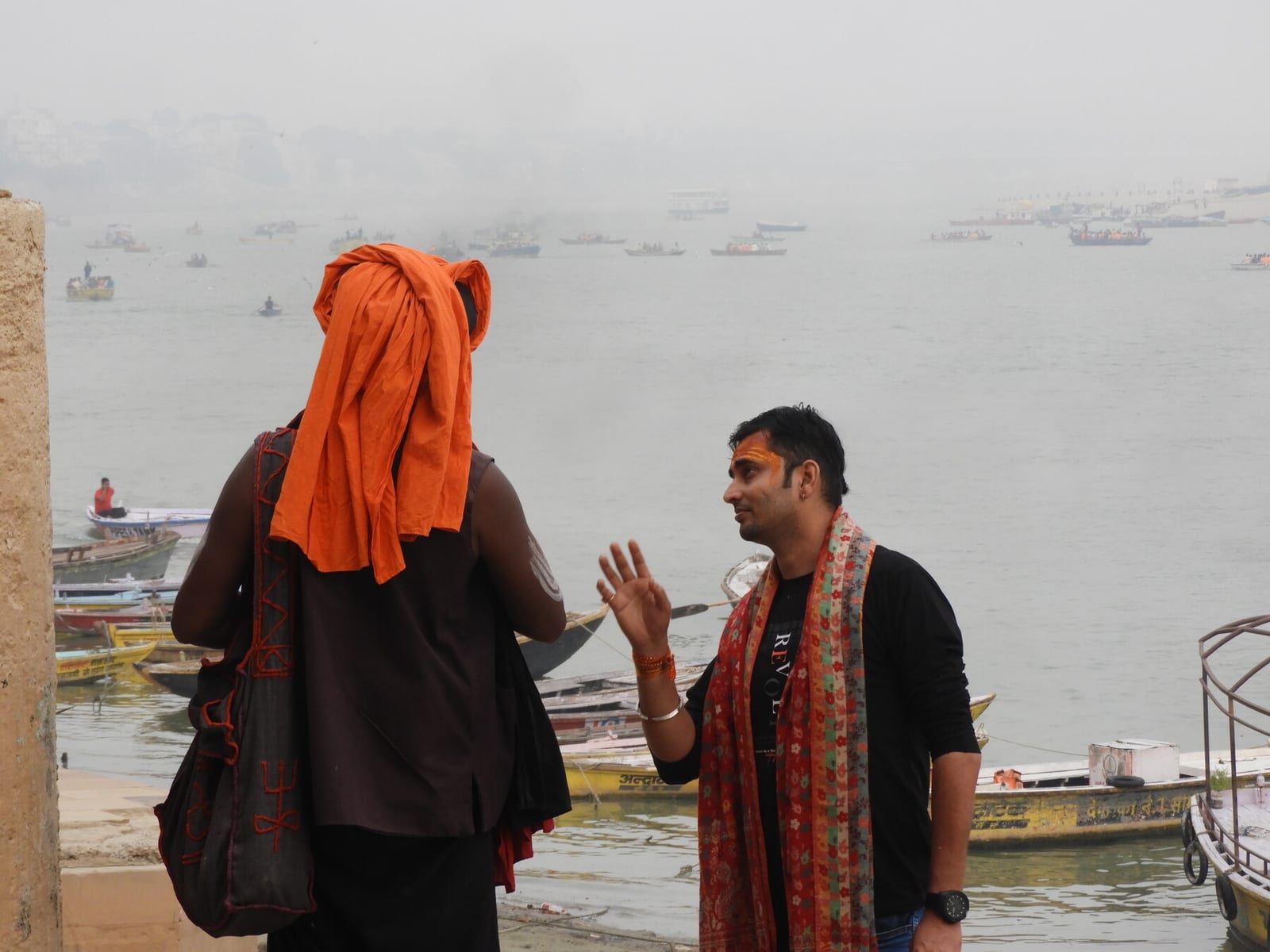
Goutam1962 / Wikimedia Commons · CC BY-SA 4.0
Varanasi knows how to draw people to the river on Dev Deepawali. Tonight’s harder question is how they will get home when thousands decide to leave at once. A family standing at the foot of a ghat needs to know which way to walk and where its bus will leave, not simply where a road was closed hours earlier.
Varanasi Traffic Police’s November 22 advisory sets restrictions from 1 p.m. today. It closes the Rajghat crossing from Padav towards Namo Ghat to people on foot as well as vehicles. Samne Ghat, between the city and Ramnagar, is for pedestrians and two-wheelers under the plan. Bus operations at Cantt and Kashi depots move to temporary terminals at Sandaha and Harahua. These are not interchangeable detours. The wrong turn can send someone back into a crowd moving the other way.
The state’s November 11 review called for dividing the ghats and riverbank into sectors, each with an officer responsible, and for training boat operators. The police need room to change routes as crowds build, and a printed map cannot promise that a lane will stay open. That is precisely why the administration should put the same time-stamped update at ghat exits, bus stops and on its public channels. At the busiest junctions, signs should say which way to go, not just which way is barred. Residents and visitors must be able to follow them without a smartphone.
A festival plan is complete when it accounts for the person leaving, not just the person arriving. Varanasi should judge tonight’s arrangements by how clearly people are guided from the river to their ride home.




