


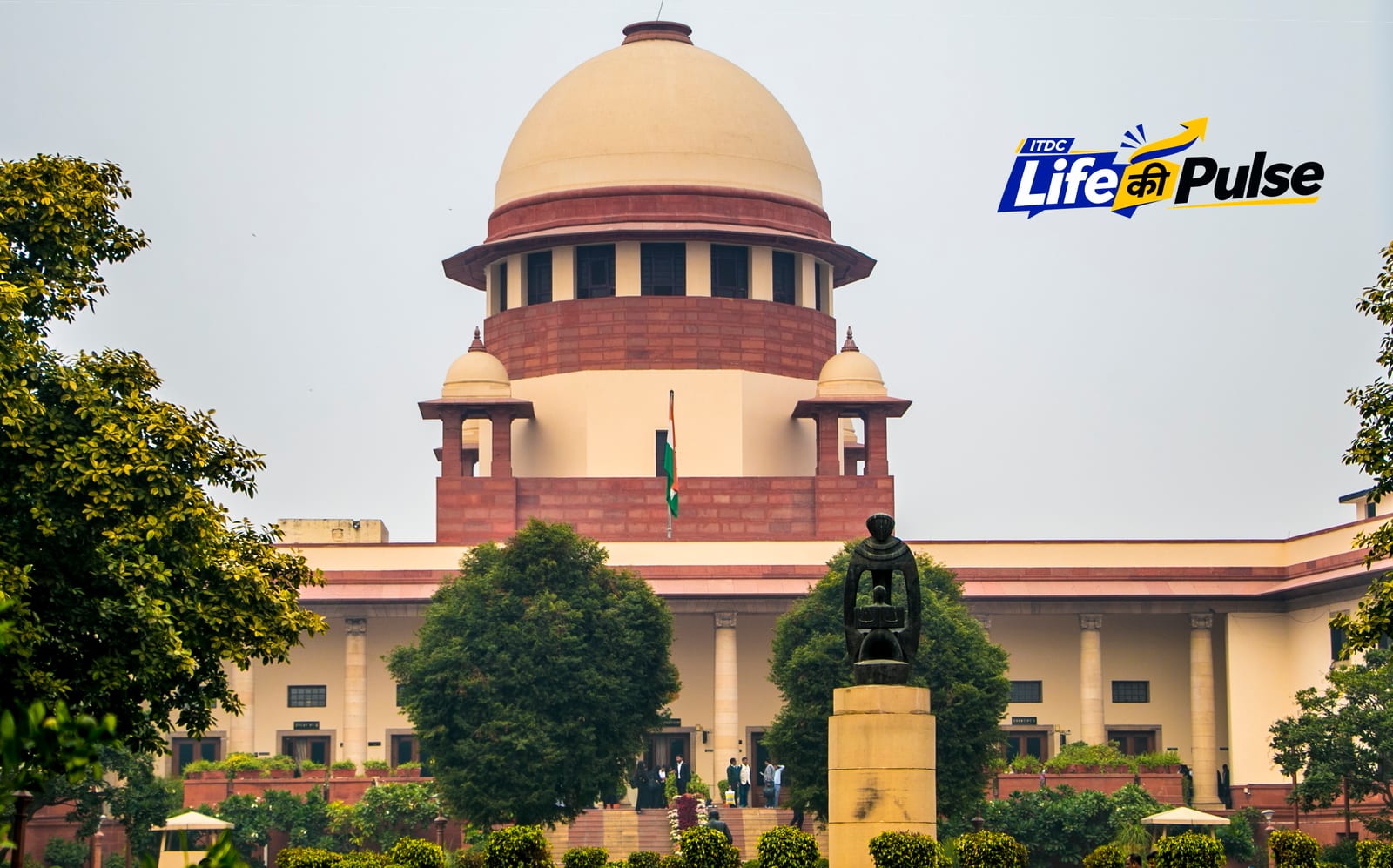
Photo: Subhashish Panigrahi / · CC BY-SA 4.0
The next video plays before a viewer chooses it. Another notification pulls attention back. Features familiar to millions of social-media users now sit at the centre of an Indian court challenge over children: the Supreme Court has issued notice in a petition alleging that platform design encourages compulsive use.
In its November 4 report, Bar & Bench said the court sought responses from the Centre and Meta. The petition targets features including infinite scrolling and autoplay, and seeks algorithm audits and stronger age checks. These are allegations and requested remedies, not judicial findings. The court record reproduced by Indian Kanoon lists the notice as returnable on December 7.
The case moves the dispute beyond how long a child holds a phone. It reaches into what the service does while the child is there. An age check concerns entry; an algorithm shapes the stream of material after entry. Restricting one does not automatically establish what has happened to the other.
Australia offers an unusually concrete parallel. In its eSafety evaluation of 803 surveyed 10-to-15-year-olds, the share who reported both owning an account on an age-restricted platform and using that platform in the previous four weeks fell from 52.4% before the restrictions to 42.1% at the three-month follow-up. Yet among parents whose children had used social media in the previous four weeks, the share unaware of that use rose from 23.3% to 33.3%. The March–April 2026 follow-up was early evidence, not a verdict on long-term success or proof that restrictions caused the awareness gap.
That is the unexpected connection with the Indian case. A decline in children reporting both an account and recent use on restricted platforms can coexist with greater parental unawareness in a separate measure. The results do not establish deliberate concealment or explain why awareness changed. Account removal, recent use, parental awareness and exposure to a particular feature are different outcomes. The Australian findings do not predict India's experience, but they show why a single total of blocked accounts cannot describe everything happening behind the screen.
Meta, meanwhile, has been announcing changes to the screen itself. A June update, revised in July, described stricter content settings, AI-assisted age assurance and alerts for parents using supervision when teens repeatedly search for certain self-harm terms. These are the company's stated safeguards, not independent measurements of their effectiveness or its response filed in this Indian case. The existence of a feature and its reach among children remain separate facts.
There is also a scientific dispute beneath the courtroom language. The US National Academies' 2024 review did not establish that social media causes adolescent-health changes at population level. Different young people can experience the same service differently, and the direction of influence is not always clear. That limits sweeping claims of harm without resolving allegations about a specific design or a particular child.
Even identifying age can open another dispute: whose identity information must be collected. Australia's privacy regulator says its minimum-age regime cannot make government identification compulsory without a reasonable alternative. That is an Australian requirement, not an Indian rule, but it shows how a child-safety intervention can also become a privacy decision.
For now, India's court has opened a case, not imposed a national social-media ban. The pending responses will enter a debate in which the headline measures already diverge: lower reported account-and-recent-use rates, continuing use, disputed design choices and parental awareness gaps. The familiar endless feed is now also a question of evidence.
Hashtags: #LifeकीPulse #NationalIndia #SupremeCourt #SocialMedia #NewDelhi #Endless #Scroll #Reaches #Supreme #Court




