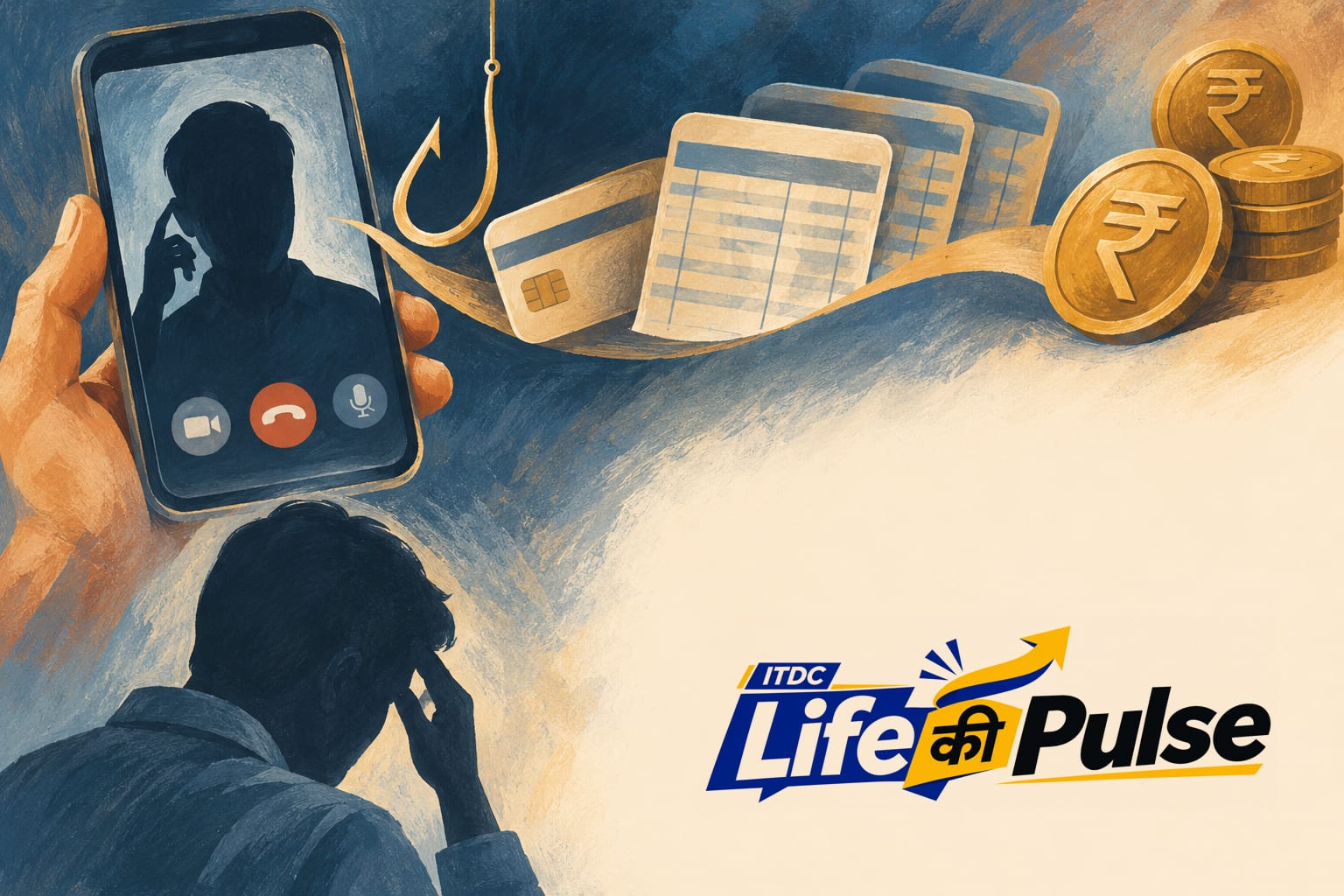
ITDC India ePress | Illustration
New Delhi / Bhopal: A Delhi woman's ₹71 lakh loss has led to arrests in Bhopal, putting the less visible end of a ‘digital arrest’ fraud in focus: the people who allegedly receive and move the money after a threatening call.
Delhi Police said on Sunday that three people had been arrested in Bhopal for allegedly supplying accounts used to route the proceeds. According to reporting by The Times of India and Indian Masterminds, a caller posing as a Mumbai IPS officer told the woman that a credit card in her name was linked to a fabricated money-laundering case. She transferred the money in two transactions. An FIR was registered on October 8; the November development is the arrests, not a newly committed fraud. The investigation continues, and the allegations have not been adjudicated.
The case arrives alongside a different kind of enforcement tally. TRAI's July–September report, reported by PTI on November 14, recorded action against more than 1.24 lakh telecom resources for unsolicited commercial communications. Operators' AI systems flagged 18.28 billion calls as suspected spam. That is a count of flagged calls, not confirmed frauds, unique callers or money saved.
Nor does a telecom spam tally establish what happened on this woman's internet video call. The two developments concern different systems. One tracks unwanted communications; the police investigation follows money through bank accounts. Neither report demonstrates that a particular warning or blocked number would have prevented this case.
The gap between a threatening screen and an actual loss is also drawing attention at the highest levels. Addressing IPS probationers on November 10, President Droupadi Murmu called for greater police and public sensitivity to the seriousness of cybercrime, contrasting reactions to a shop robbery with those to older people losing their savings through digital-arrest scams.
TRAI's earlier public advisory is unequivocal: it does not investigate individual customers, demand personal banking details or issue arrest threats on digital platforms. It directs people to report fraud through 1930 or the national cybercrime portal. In this investigation, the live question remains where the money went and who else handled it, not whether the voice on the screen sounded official.
Hashtags: #LegalCrime #Bhopal #Fake #Call #Ended #Its #LifeकीPulse #NewDelhiBhopal #Money #Trail