


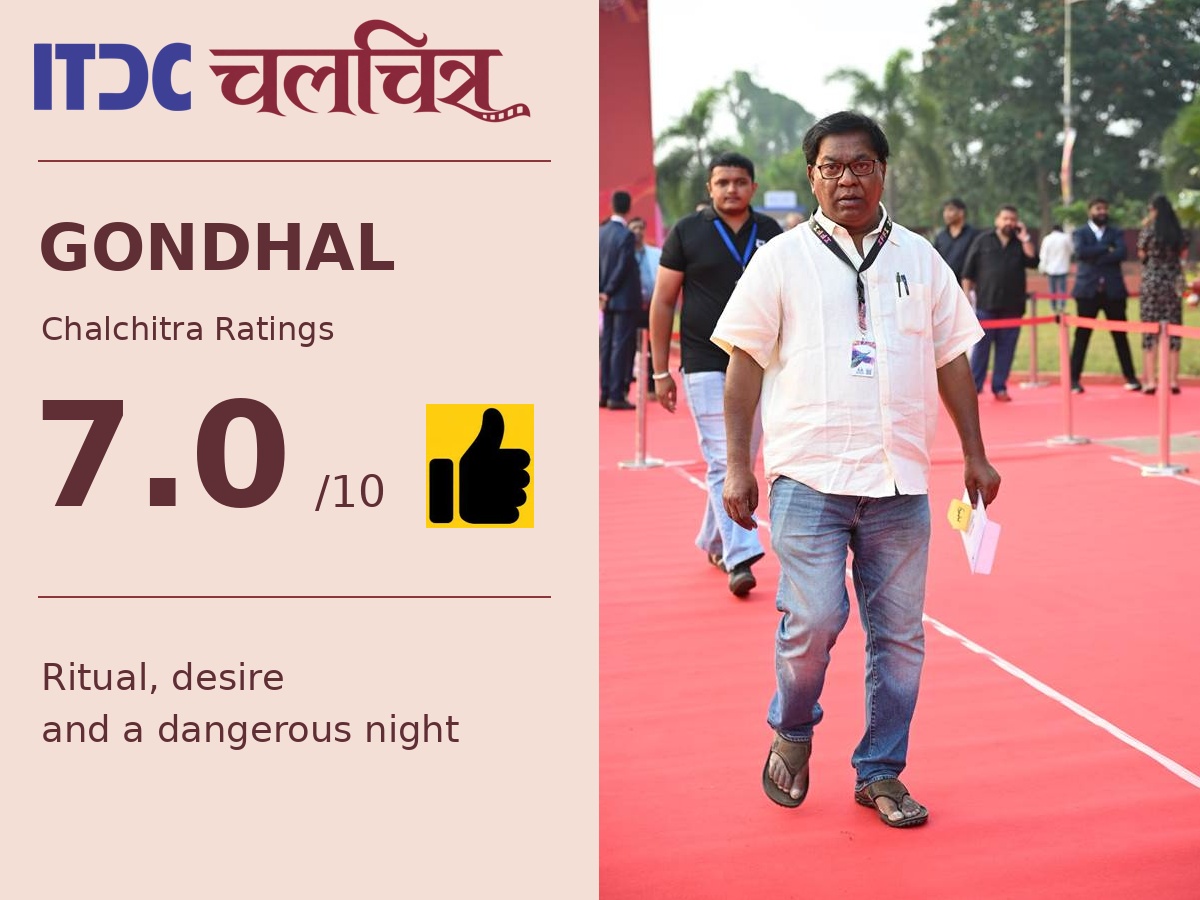
Photo: PIB/IFFI
A wedding celebration becomes a contest of wills in Gondhal. Santosh Davakhar’s Marathi drama places a bride’s private wishes against the public rituals surrounding her marriage. The resulting film is more persuasive in its atmosphere and performances than in every turn of its plot.
Suman, played by Ishita Deshmukh, has married Anandrao, but Sarjerao remains part of her emotional life. As a Gondhal performance continues through the night, desire, village authority and concealed grievances draw the characters into increasingly dangerous encounters. Kishor Kadam’s Bhivaba adds another generation’s experience to the gathering.
The strongest reason to choose this film is its sense of place. Amalendu Chaudhary’s camera gives the nocturnal setting texture and spatial clarity. The elaborate opening movement introduces a community rather than simply announcing a conflict. The folk performance supplies a distinctive cultural setting, while the actors keep the tensions personal. Deshmukh and Kadam are particularly important to that balance.
The qualification is the storytelling. Intrigue accumulates faster than its consequences can register. Some characters become instruments of the plot, and the shifts between observational detail and heightened melodrama are not always smooth. Viewers expecting a brisk, tightly resolved thriller may find the night overextended.
For those drawn to Marathi cinema, ritual traditions and morally tangled rural drama, Gondhal offers enough craft and character interest to outweigh its unevenness. Its appeal lies in the world it builds, not in faultless narrative control. The verdict is a qualified recommendation: 7.0/10.
Hashtags: #EntertainmentBollywood #Maharashtra #Gondhal #Vivid #Wedding #Night #Chalchitra #Uneven #Aftermath #Celebration



