CNN Central News & Network-ITDC India Epress/ITDC News Bhopal: Gut microbiome imbalance may triple the risk of type 1 diabetes in children
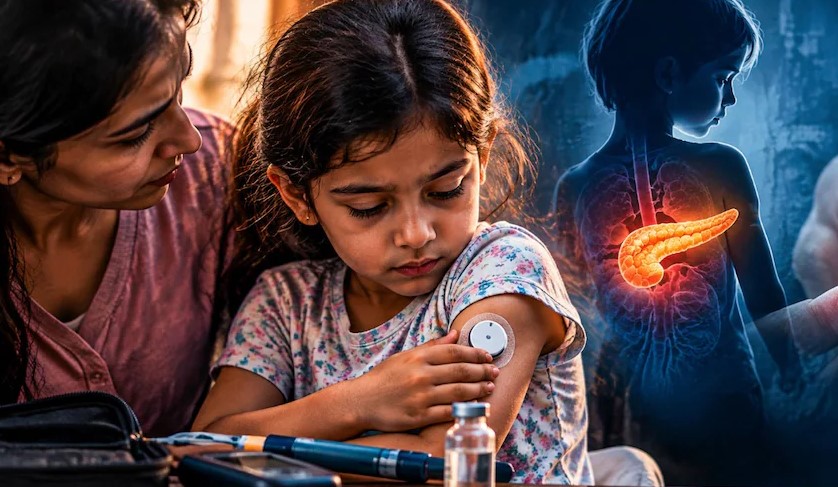
New Delhi. A new study on the risk of type 1 diabetes in children has identified an important link between the development of microorganisms in the gut and the disease. The study, published in Nature Metabolism, found that children whose gut microbial community stopped developing early in life had an almost three times higher risk of type 1 diabetes.
Researchers analysed data up to six years of age from 887 children who were at genetically higher risk of type 1 diabetes under the TEDDY study. During this period, gut microbiome-related data were collected 12,151 times. The research identified three distinct patterns of microbiome development, including one group in which development became stable at an early stage. The risk of the disease was found to be nearly three times higher in this group.
According to the researchers, in a normally developing microbiome, microorganisms that help digest diverse diets and fibre-rich foods increase over time. In contrast, in the microbiomes that stabilised early, microorganisms linked to the digestion of milk sugar remained more abundant for a longer period, while microbial diversity was relatively limited.
The research also found that a child’s genetic structure may influence the relationship between microbiome development and type 1 diabetes. However, the study does not prove that changes in the microbiome alone cause type 1 diabetes. Researchers also pointed to the combined influence of genetic and early-life environmental factors.
Hashtags: #Health #Bhopal #Type1Diabetes #GutMicrobiome #Children #NatureMetabolism #TEDDYStudy #GutMicrobiomeImbalanceMay #Desksource #खतर