CNN Central News & Network-ITDC India Epress/ITDC News Bhopal: Harvard scientists grow brain cells in lab for seven years
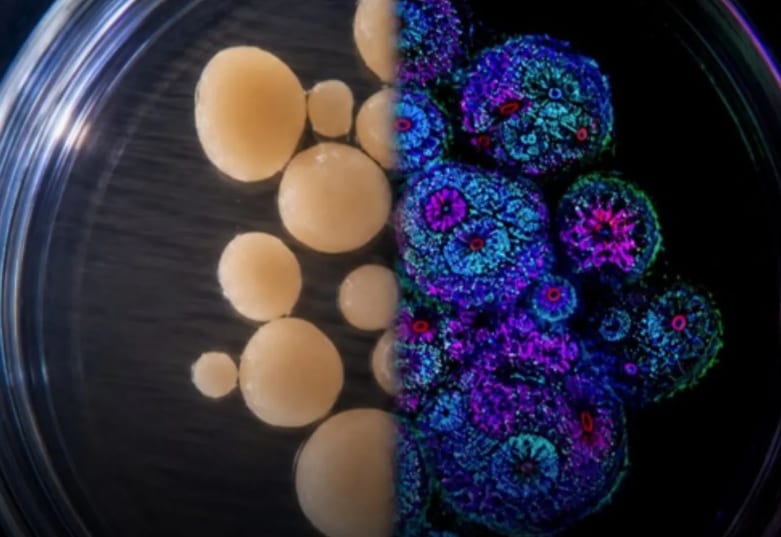
Scientists at Harvard University in the United States have succeeded in keeping small brain organoids, developed from human brain cells, alive in a laboratory for several years. According to the researchers, these cell clusters not only survived for a long period but also continued to develop and mature. The study is considered important for understanding the development of the human brain.
These organoids were prepared from human stem cells and may contain more than one million cells of the brain’s outer layer, the cerebral cortex. Scientists observed their development over several years at different stages. The research found that the cells showed several molecular and biological changes associated with natural brain development.
Researchers found that these cells retained a form of molecular memory of earlier stages of development. When cells from older organoids were placed in a different environment, they began moving more rapidly towards some later stages of development. According to scientists, this may be linked to developmental information recorded within the cells.
The achievement could give scientists an opportunity to conduct long-term experiments to understand brain development and diseases linked to the nervous system. Researchers hope such models may prove useful in the future for understanding the development process of autism, Alzheimer’s and other neurological disorders, as well as for studying potential treatments. However, these organoids are not complete organs like the real human brain and do not have consciousness or higher-level brain functions.
Hashtags: #ScienceTechnology #Bhopal #DeskSource #HarvardUniversity #BrainOrganoids #StemCells #CerebralCortex #NeurologicalDisorders #HarvardBrainOrganoidsGrown #Desksource