


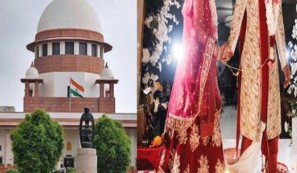
CNN Central News & Network-ITDC India Epress/ITDC News Bhopal: New Delhi. Hearing a petition on the validity of a marriage, the High Court made it clear that a dispute over rituals alone does not automatically render a marriage void. The husband had filed a petition in court seeking a declaration that the marriage was invalid. He argued that the wedding rounds, or pheras, were not performed during the marriage and, therefore, the marriage should not be given legal recognition. The court, however, dismissed the petition.
The husband made the absence of pheras the basis for seeking cancellation of the marriage. In the case, he claimed that the marriage rituals had not been completed and, in particular, that the pheras had not been taken. On this basis, he challenged the validity of the marriage and sought a declaration that it was invalid.
Considering the facts of the case and the applicable legal provisions, the court clarified that the validity of a marriage cannot be decided solely on the basis of a claim related to one ritual. It is necessary to examine the law applicable to the marriage concerned and the actual circumstances.
Under Section 7 of the Hindu Marriage Act, 1955, a Hindu marriage may be solemnised in accordance with the customary rites and ceremonies of either party. Where Saptapadi, or seven steps, is an essential ceremony of the marriage, the marriage is considered complete when the seventh step is taken. However, the same ritual requirement does not apply to all communities and all marriages.
For this reason, whether a ritual was performed or not is decided on the basis of the relevant tradition, available evidence and legal provisions. A marriage does not automatically become invalid merely because an allegation is made.
The High Court dismissed the husband’s petition. To understand the actual basis of the court’s order, it is necessary to look at the facts and legal reasoning recorded in the judgment. From the available details, it is clear that the court did not consider the claim that pheras were not performed to be sufficient to declare the marriage void.
In disputes related to marriage, courts also examine which rituals the parties followed, under which law the marriage took place and whether the grounds prescribed in law for declaring a marriage invalid are present.
The case shows that personal claims or disagreement over rituals are not enough to challenge the validity of a marriage. A petition must present concrete facts and grounds in line with the applicable law.
Hashtags: #ChhattisgarhState #Bhopal #NewDelhi #HighCourt #MarriageValidity #HinduMarriageAct #Pheras #Saptapadi #AnnulmentPlea #HighCourtRejectsPlea



