PIB / Ministry of Electronics and IT
A patient leaving hospital needs to know three things: how to take the medicine, which warning signs mean they should return, and when the next visit is due. A polished translation is of little help if any of those answers is wrong.
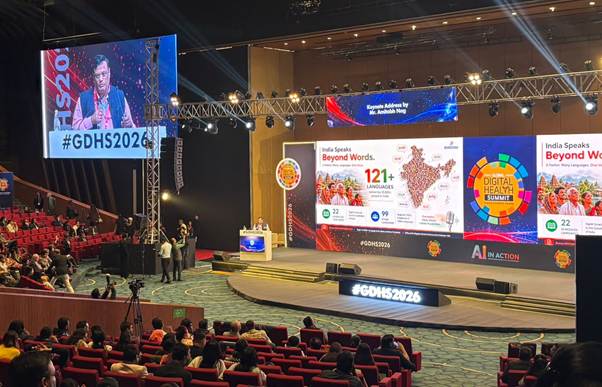
At the Global Digital Health Summit in Delhi on 20–21 November, BHASHINI demonstrated tools for multilingual consultations and clinical documentation with AIIMS and JIPMER, among other partners. The Ministry of Electronics and IT described voice-based documentation of discharge instructions at JIPMER and speech tools for consultations at AIIMS. These are promising uses. The ministry’s account describes demonstrations and integrations; it does not tell us how often patients understood their instructions correctly.
Hospitals cannot wait for a trained interpreter to be available in every language at every hour. Start where the risk is low: explaining where to register or how to find a department. When software translates a dose, an allergy or a warning sign, the clinician should check the wording and ask the patient to explain it back in their own words. Hospitals should offer a human alternative when the software is uncertain or the patient asks for one. They should also explain whether a conversation is recorded and avoid keeping audio they do not need.
A pilot should measure what patients understood and where staff had to correct errors, with results broken down by language. The deciding question is not how many languages a system lists. It is whether someone can leave the ward knowing what to do next.