


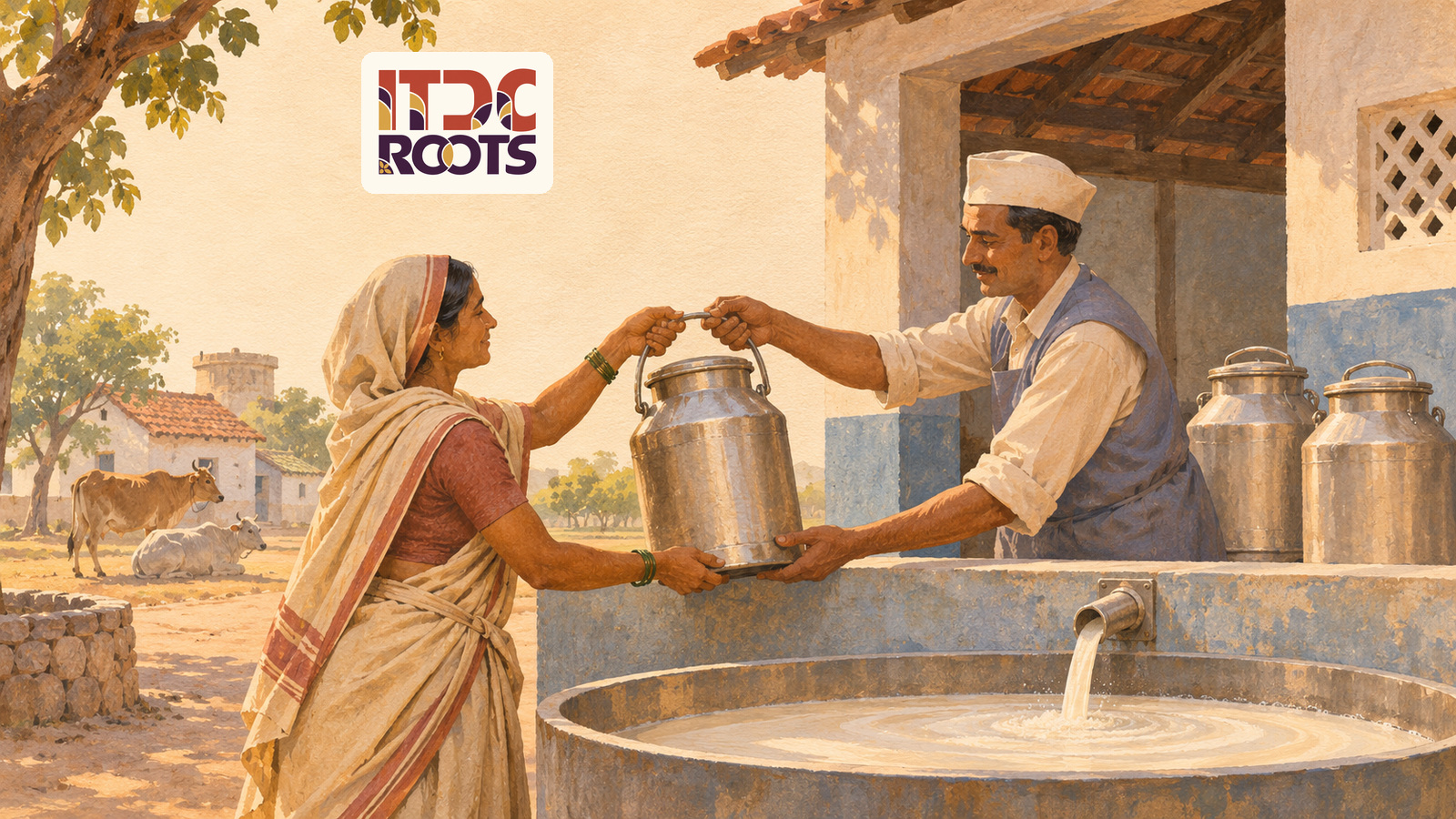
Milk is hard to sell on your own. It spoils quickly, and a farmer with a few litres cannot fill a truck. In 1946, milk producers in Gujarat’s Kaira district began organising around a cooperative at Anand. The answer was to pool what each household could supply and to give producers a say in how it was sold.
The arrangement became known as the Anand Pattern. At the village society, members brought in milk and were paid according to quantity and quality. A district union pooled the collections and handled processing. At state level, a federation marketed the milk and dairy products. Different jobs went to different levels, but the village producer was a member, not just a supplier to someone else’s company.
The National Dairy Development Board used that structure when Operation Flood began in 1970. Its first phase set out to connect 18 milk-producing areas with the markets of four large cities. India marked Verghese Kurien’s birth anniversary on National Milk Day this week. His legacy is often told through a brand. Its quieter achievement was a route to market that began at a village counter.
Hashtags: #ITDCRoots #Anand #DairyCooperatives #OperationFlood #LifestyleCultureReligion #Gujarat #How #Milk #Cooperatives #Linked



