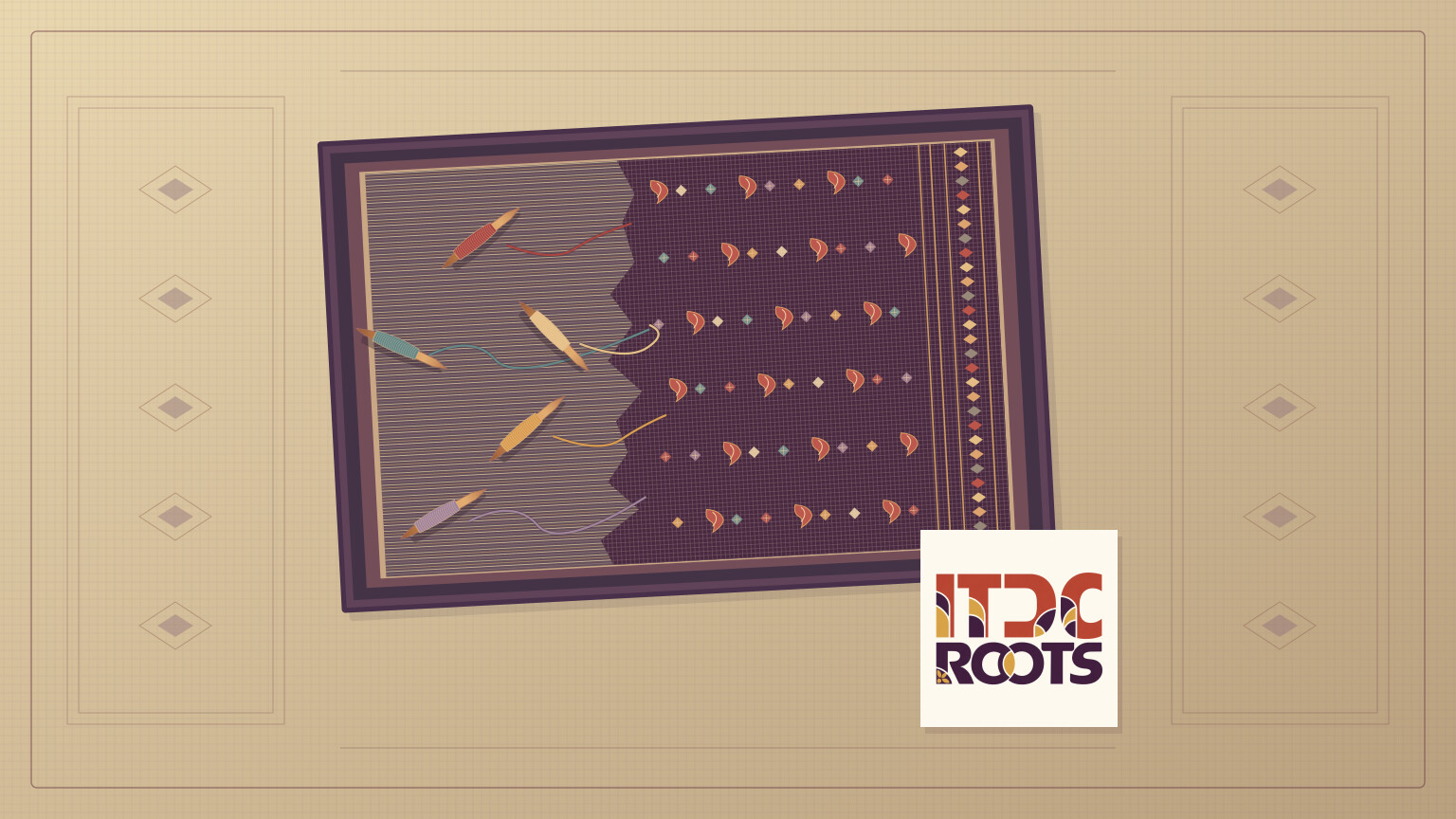
A flower on a Kashmiri Kani shawl starts as a line of instructions. The weaver doesn’t stitch it onto finished cloth. It appears as the cloth itself is woven.
The handloom showcase at Delhi’s India International Trade Fair this week offers a reason to look closer. On the official list of selected participants is Fayaz Ahmad Wani of Kanhama, Budgam, with Kani shawls.
The little wooden sticks for which the shawl is named do the work of a shuttle. Each carries a coloured thread. The written pattern, called a talim, tells the weaver which colour to use and how many lengthwise threads it should cross. Where two colours meet, the threads lock together. Row by row, those joins form the edge of a leaf or the curve of a petal.
The next time a motif catches your eye, look at where one colour gives way to the next. That boundary isn’t simply drawn on the cloth. It’s built into it.
Hashtags: #ITDCRoots #KaniShawl #KashmiriWeaving #Talim #LifestyleCultureReligion #Budgam #JammuAndKashmir #How #Kashmir #Kani