
Illustration
Two passbooks do not necessarily mean two layers of protection.
Suppose you have ₹2 lakh in savings and ₹4 lakh in a fixed deposit at the same insured bank. Both are in your name, held in the same capacity. Your deposits total ₹6 lakh, but their combined insurance cover is capped at ₹5 lakh, not ₹5 lakh for each account.
That is how India’s Deposit Insurance and Credit Guarantee Corporation, or DICGC, explains the limit. Money in different branches of that bank is added together too.
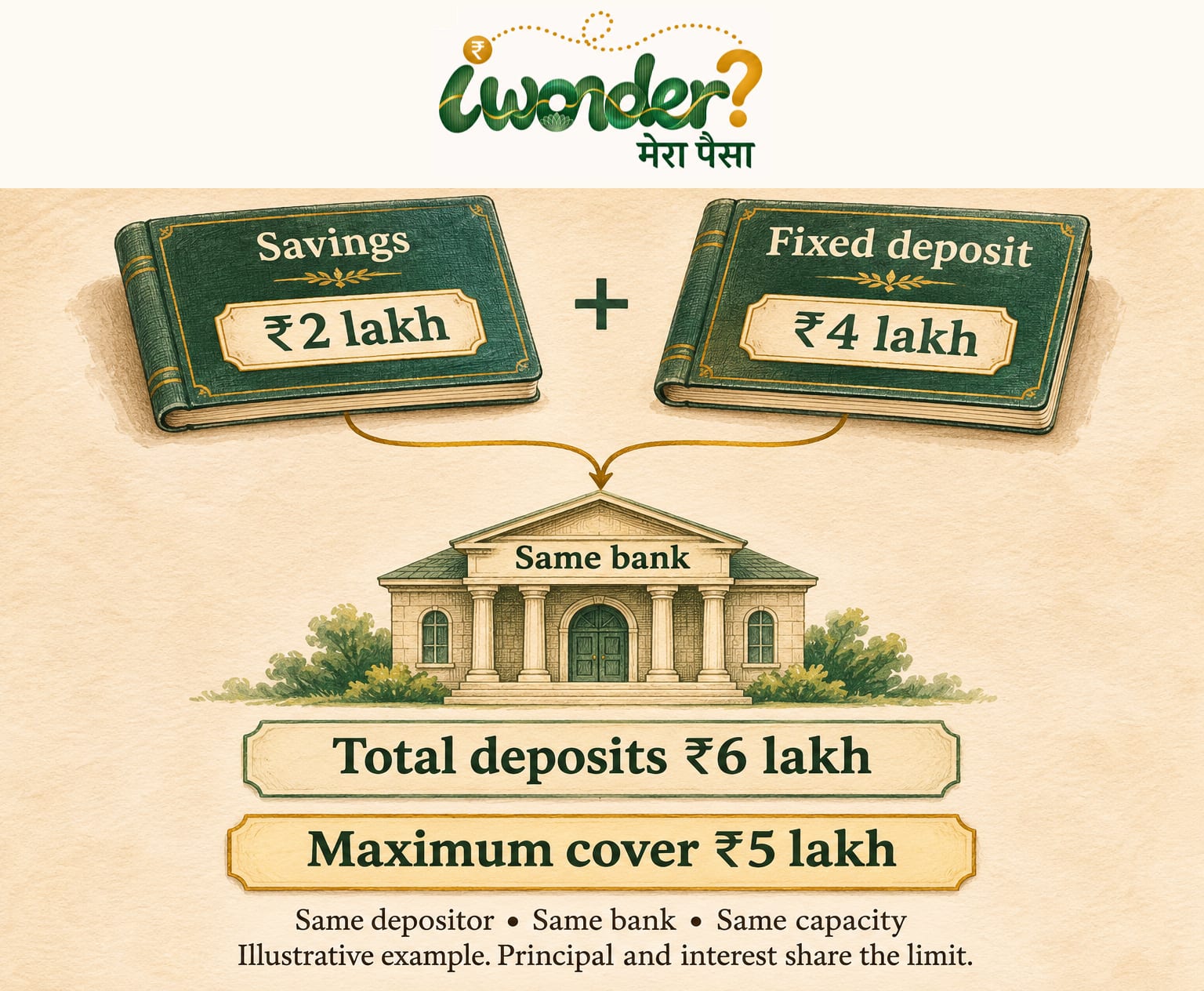
The ₹5 lakh ceiling includes interest as well as the amount deposited. Interest does not get a separate allowance above it. Deposits at separate insured banks are covered separately.
The distinction matters because an account is not the same thing as a bank. Opening another savings account or fixed deposit at your existing bank does not, by itself, multiply the protection.
Insurance also does not promise instant access during a bank’s failure or withdrawal restrictions. Claims follow the applicable process. Start by knowing which bank holds your money, not simply counting your passbooks.