


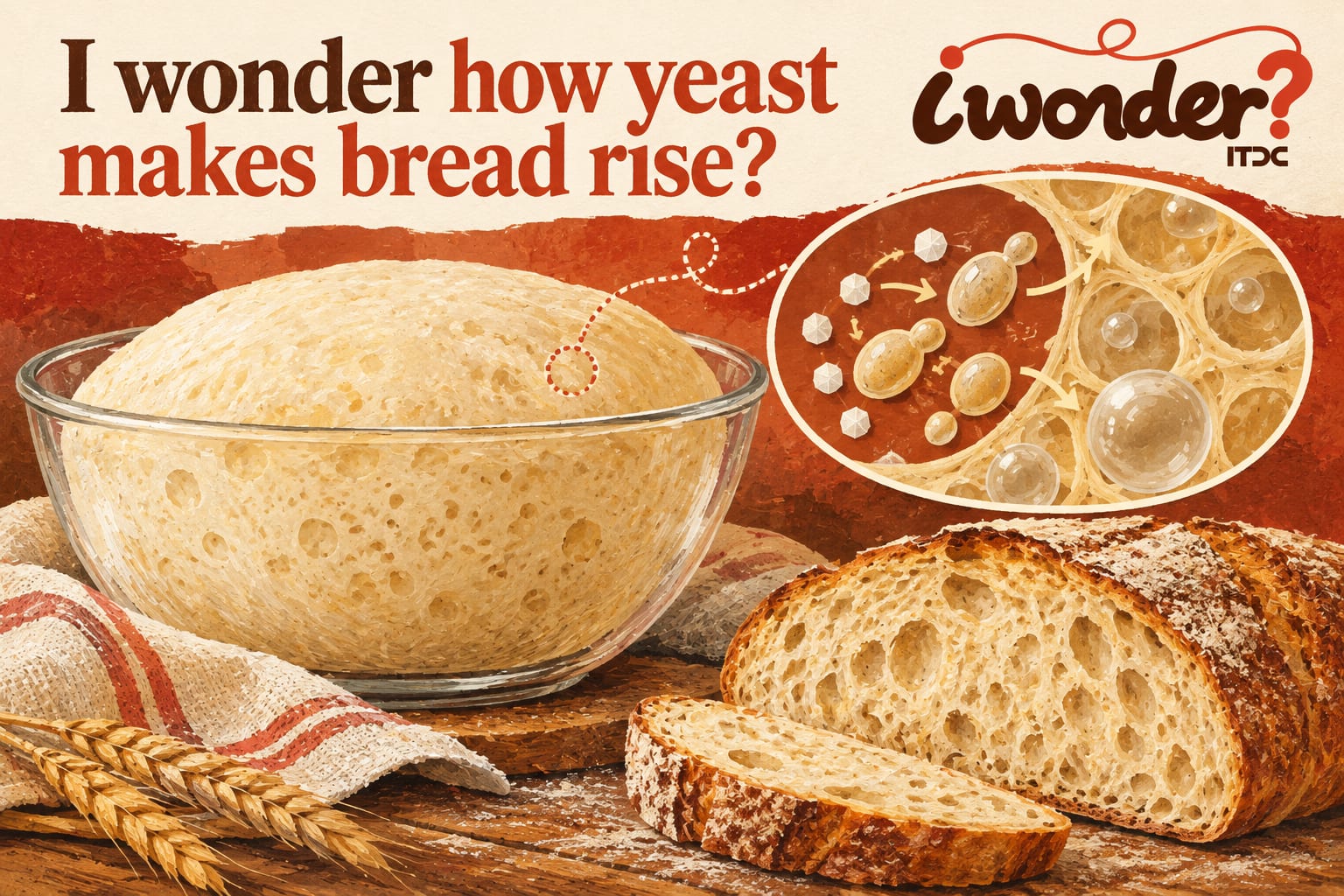
A lump of dough rests in a bowl. Nothing appears to enter it, yet later it may have grown into a soft dome. The extra volume comes largely from gas made by microscopic living organisms.
Baker's yeast is a fungus. Its cells use sugars, and during fermentation they release carbon dioxide along with alcohol. The gas enters bubbles within the dough and helps those bubbles grow.
Dough is flexible. When wheat flour is mixed with water and worked, proteins form a stretchy network called gluten. This network can hold gas while expanding, so the growing bubbles do not escape into the kitchen air.
The result resembles a collection of balloons, although the walls are dough rather than rubber. As those spaces enlarge, the whole mass rises. Yeast is supplying gas; the dough's structure is doing the work of retaining it.
The sugars available to yeast may come from added ingredients and from the breakdown of flour's starch by enzymes. It would be misleading to imagine yeast cells simply swallowing intact starch granules. Several processes help make suitable food available.
Temperature affects the pace because yeast is alive and its reactions depend on conditions. Rising also needs time and a dough capable of holding the gas. More yeast activity alone does not guarantee a well-shaped loaf if the structure cannot cope.
Baking brings further changes. Gas expands as it warms, moisture produces vapour, and the dough eventually sets into a firmer structure. The holes visible in a cut slice are the spaces left by bubbles held during this transformation.
Bread therefore begins acquiring its airy character before it reaches the oven. The quiet wait on the counter is already part of its making.
A loaf's softness starts with countless yeast cells turning a little sugar into a larger collection of spaces.
Hashtags: #IWonder #Yeast #Bread #Fermentation #ScienceTechnology #India #Wonder #How #Makes #Rise



