


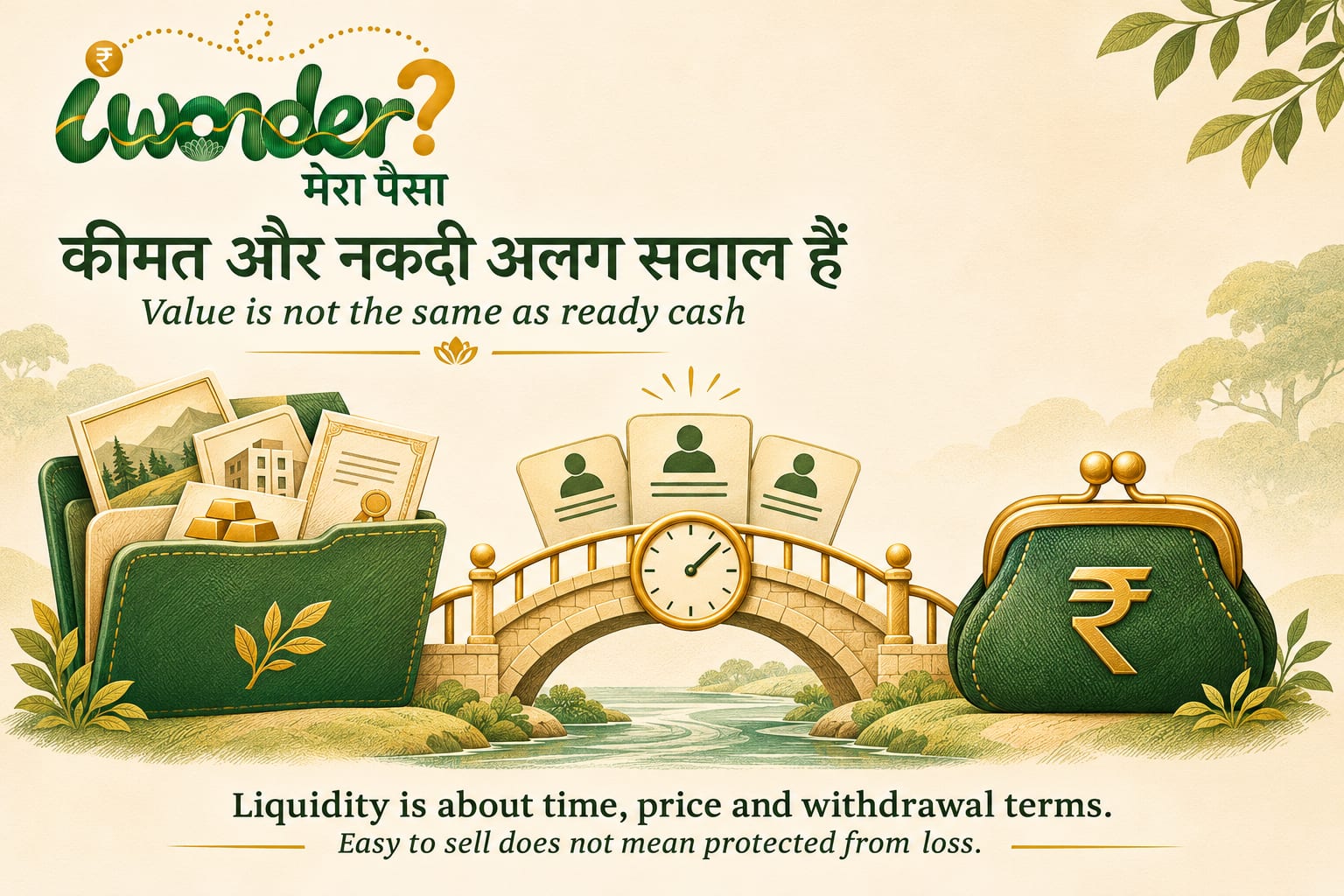
An investment can be valuable without being easy to turn into spending money.
Liquidity describes how readily that conversion can happen without a large sacrifice in price. SEBI lists it separately from safety and returns. Those are different questions.
Imagine owning an asset you value at ₹1 lakh. You need ₹20,000 tomorrow, but the only buyer available immediately offers much less than you expected. The estimated value alone does not tell you how easily you can raise cash. This is an illustration, not a valuation of any particular investment.
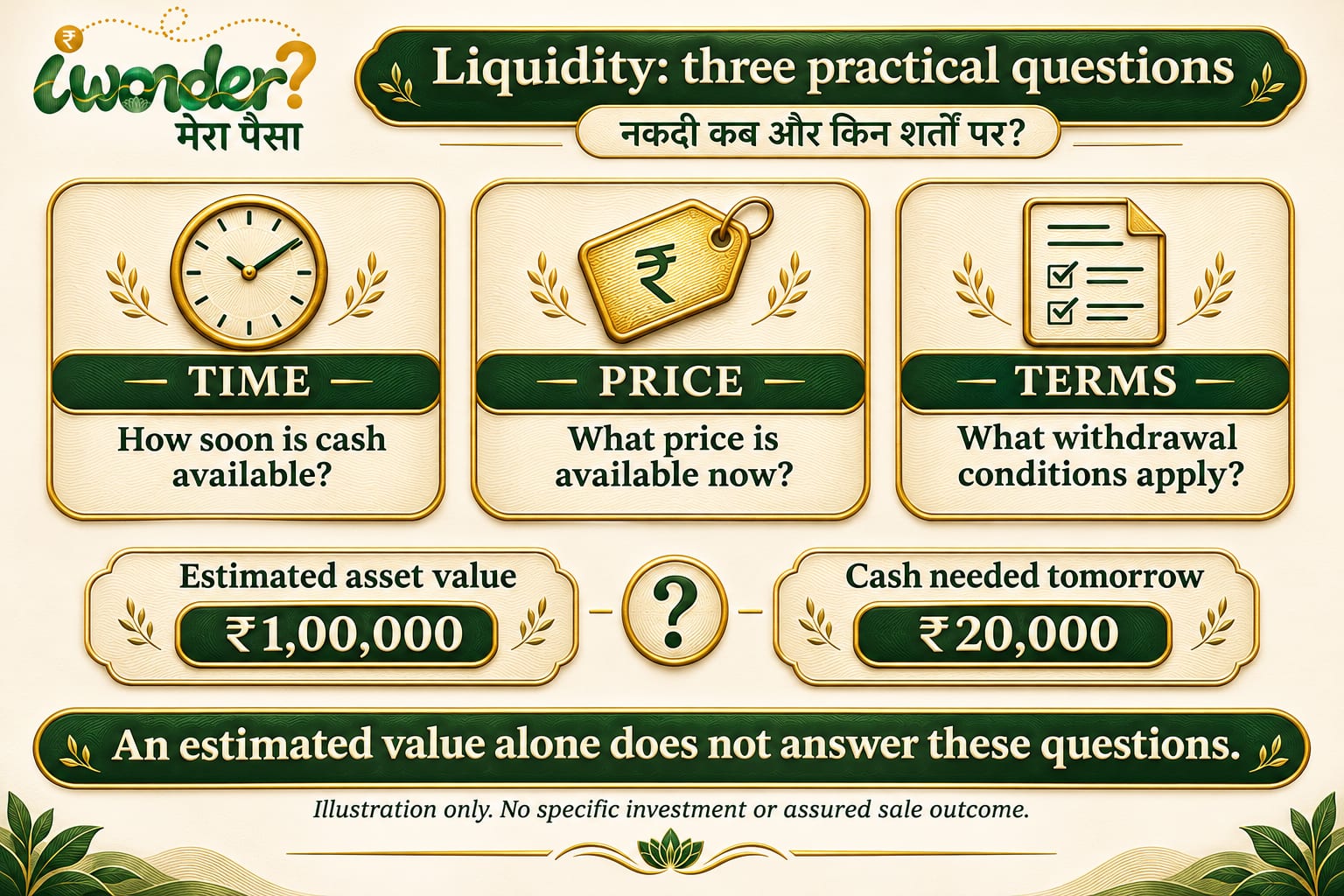
The difficulty may be finding a buyer, accepting the available price or meeting the product’s withdrawal conditions. Different investments have different terms; a single rule cannot describe every deposit, share or fund.
Liquidity also does not mean freedom from loss. Something can be easy to sell at a price below what you paid.
“How much is it worth?” and “When, and on what terms, can I use the money?” belong together.



