


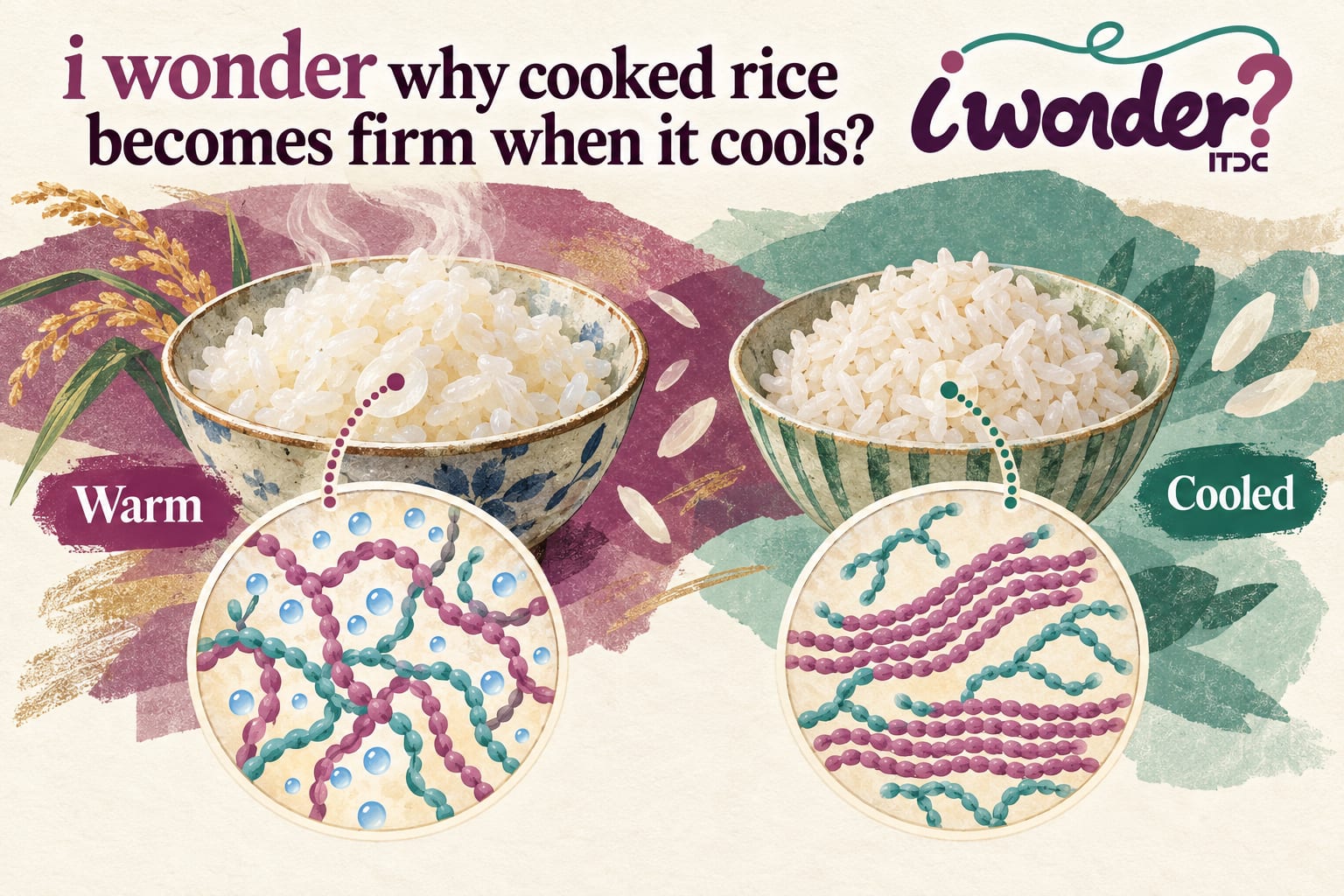
Freshly cooked rice yields easily to a spoon. Later, the grains can feel firmer and less soft, even when they have been kept from drying out. Losing water may contribute, but another change occurs inside the starch itself.
A rice grain contains starch built from long chains of sugar units. During cooking, heat and water disturb the organised structure of its starch granules. They take up water and swell in a process known as gelatinisation, helping the grain become tender.
Cooling begins another stage. Some starch chains start associating again, forming more ordered arrangements. Food scientists call this retrogradation. The word describes a reorganisation of molecules, not a return of cooked rice to its original raw state.
As these associations develop, the texture changes. The starch structure can become firmer, and water is distributed differently within it. A grain may consequently resist the spoon more than it did when it was freshly cooked.
The two main starch components do not behave on the same schedule. Amylose can reorganise quickly, while changes involving amylopectin contribute later. Rice varieties contain different starch structures and proportions, so their textures do not change identically.
Researchers following several rice varieties during chilled storage measured differences in hardness and stickiness. Their samples were kept sealed, showing why firming cannot be explained only as water evaporating.
Temperature, storage time and the rice itself influence the result. The phrase cold rice therefore covers a range of textures rather than one inevitable condition. A grain's history matters as much as its temperature at the moment you notice it.
This is an explanation of texture, not a guide to storing or judging the safety of leftovers. Those are separate questions.
Inside the bowl, molecules are finding new neighbours. The firmer grain records their changing arrangement after the heat has gone.



