


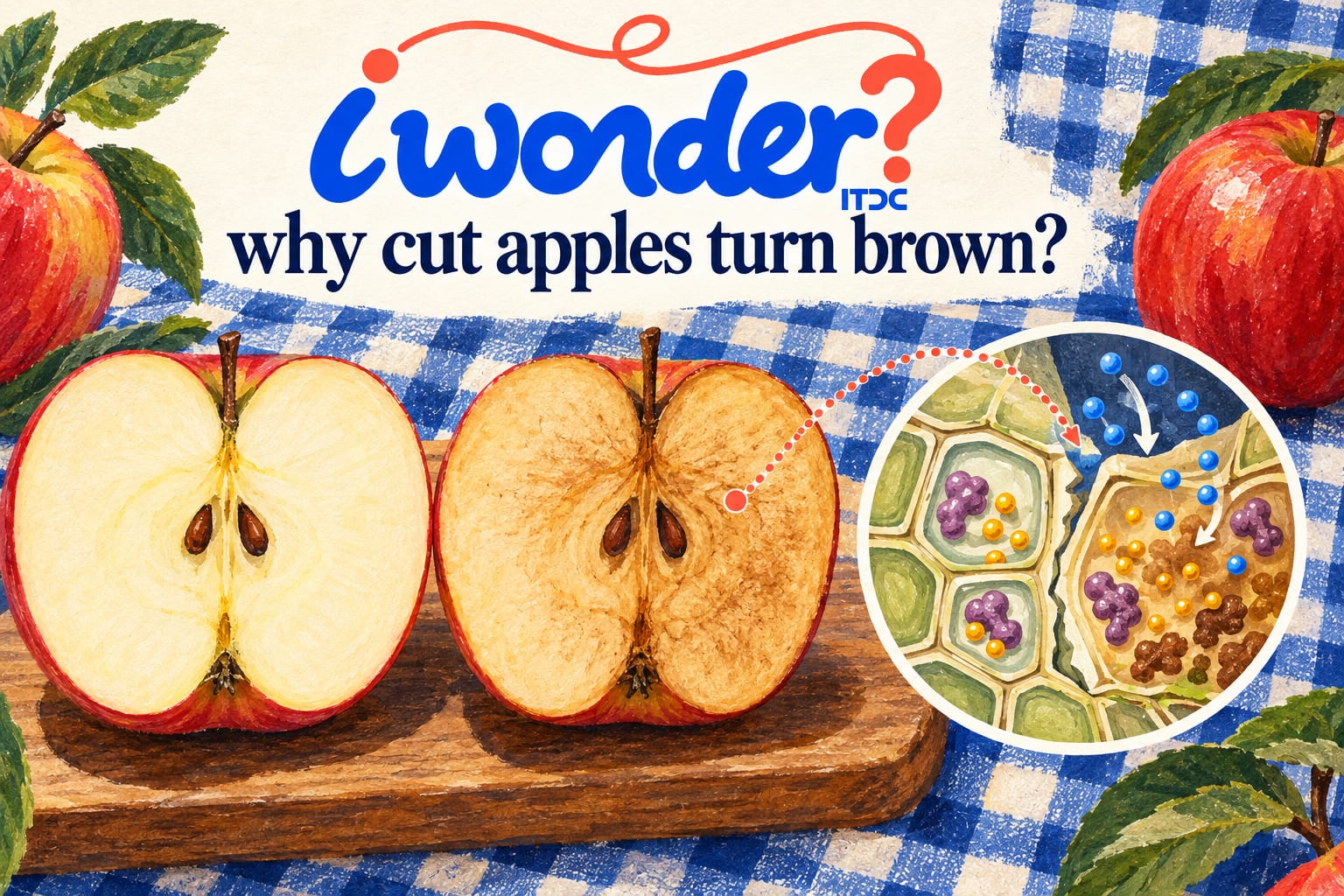
The first apple slice is pale. By the time the rest are arranged on a plate, its exposed surface may be changing colour. Nothing brown has been sprinkled over it. The apple is making new coloured substances where the knife passed.
Inside living fruit, materials occupy different compartments. Cutting breaks that organisation. An enzyme called polyphenol oxidase can now meet compounds known as phenolics, while oxygen from the air reaches the damaged tissue.
The enzyme helps reactions proceed between those compounds and oxygen. Early products called quinones then take part in further reactions that form brown pigments. What begins as damage to microscopic compartments becomes a change visible across the cut surface.
Enzymes are not little animals eating the apple. They are molecules that help chemical reactions happen. Nor is this the same process as iron rusting, even though both involve oxidation. The materials and reaction pathways are different.
Why does one apple brown rapidly while another stays pale longer? Varieties differ in their chemistry and enzyme activity. Researchers comparing fourteen apple cultivars found substantial differences in browning and in the compounds associated with it. The response is not identical in every fruit.
The amount of tissue damage matters as well. A clean slice and a badly bruised area do not expose exactly the same collection of cells. Oxygen access and surrounding conditions also influence how the process unfolds.
Browning alone is not a precise verdict about every other change in a piece of fruit. It describes this particular chemical response; it does not by itself establish a picture of freshness or spoilage.
The intact skin normally hides most of this chemistry from view. A knife opens the compartments and provides an entrance for air. The brown edge is the consequence of ingredients meeting that had previously been kept apart.



