


ITDC I Wonder Desk
The roti lies flat on the tawa, freckled with brown spots. Then a small bump rises, spreads and becomes a dome. For a few seconds, a piece of dough looks like a balloon. What is doing the inflating?
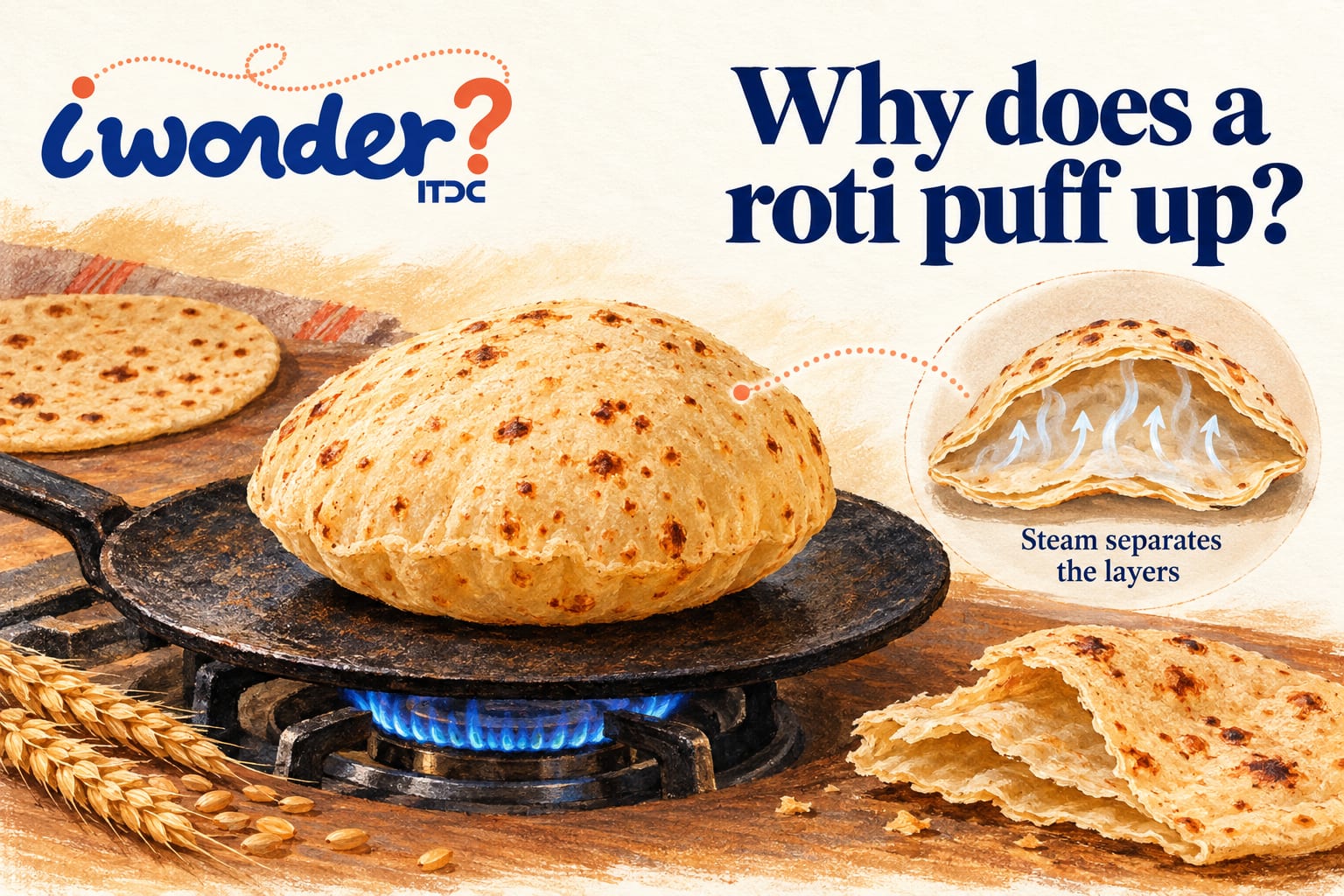
The answer was mixed into the atta before the rolling began: water. As the dough heats, some of that water turns into steam. The steam needs far more room than the liquid from which it formed. If it cannot escape quickly enough, it pushes the cooked surfaces apart.
Timing matters. Contact with the hot tawa helps the outside of the roti set into layers that resist the escape of vapour. Meanwhile, moisture remains inside. With enough heat reaching that moist interior, steam builds up between the layers and lifts them. The impressive puff is therefore a partnership between a flexible covering and an expanding filling.
This also explains why a roti with a tear may refuse to rise fully. The opening gives steam an escape route. Uneven thickness can create uneven heating, so one patch may balloon while another stays stubbornly flat. Flour properties, the water in the dough and the way heat reaches it all influence the result.
There is no need for yeast to produce this particular rise. In a loaf, fermentation can supply gas before baking; in a plain roti, steam provides the dramatic lift during cooking. The two breads reach their airy structures by different routes.
Once the roti leaves the heat, the show is brief. Steam escapes or condenses as it cools, the pressure difference shrinks, and the dome settles. What remains is a bread with two separated layers, ready to fold around a mouthful of sabzi.
The next perfect puff is worth watching. A little water, briefly imprisoned in dough, has made its presence wonderfully visible.



