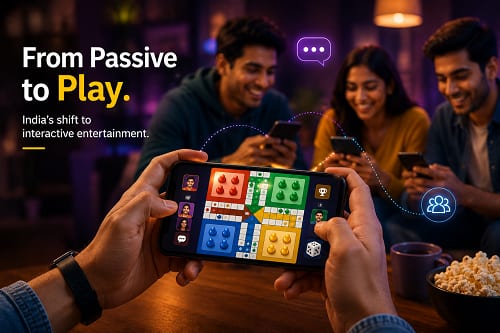
CNN Central News & Network-ITDC India Epress/ITDC News Bhopal: India's digital entertainment ecosystem is entering a new phase. While streaming platforms, short-form videos, and social media continue to dominate screen time, consumers are increasingly looking for experiences that go beyond passive viewing. Today, entertainment is becoming more interactive, allowing users to participate, compete, and connect with others in real time.
This shift is transforming the country's gaming landscape. According to Niko Partners, India's gamer base is expected to surpass 700 million gamers by 2028, making it one of the world's fastest-growing gaming markets. At the same time, affordable smartphones, low-cost mobile data, and expanding 5G connectivity have made online multiplayer gaming more accessible than ever before. Together, these factors are reshaping how Indians engage with digital entertainment.
Interactive Entertainment is Becoming the New Normal
Over the past decade, India's digital entertainment journey has evolved rapidly. Consumers first embraced video-on-demand platforms, followed by creator-led content on social media. Today, another evolution is underway as users increasingly prefer experiences that encourage participation instead of passive consumption.
Interactive entertainment gives users an active role. Rather than simply watching content, people can compete with others, collaborate in real time, and become part of a larger digital community. This growing preference reflects a broader behavioural shift, particularly among younger audiences who increasingly value engagement over observation.
As a result, multiplayer gaming has emerged as one of the fastest-growing forms of entertainment, offering users an experience that combines competition, communication, and connection.
Social Games are Redefining Digital Engagement
The growing popularity of social games reflects changing consumer expectations. Modern users seek entertainment that fits seamlessly into their daily routines while providing meaningful interaction.
Unlike traditional single-player experiences, multiplayer free-to-play games create dynamic environments where every session is unique because real players influence every outcome. Features such as live matchmaking, leaderboards, in-game communication, and community-driven experiences have transformed gaming into a highly social activity.
The appeal extends beyond competition. Whether reconnecting with friends after work, playing with family members across different cities, or participating in quick multiplayer sessions during a commute, users increasingly view gaming as a way to stay socially connected while being entertained.
This evolution has also changed how developers approach game design. Instead of focusing solely on graphics or complex gameplay mechanics, many platforms now prioritise accessibility, shorter play sessions, and seamless multiplayer experiences.
Ludo Continues to Find New Life in the Digital Era
Few games illustrate this transformation better than Ludo. For generations, the classic board game has been a staple of Indian households, bringing families and friends together during holidays and social gatherings. Today, digital platforms have successfully adapted that familiar experience for smartphones.
The game's simple mechanics, combined with real-time multiplayer functionality, have helped introduce millions of users to online gaming. Because players already understand the rules, they can immediately participate without navigating a steep learning curve.
Digital innovation has also expanded the way people experience Ludo. Faster formats, strategy-oriented gameplay, and real-time competition have enabled the game to remain relevant for today's mobile-first generation while preserving the nostalgia that has made it a household favourite for decades.
Hashtags: #BusinessEconomy #Bhopal #Desksource #India #Social #Gaming #DeskSource #Boom #Drives #Interactive