CNN Central News & Network-ITDC India Epress/ITDC News Bhopal: India’s journey in supercomputing reflects decades of technological development and growing ambitions in high-performance computing. The journey began with PARAM 8000, developed by the Centre for Development of Advanced Computing (C-DAC) in the early 1990s. Built when access to advanced computing systems was restricted, PARAM 8000 demonstrated India’s ability to design and develop indigenous supercomputing technology.
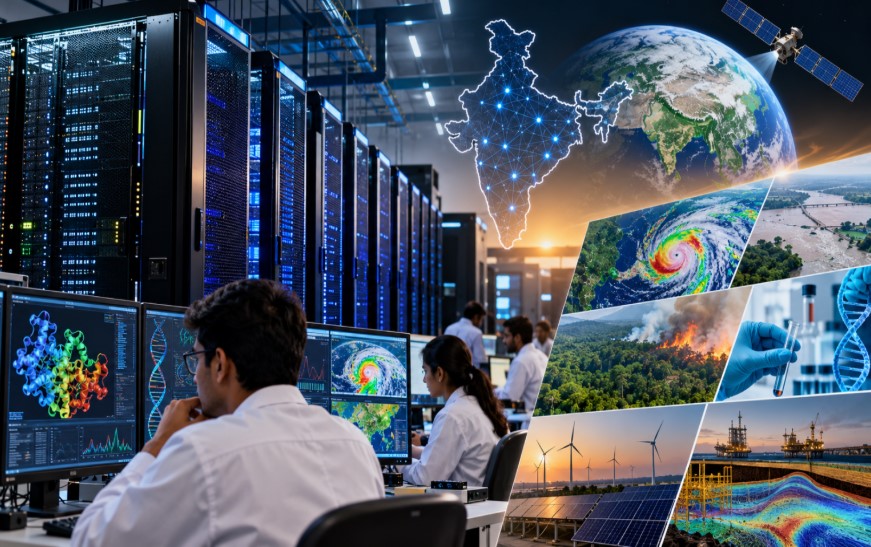
The PARAM series subsequently expanded with increasingly powerful systems, supporting scientific research, weather forecasting, space exploration, defence, healthcare and other computationally intensive applications. These systems helped establish a domestic ecosystem for high-performance computing and strengthened India’s capabilities in advanced computing.
The latest generation includes PARAM Rudra, developed under the National Supercomputing Mission. These systems are designed to provide powerful computing resources to researchers and academic institutions across the country. PARAM Rudra is aimed at applications including artificial intelligence, scientific simulations, climate modelling, computational biology and engineering research.
The evolution from PARAM 8000 to PARAM Rudra highlights India’s transition from building its first indigenous supercomputer to developing larger and more sophisticated computing infrastructure. The National Supercomputing Mission has further expanded this ecosystem by connecting supercomputing facilities with research institutions.
India’s supercomputing programme now forms an important part of its broader efforts to strengthen technological self-reliance, scientific innovation and advanced digital infrastructure.
Hashtags: #ScienceTechnology #Bhopal #India #Supercomputing #Journey #Param #Rudra #Reflects #Decades #IndiaSSupercomputingJourney