


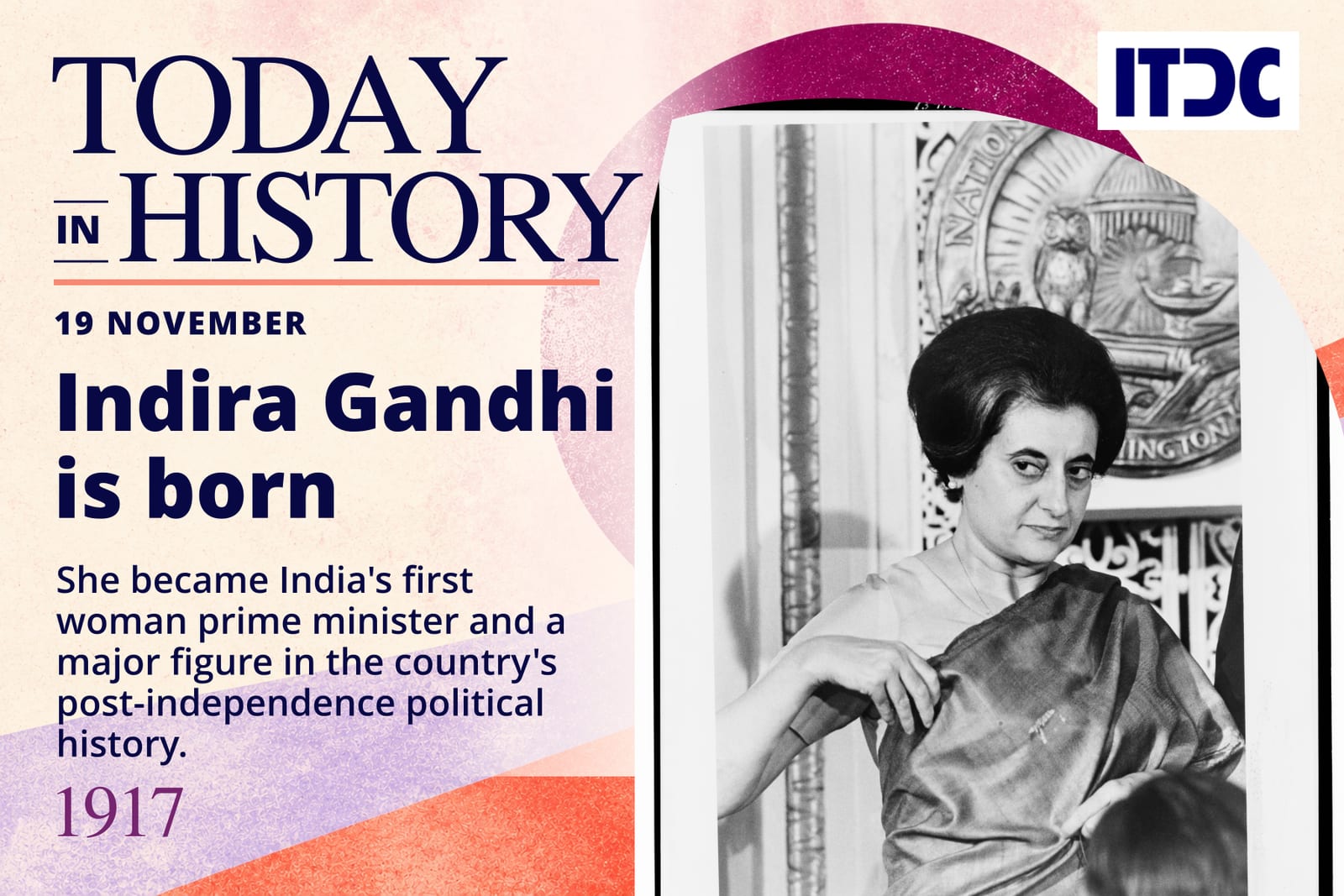
Warren K. Leffler / Library of Congress
Indira Gandhi was born on 19 November 1917 in Allahabad, now Prayagraj, into a household closely involved in India’s struggle against British rule. Her father, Jawaharlal Nehru, would become independent India’s first prime minister. Politics therefore entered her life long before she held public office herself.
Her education took her through institutions in India and Europe, including Visva-Bharati at Santiniketan and Somerville College, Oxford. During the freedom movement she participated in political activity and was imprisoned in 1942. That year she married Feroze Gandhi. These experiences placed her within the Congress movement, but the authority she later acquired would rest on a political career of her own.
Gandhi became Congress president in 1959 and served as information and broadcasting minister from 1964 to 1966. Following Lal Bahadur Shastri’s death, she became prime minister in January 1966, the first woman to hold the office. She led the government until March 1977 and returned to power in January 1980.
Her premiership included decisions that changed India’s economy and regional position. Major banks were nationalised in 1969. In 1971, India’s war with Pakistan accompanied the emergence of Bangladesh as an independent country. These events helped establish her reputation as a forceful national leader, while her increasingly centralised style also sharpened arguments about power within the Congress and the state.
The gravest controversy was the Emergency of 1975–77. Opposition politicians were imprisoned, press freedom was restricted and civil liberties were curtailed. The period remains essential to any assessment of her leadership: electoral popularity and national achievement cannot erase the damage inflicted on democratic institutions and individual rights.
The 1977 election removed her government from office. Her subsequent return demonstrated both the strength of her political appeal and the electorate’s capacity to change governments. Her final term ended with her assassination on 31 October 1984.
Remembering her birth means looking beyond a simple portrait of either triumph or failure. Gandhi’s career brings together the freedom movement, the opportunities and strains of nation-building, the rise of a woman to the country’s highest executive office, and a profound warning about concentrated power. Her place in Indian history rests on that complicated record, which continues to shape how leadership and democratic accountability are discussed.



