


ITDC illustration / चित्रांकन
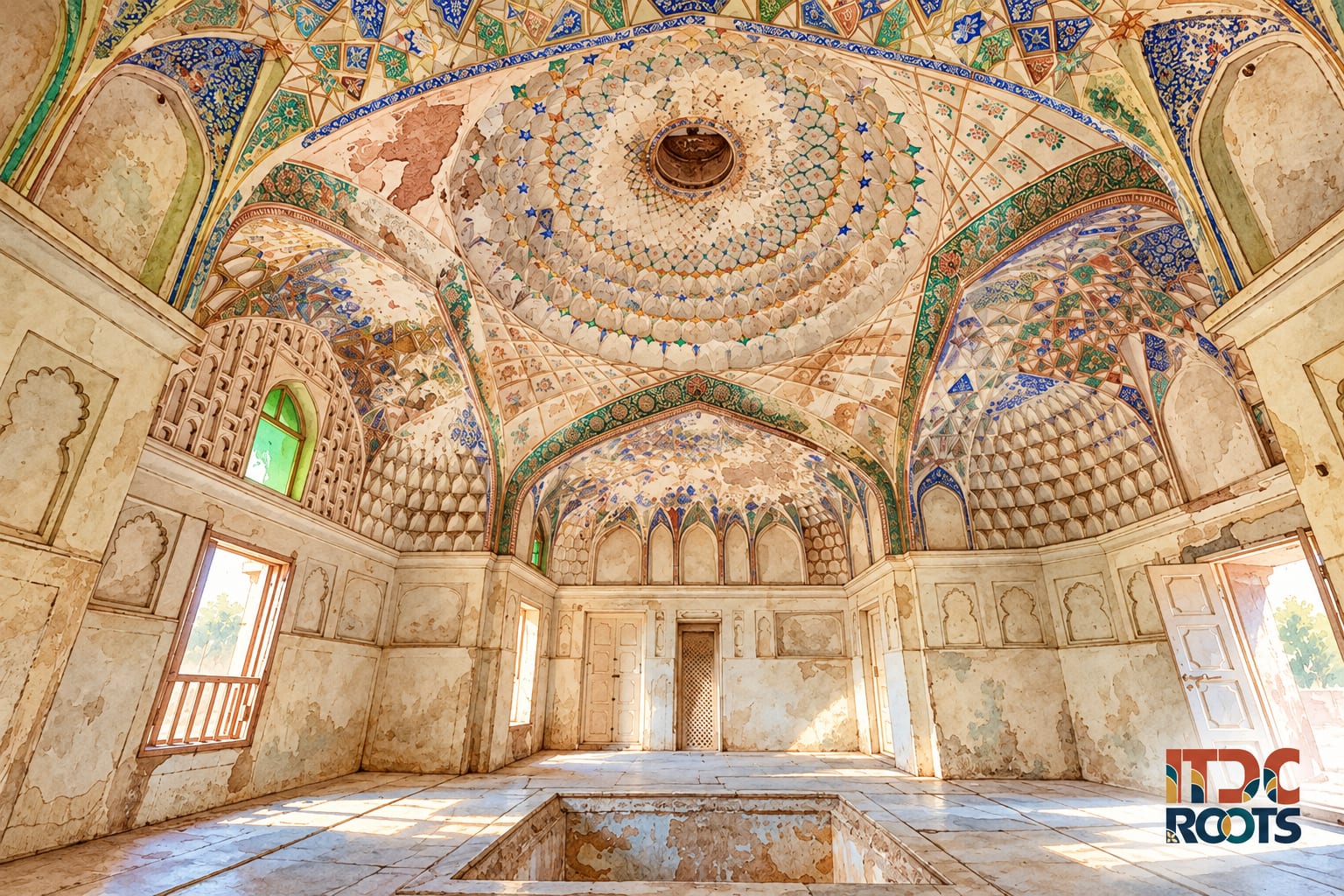
The Shahi Hammam at Burhanpur preserves a part of a royal palace. Its faceted vaults and decorated plaster surfaces belong to rooms designed for bathing, where the treatment of water mattered as much as the appearance of the ceiling.
The bath stands within Shahi Qila, the riverside fort associated with the Faruqi rulers and later expanded under the Mughals. The National Monuments Authority identifies the hammam among the surviving Mughal additions, alongside the remains of public and private audience halls. Within this setting, bathing formed part of the arrangements supporting life at court.
Burhanpur’s district heritage account describes separate supplies of hot and cold water. Water heated in large vessels was directed through channels, while another channel carried the cold supply. Cisterns and a fountain organized its use within the bath. These details suggest a space dependent on preparation and maintenance outside the room where a royal bather received it.
The architecture made that practical service elaborate. The entrance chamber retains Persian-style plaster ornament and faceted vaulting, features noted in the official monument documentation. Painted decoration survives within the palace interiors. Looking upwards reveals work whose scale differs markedly from the fort’s high walls and bastions.
Mumtaz Mahal’s association with Burhanpur often draws the conversation towards the Taj Mahal. Local stories even interpret a painted building as an early design for that monument. Such claims require more evidence than resemblance. The hammam’s own surviving fabric offers a substantial subject without borrowing significance from Agra.
Here, a royal household’s comfort depended on an architectural system: spaces for bathing, routes for water and surfaces finished for close viewing. The channels and the ceiling belong to the history. Their survival allows a palace otherwise understood through authority and defence to be considered through one of its carefully arranged domestic activities, the royal bath.



