


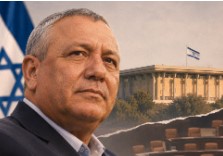
Political activity has intensified in Israel over Prime Minister Benjamin Netanyahu’s departure from power and the formation of a new government. Opposition leader Gadi Eisenkot has gained an edge in the race for the prime minister’s post after receiving support from six political parties. President Isaac Herzog has announced that he will decide on Sunday about formally inviting a leader to form the new government.
After the general election held in Israel on October 27, no alliance secured a clear majority. In the 120-member Knesset, at least 61 MPs are needed to form a government. During consultations with the president, 67 MPs supported Eisenkot, while 46 MPs recommended Netanyahu. However, despite the higher number of supporters, securing a majority will not be easy for Eisenkot.
The biggest challenge in Eisenkot’s path concerns support from Arab parties. Arab-majority parties have backed him, but Eisenkot and some of his coalition partners have raised objections to forming a government with these parties. Meanwhile, United Torah Judaism has not supported any candidate, increasing political uncertainty even in Netanyahu’s old ally camp.
No single party in Israel has so far secured a majority on its own to form a government. Coalition governments are formed under the proportional representation system. After receiving the formal mandate from the president, a candidate gets 28 days to form a government, which can be extended by 14 days.
Hashtags: #WorldInternational #Bhopal #Israel #GovernmentFormation #GadiEisenkot #BenjaminNetanyahu #Government #Formation #IsaacHerzog #Knesset



