


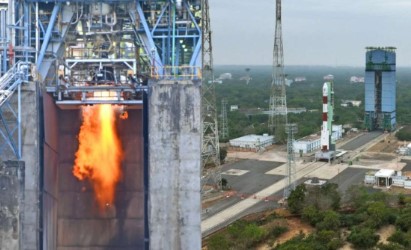
CNN Central News & Network-ITDC India Epress/ITDC News Bhopal: Bengaluru. The Indian Space Research Organisation (ISRO) has made significant progress in the development of indigenous rocket engine technology. ISRO has successfully conducted the ignition test of the full-scale gas generator of its LME-110 methane rocket engine. The achievement is being considered important for India’s future heavy-lift launch capability and plans linked to crewed lunar missions.
Emphasis on methane engine technology: In a rocket engine, the gas generator is a crucial component. It produces the hot gas required to run systems such as turbopumps, thereby supporting engine operation. The successful ignition of the full-scale gas generator is an important step in the development and testing process of this technology.
Space agencies and private companies around the world are working on methane-based propulsion systems. This technology uses liquid methane as fuel. Owing to its features, it is seen as having potential for future space missions and reusable launch systems.
Preparation for heavy-lift launches and lunar missions: ISRO’s progress could contribute to the development of India’s next-generation launch systems. Heavy-lift launch capability is useful for sending large spacecraft, scientific instruments and other important payloads into space in the future. To move ahead towards crewed lunar missions, detailed testing of engine reliability, safety and performance under various conditions will be necessary. The successful ignition of the gas generator is part of this wider development process.
Hashtags: #ScienceTechnology #Bhopal #ISRO #MethaneRocketEngine #LME110 #SpaceTechnology #GasGenerator #HeavyLiftLaunch #CrewedLunarMission #Bengaluru



