


Bhopal:
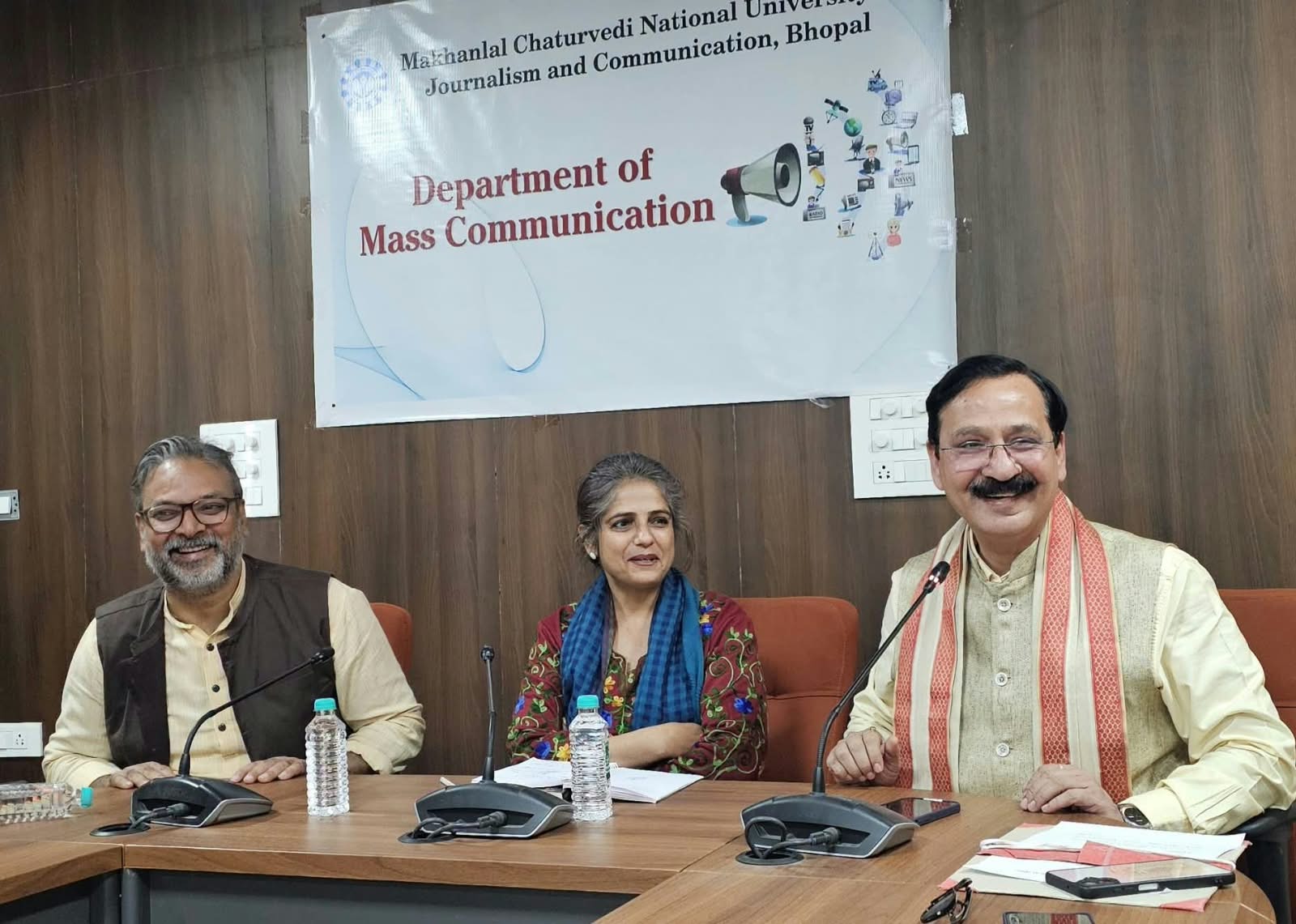
Crime journalism is not limited to reporting criminal incidents, arrests and police action. It also demands sensitivity, impartiality and social responsibility from journalists. A reporter must not declare any person guilty on the basis of media coverage. A journalist is neither a judge, a police officer nor an investigating officer. News must be presented on the basis of facts rather than prejudice or a predetermined narrative. These views were expressed by Prof. Vartika Nanda, a prison reform advocate and professor at Lady Shri Ram College, Delhi, during an interactive session on ‘Crime Journalism in Changing Times’ organised by the Department of Mass Communication at Makhanlal Chaturvedi National University of Journalism and Communication, Bhopal. Discussing the changing nature of crime reporting, Prof. Nanda referred to the widely discussed 1990s Tandoor murder case. She explained that the case emerged during the early years of private television broadcasting and gave crime journalism a new dimension. Public curiosity about when the accused would be arrested helped media organisations recognise the growing audience interest in crime-related news. Subsequently, crime stories began receiving greater prominence in television news, and the scope of crime journalism gradually expanded. She pointed out that one major challenge is the media's tendency to focus on a crime only as long as audience interest remains high. Once that interest fades, the accused, victims and other people connected with the incident often disappear from news coverage. She said journalism needs to reflect on this tendency. Prof. Nanda also discussed the dangers of media trials and prejudiced reporting. Recalling her experiences in prison related to the Aarushi-Hemraj murder case and her interview with Nupur Talwar, she explained that public and media perceptions of an individual may differ considerably from the actual circumstances. The perspective of a person inside prison can be very different from the way society views them from outside. Therefore, reporting must not portray anyone as guilty before the judicial process is complete. Drawing on her work and books, including Tinka Tinka Tihar, published in 2013, Jail Mein Radio, published in 2025, and J Se Jail, published in 2026, she encouraged students to make meaningful efforts to improve society. She stressed that journalists should never publish inaccurate reports that could leave them unable to face the people or circumstances affected by their reporting. The responsibility of journalism is to present facts, not to declare someone guilty or innocent. She also emphasised the need to understand the distinct roles of the police, media and judicial system in criminal cases. Explaining that crime is not merely an isolated incident, she said there are often circumstances and warning signs behind it. Changes in a person's behaviour and activities may sometimes indicate risks that society and relevant institutions need to address. She also interacted with students on subjects including crime, police investigation, prosecution, the Bharatiya Nyaya Sanhita and citizen journalism. She urged aspiring journalists not to treat the profession merely as a means of earning money or gaining popularity, but to recognise its wider social responsibility.
Discussion On Prison Reform, Rehabilitation And Media Responsibility
During the interaction, Prof. Nanda also spoke about prison reform initiatives, the psychology of inmates and the perceptions surrounding prisons. She observed that several positive activities take place inside prisons that remain largely unknown to the outside world. However, she said, every good initiative does not necessarily need publicity. The purpose of reforms should be to bring genuine improvement in prisoners' lives rather than to derive commercial benefits. She added that contributing to positive work in prisons without expecting personal gain, financial benefits or certificates is itself a meaningful form of service. Discussing rehabilitation and skill development, she explained that imprisonment affects every individual differently. Some people may emerge more positive and skilled, while others may develop deeper negativity or stronger criminal tendencies. It would be incorrect to assume that every person leaves prison transformed into a saint. The outcome depends largely on how an individual uses the period of incarceration. She noted that prison life can make people realise the value of things they often take for granted, including family, friends, education, freedom and everyday facilities. Referring to Arvind's life as an example, she explained how incarceration can also initiate a process of introspection and personal change.
Wrong Reporting Can Have Long-Lasting Consequences
Prof. Nanda said the impact of inaccurate reporting may not always be immediately visible, but its consequences can emerge over time. While some journalists reflect on their mistakes, others fail to do so. She observed that media trials have created deep resentment towards journalism and journalists among some prison inmates. The fundamental responsibility of journalism is to present facts, but reporting influenced by prejudice moves away from this responsibility. Expressing concern over the growing influence of commercialisation, she pointed out that sponsored news stories and even sponsored headlines are becoming increasingly common. Such practices can raise questions about the independence and credibility of journalism.
Prison Facilities And Rehabilitation Initiatives In Madhya Pradesh
Referring to facilities and reformative activities in prisons, Prof. Nanda appreciated certain initiatives undertaken in Madhya Pradesh. She mentioned skill-based activities such as sari manufacturing in prisons, explaining that such efforts provide inmates with opportunities to learn skills and prepare for rehabilitation. She also spoke positively about the infrastructure and arrangements in the state's prisons. Sharing her personal experiences, she said that working inside prisons also has an emotional impact on the people involved. The circumstances, stories and life experiences of inmates can deeply affect those who work with them. She emphasised that prisons have their own human world and that people working there face their own challenges. Prison reform, therefore, must be viewed not merely as an administrative responsibility but also as a matter involving human sensitivity and self-reflection.
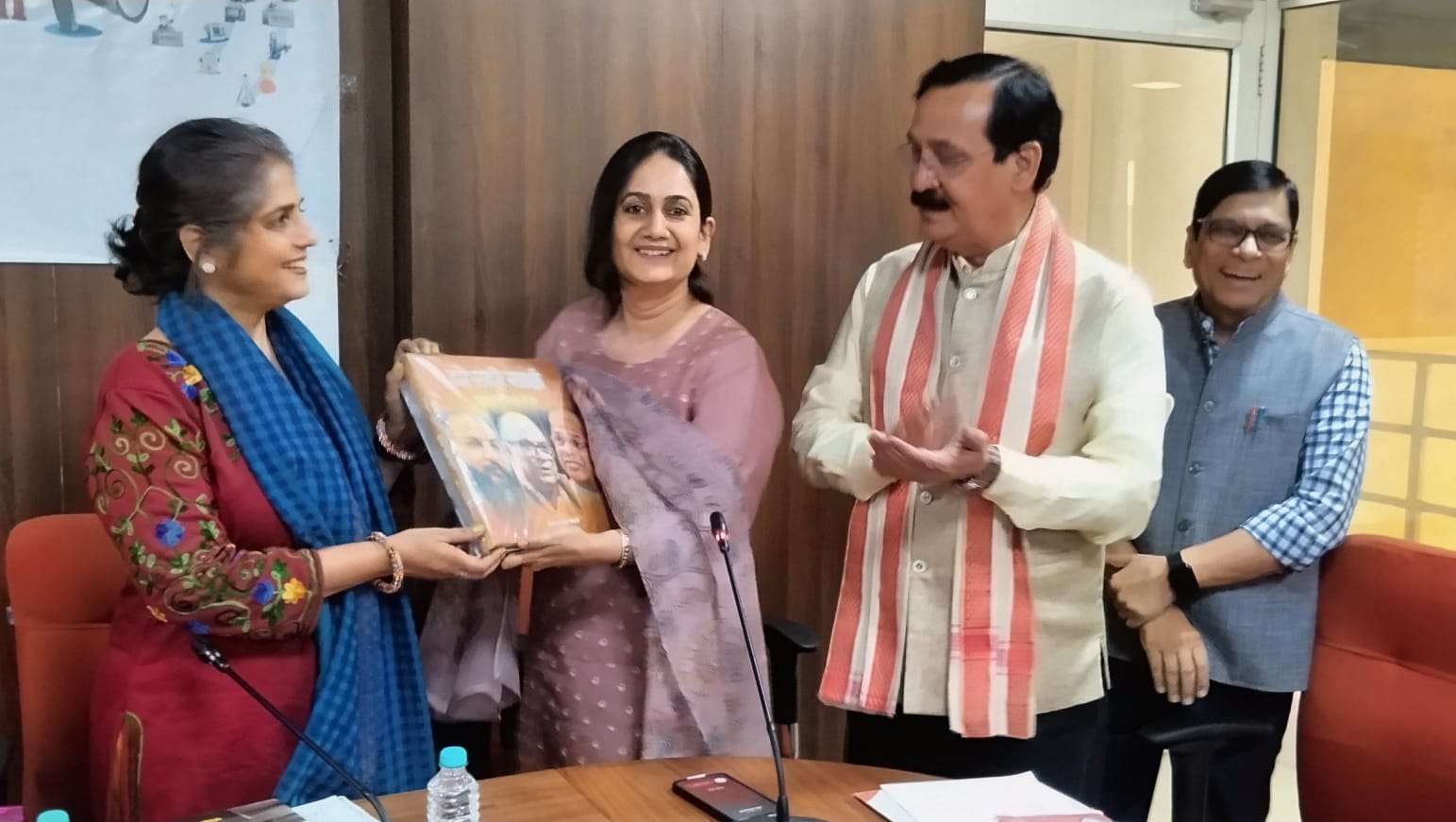
At the beginning of the programme, Prof. (Dr.) Sanjay Dwivedi, Head of the Department of Mass Communication, welcomed Prof. Vartika Nanda. Department Coordinator Dr. Pradeep Deharia, Dr. Lal Bahadur Ojha, Dr. Urvashi Parmar, Adjunct Professor Girish Upadhyay, Dr. Garima Patel, Saket Dubey, Dr. Uditya Singh Sengar, Dr. Babita Ghosh, Abhitosh Dubey, research scholars and students were present.
Hashtags: #MadhyaPradeshState #Bhopal #Journalists #Must #Not #Declare #Anyone #Guilty #Vartika #JournalistsMustNotDeclare



