CNN Central News & Network–ITDC India Epress/ITDC News Bhopal: Ramsingh Kushwah, a farmer from Barkheda Bondar village in the Phanda area of Bhopal district, once depended on traditional crops such as paddy, wheat, and soybean, earning only a limited income. Today, he is earning lakhs of rupees every month through modern cultivation of flowers and fruits. His journey is not only a story of economic progress but also an inspiring example of farmer empowerment and agricultural innovation.
Kushwah says, “I sincerely thank Prime Minister Narendra Modi and Chief Minister Mohan Yadav. The government’s Integrated Horticulture Development Mission scheme has made us self-reliant and given us a new identity in society.”
Kushwah’s family had been practicing traditional farming for many years. However, rising costs and low profits often created financial difficulties. During this time, he came to know about the Integrated Horticulture Development Scheme run by the Horticulture Department. Under the National Development Project, he benefited from the scheme and started flower cultivation (roses and gerbera) by setting up a 1,000-square-foot polyhouse.
Later, under the State Plan and the Integrated Horticulture Development Mission of the Horticulture Department, he installed a polyhouse on one acre of land in the year 2023–24 with government subsidy. He planted around 30,000 plants of roses, gerbera, and marigold. From this, Kushwah sells around 4,000 cut flowers daily, earning approximately ₹4,000 to ₹6,000 per day.
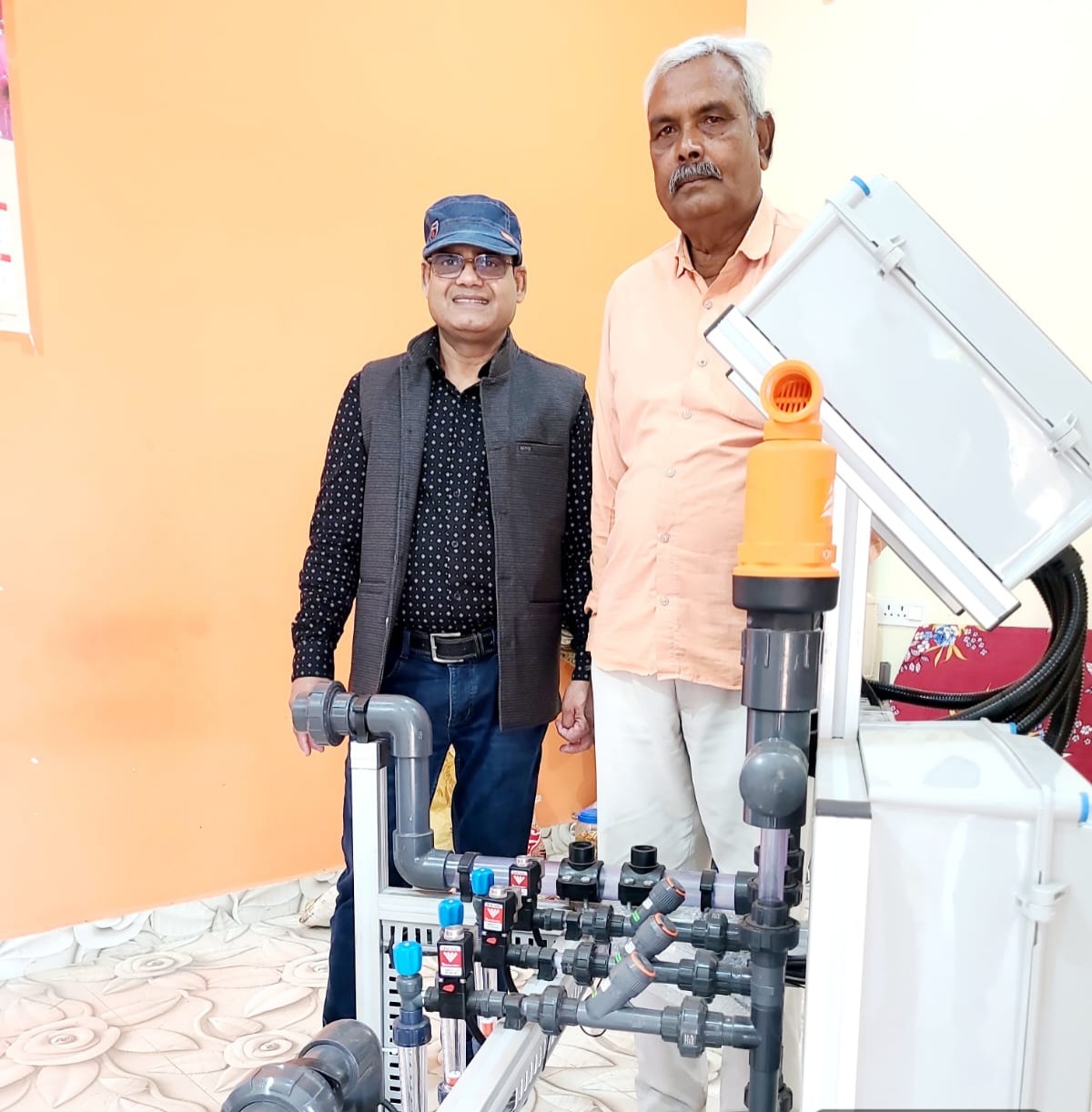
To increase flower production and reduce costs, this year he installed a sensor-based automation system in his polyhouse under the Integrated Horticulture Development Mission. The system cost ₹4 lakh, out of which ₹2 lakh was provided as government subsidy. With this automation system, a balanced quantity of water, fertilizers, and pesticides is supplied 24×7 across the one-acre farm without manual intervention. This has helped save both time and input costs. Currently, Kushwah has become the first farmer in Bhopal to shift from traditional farming to automated horticulture.
His roses and gerbera flowers are now supplied to markets in cities such as Lucknow, Delhi, and Jaipur. In the past few years, Kushwah planted 30,000 hybrid gerbera plants on one acre of land and adopted drip and sprinkler irrigation systems, for which he received a 50 percent subsidy.
As a result of modern technology and scientific farming methods, he now produces and sells around 1,500 to 2,000 flowers daily within just a year. He also harvests about 4,000 flower spikes per day, earning approximately ₹4,000 to ₹5,000 daily.
The cultivation of flowers and fruits has significantly strengthened Kushwah’s financial condition. His story is an inspiration for farmers across the state, demonstrating that with proper guidance, modern technology, and support from government schemes, agriculture can be transformed into a profitable enterprise.
#TraditionalFarming #ProgressiveHorticulture #ModernAgriculture #FarmingInnovation #HorticultureDevelopment #SustainableFarming #IndianAgriculture