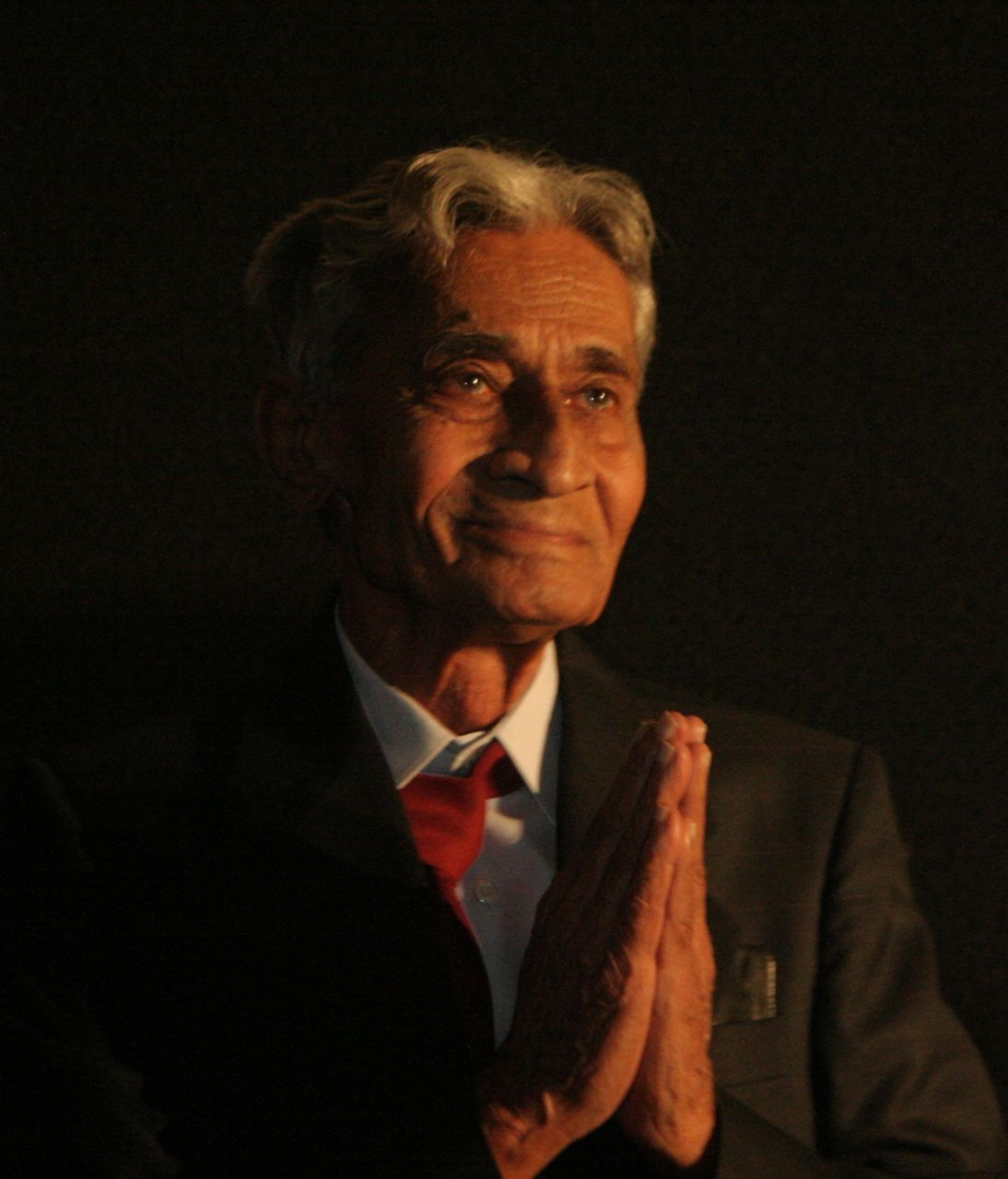
Capitalg / Wikimedia Commons · Public domain
V.K. Murthy had a perfectly good spotlight. The trouble was that its light spread out. What Guru Dutt wanted for Kaagaz Ke Phool was something much fussier: a single straight shaft of sunlight across a studio floor.
The two men had seen just such a beam without needing a lamp at all. Sunlight came in through a high ventilator; dust suspended in the air made its path visible. Getting that light to land where they wanted it, with Guru Dutt and Waheeda Rehman on the studio floor, was another matter.
Murthy described the solution in a 1999 oral-history interview. He happened to see a mirror throw a patch of sunlight onto a wall. He arranged for two bigger mirrors, each about four feet high. The first caught the sunlight outside. The second, on the studio catwalk, sent it down to the floor. The crew added smoke so the beam would show up on camera.
There was one small nuisance: the sun kept moving. The mirrors had to be adjusted to keep the light where it belonged. Murthy remembered getting the shots in about an hour.
You can see what that hour bought in the 1959 film’s ‘Waqt Ne Kiya Kya Haseen Sitam’. Geeta Dutt sings; two figures stand in a dark studio; a blade of light seems to hang between them. The one performer who couldn’t be asked to hold still was the sun.
Hashtags: #ItdcCinema #ITDCCinema #KaagazKePhool #VKMurthy #GuruDutt #WaheedaRehman #GeetaDutt #HindiFilmCinematography #KaagazKePhoolSunbeam #EntertainmentBollywood