


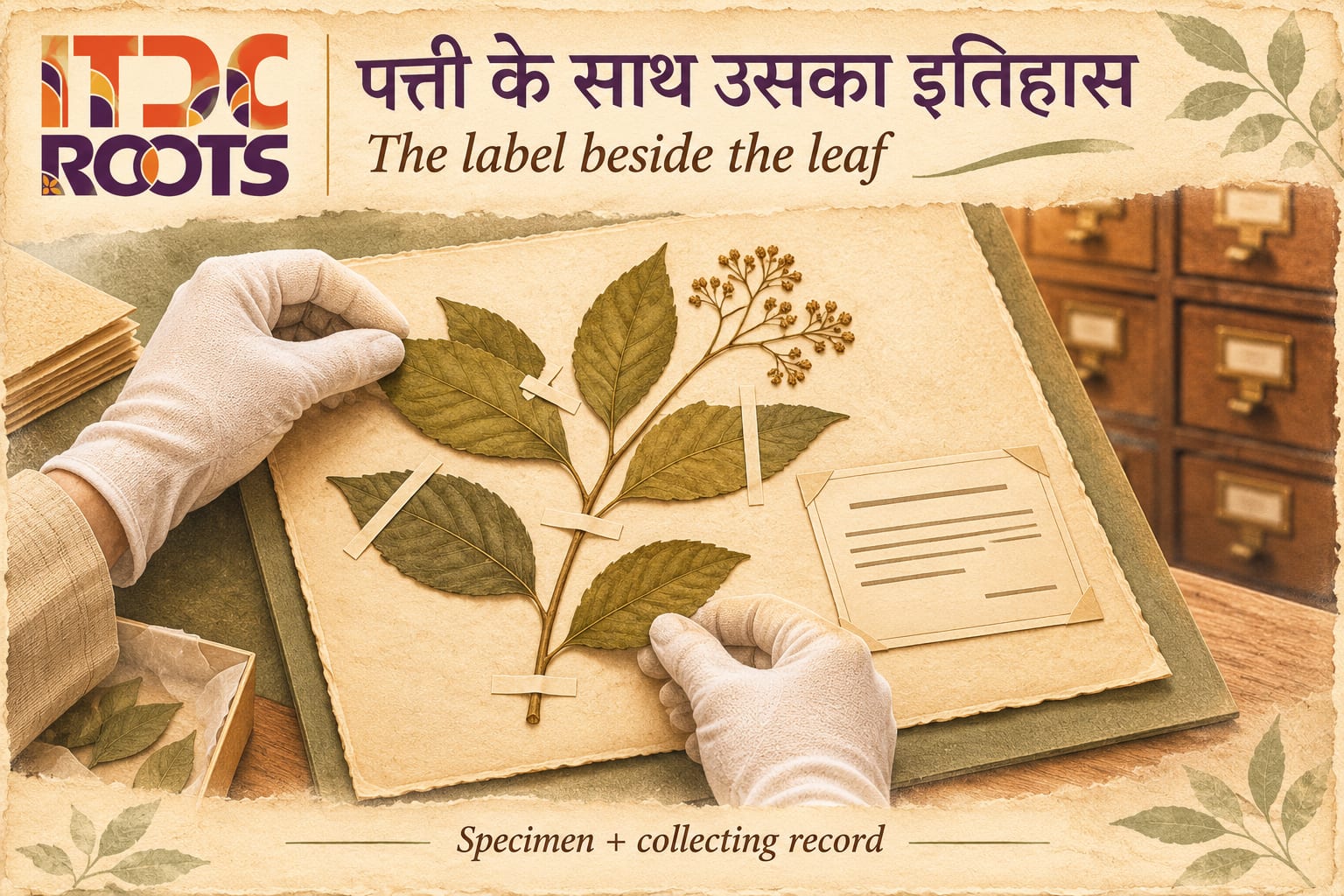
A dried plant can carry a place and a date long after its colour has faded. In Howrah, the Central National Herbarium preserves that connection between a specimen and its collecting record.
A June 2026 report by Mukti, which is working with the Botanical Survey of India, described a project to digitise nearly 20 lakh specimens. That was a project target, not an announcement that every sheet was already online.
The deeper story is on the label. The Botanical Survey’s Indian Virtual Herbarium records information including the collector, collection date, locality and habitat alongside a specimen’s botanical identity. A leaf without that context is a much poorer witness.
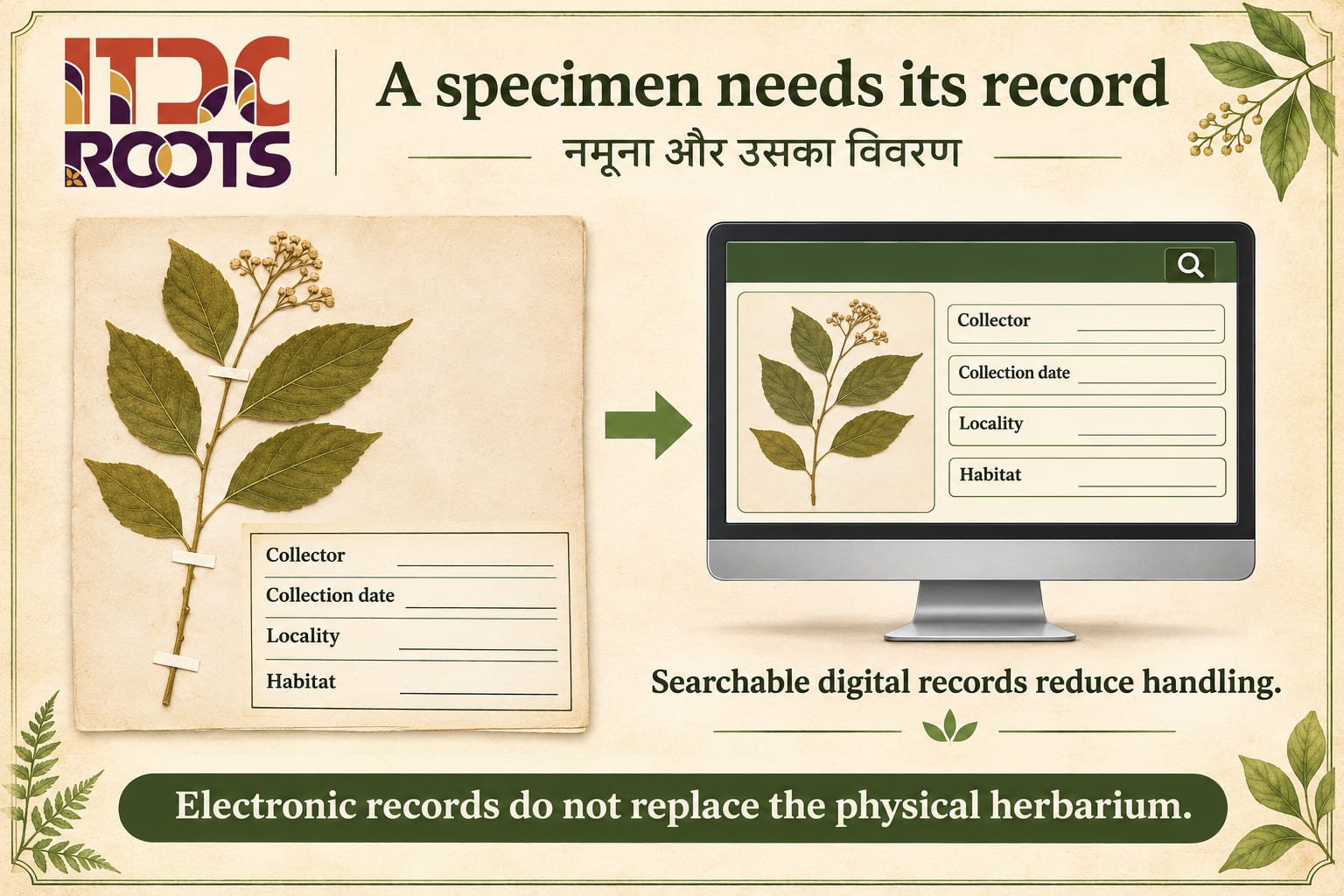
Digitisation brings the image and those particulars into a searchable database. Researchers can look by collector or plant name rather than beginning with a journey to a cabinet. It also reduces the handling and shipping of fragile originals.
But a screen does not make the physical collection redundant. The Botanical Survey explicitly says electronic records cannot replace the herbarium.
India’s botanical memory therefore needs both forms of care: keeping the specimen intact and keeping its history attached. The small label is not an accessory to the plant. It is part of the evidence.



