


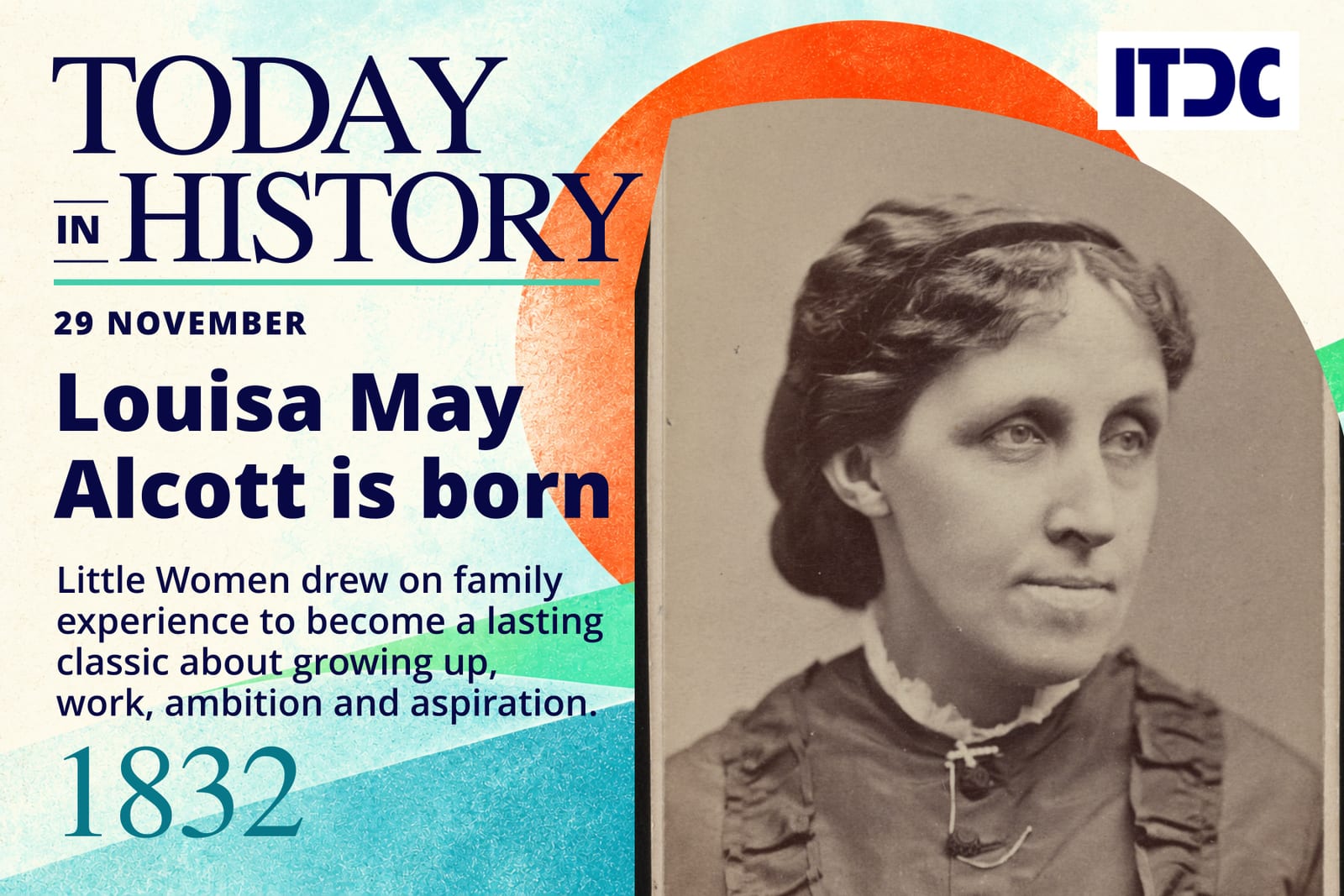
George Kendall Warren / Library of Congress
Louisa May Alcott was born in Germantown, Pennsylvania, on 29 November 1832. She is remembered above all for Little Women, but the novel becomes more interesting when placed within the life of a woman who wrote to earn, supported her family and participated in the moral arguments of her time.
Alcott grew up with three sisters, and her childhood in Massachusetts brought her close to the literary world around Concord. Her father, Bronson Alcott, was an educator and philosopher; her mother, Abigail, supplied a strong practical example of care and responsibility. Family life offered intellectual stimulation, but it also brought persistent financial difficulty.
Before writing provided security, Alcott took work that included teaching, sewing and domestic service. These experiences make the concern with money in her fiction more than a convenient plot device. For a woman seeking independence in the nineteenth century, the ability to earn could determine what choices were available.
Her literary career included stories and poetry before Little Women. Flower Fables appeared in 1854. During the American Civil War she served as a nurse in Washington, an experience that informed Hospital Sketches, published in 1863. National Archives records preserve evidence of her nursing service and place it within her commitment to the Union cause and opposition to slavery.
Little Women began appearing in 1868, with a second part following in 1869. The March sisters drew on the Alcott family, but the book shaped experience into fiction rather than recording a complete household history. Its episodes move through affection, jealousy, work, illness and ambition, giving everyday domestic decisions the weight of a larger coming-of-age story.
Jo March’s desire to write has been especially important to the novel’s appeal. She is energetic and imperfect, with aspirations that do not fit neatly into expectations of feminine behaviour. Her struggle makes room for readers to consider a young woman’s creative ambition as a serious subject.
Alcott also wrote in other modes, including sensational fiction. The Library of Congress preserves evidence of this broader literary activity, a reminder that the author’s working life cannot be reduced to a single familiar book.
She died in 1888. Her birth anniversary invites a renewed reading of Little Women with attention to the labour behind it. The story’s warmth survives alongside its questions about independence, duty and the price of pursuing a talent. Those tensions help explain why a novel grounded in one family’s nineteenth-century experience continues to find readers.
Hashtags: #TodayInHistory #LouisaMayAlcott #LittleWomen #LifestyleCultureReligion #Germantown #Pennsylvania #Louisa #May #Alcott #Working



