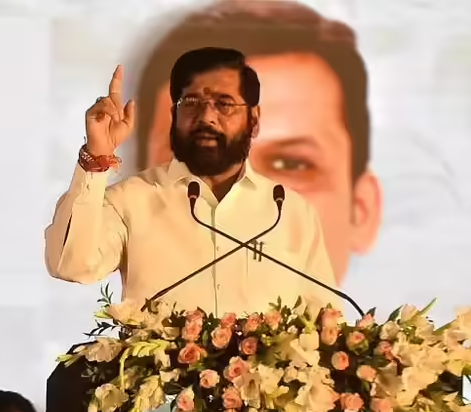
CNN Central News & Network–ITDC India Epress/ITDC News Bhopal: The Maharashtra government has announced major steps toward implementing zero-waste management and waste-to-energy projects across the state, with a special focus on upgrading sewage treatment infrastructure. Deputy Chief Minister Eknath Shinde stated that the state is actively working on converting waste into energy and promoting sustainable urban development under a circular economy model.
According to the government, Maharashtra’s sewage treatment plants (STPs) are being modernized, and one such facility is set to be developed as a national model for other states to replicate. The initiative aims to improve efficiency in wastewater management, reduce environmental pollution, and generate usable energy from waste materials.
Officials highlighted that these projects are part of a broader vision under Swachh Bharat Mission Urban 2.0, where cities are encouraged to adopt advanced technologies such as biogas generation, refuse-derived fuel systems, and energy recovery from organic waste. The state is also encouraging public-private partnerships to accelerate implementation and improve infrastructure capacity.
The initiative reflects Maharashtra’s growing focus on environmental sustainability and urban cleanliness, while also addressing challenges related to rapid urbanization and increasing waste generation. Experts believe that if implemented effectively, these projects could significantly reduce landfill dependency and improve water quality in urban regions.