


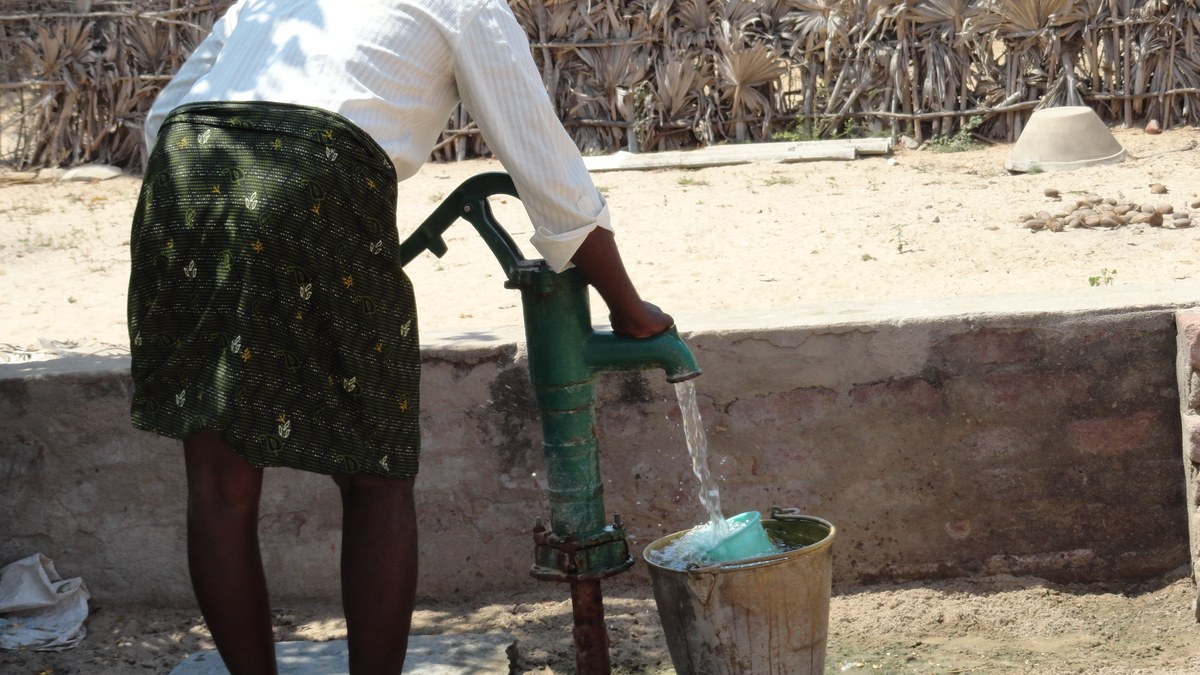
Bhaskaranaidu / Wikimedia Commons (Public domain). Cropped.
Water from more than 50 private borewells in Indore has tested positive for E. coli, prompting the National Green Tribunal to take suo motu cognisance of the contamination.
The tribunal's Central Zone Bench in Bhopal, comprising Judicial Member Justice Shiv Kumar Singh and Expert Member Sudhir Kumar Chaturvedi, has directed the Indore Municipal Corporation, the Madhya Pradesh Pollution Control Board and other departments to verify the findings, treat the contaminated water and submit an investigation report.
The failed samples came from borewells at government hospitals, private hostels, homes and other institutions across the city, according to reports in Dainik Bhaskar and Amar Ujala. The corporation has put up boards declaring the water unfit for drinking at affected sites and has sealed some borewells.
E. coli in water is generally treated as a sign of contamination from sewage or animal waste. That makes private borewells a concern of their own, because many households and institutions draw from them without the routine testing applied to piped supply.
The finding lands in a city still dealing with the Bhagirathpura tragedy, where more than 30 people died after an outbreak linked to contaminated piped water between December 2025 and February 2026. A one member commission appointed by the High Court linked 22 deaths to the outbreak on the basis of hospital records and called the tragedy preventable. It traced the contamination to sewage entering drinking water lines laid too close to sewer pipes.
Of the 52 water samples the pollution control board collected during that outbreak, 50 tested positive for total coliform and 40 for E. coli, the commission recorded.
Hashtags: #Indore #DrinkingWater #NGT #Health #IndoreWater #EColi #Borewell #Bhagirathpura #IndoreBorewellEColi #MadhyaPradeshState




