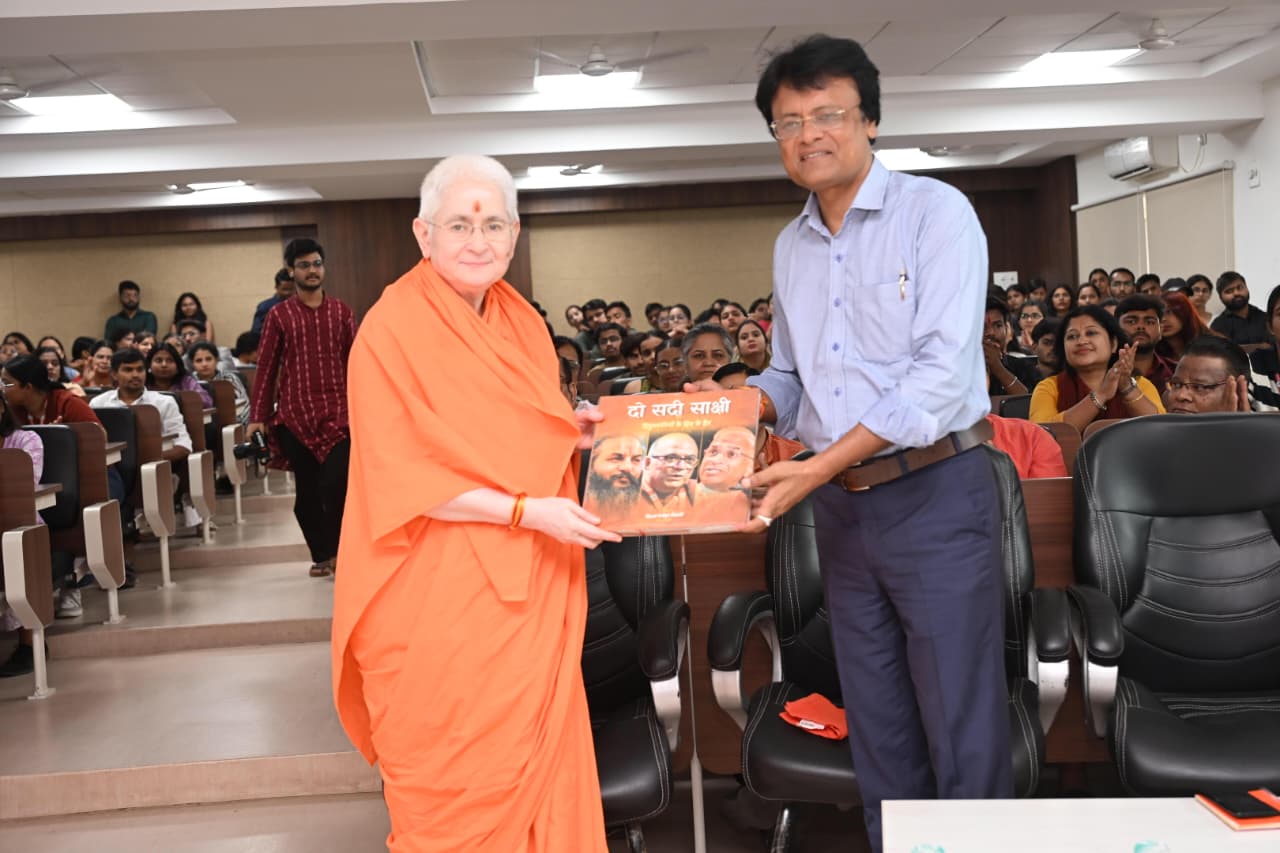
CNN Central News & Network-ITDC India Epress/ITDC News Bhopal: Our scriptures speak of the principle of Advaita. They discuss oneness. Just as the sun has a kind of completeness, Advaita too is integral and unified. Many differences are visible in this world and, generally, we live within them. But our scriptures say that everything is one. No form of duality is the ultimate truth, Swamini Sadvidyanand Saraswati of the Acharya Shankar Cultural Unity Trust said.
She was addressing students in the first session of a three-day TEDx Talk organised at MCU. Speaking on the Advaita worldview at the event, held on the theme “A World Changing Through Ideas”, she said this is the essence of the Vedas. The Vedas are the body of knowledge and these texts are the centre of knowledge. The word Veda originates from “vid”, which means knowledge. Knowledge is universal and objective. In this way, knowledge too is integral, and that oneness is reality, she said.
She added that every kind of division creates fear. Fear brings unrest and uncertainty, and in such a situation happiness is absent. The feeling of oneness removes fear.
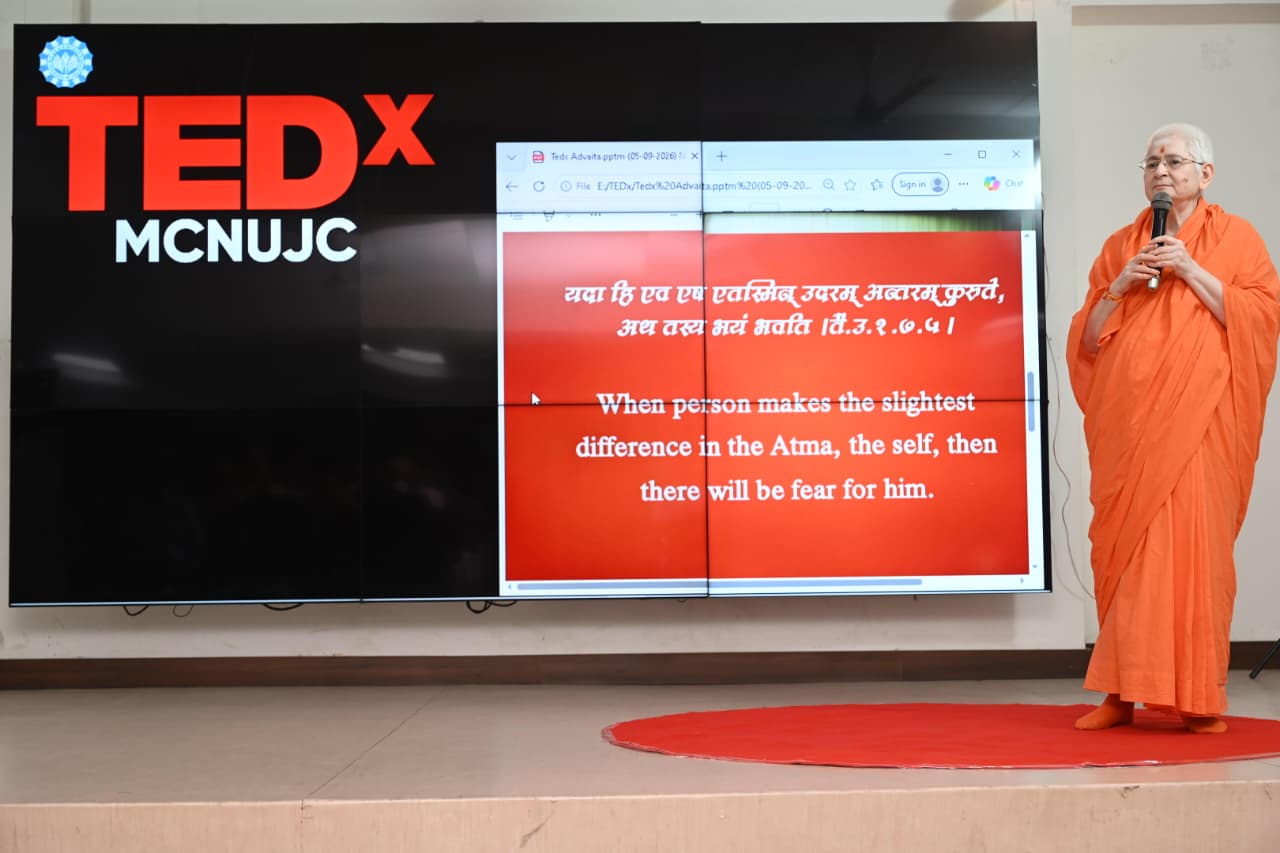
In the inaugural session, university Vice-Chancellor Vijay Manohar Tiwari said that in its journey of more than three decades, the university was happy to organise a TEDx Talk of international level. He said Acharya Shankar presented the Vedic tradition before us in a distinctive form. The same tradition continues up to Swami Vivekananda. Omkareshwar is the only place on earth where the 11-12-year-old Shankar attained Brahma Gyan, he said. He urged students to listen carefully to the lectures in the event and adopt their important points in their lives.
In the second session, keynote speaker Manoj Shrivastava, a senior Indian Administrative Service officer, noted writer and thinker, spoke on “The Changing Form of Language in the Digital Era and Youth”. He said the journey of Indian society is a journey from the “inner eye” to the internet, in which the medium, culture and many other things have changed. Along with this, creation or the world has also changed, and our way of looking at it has changed too.
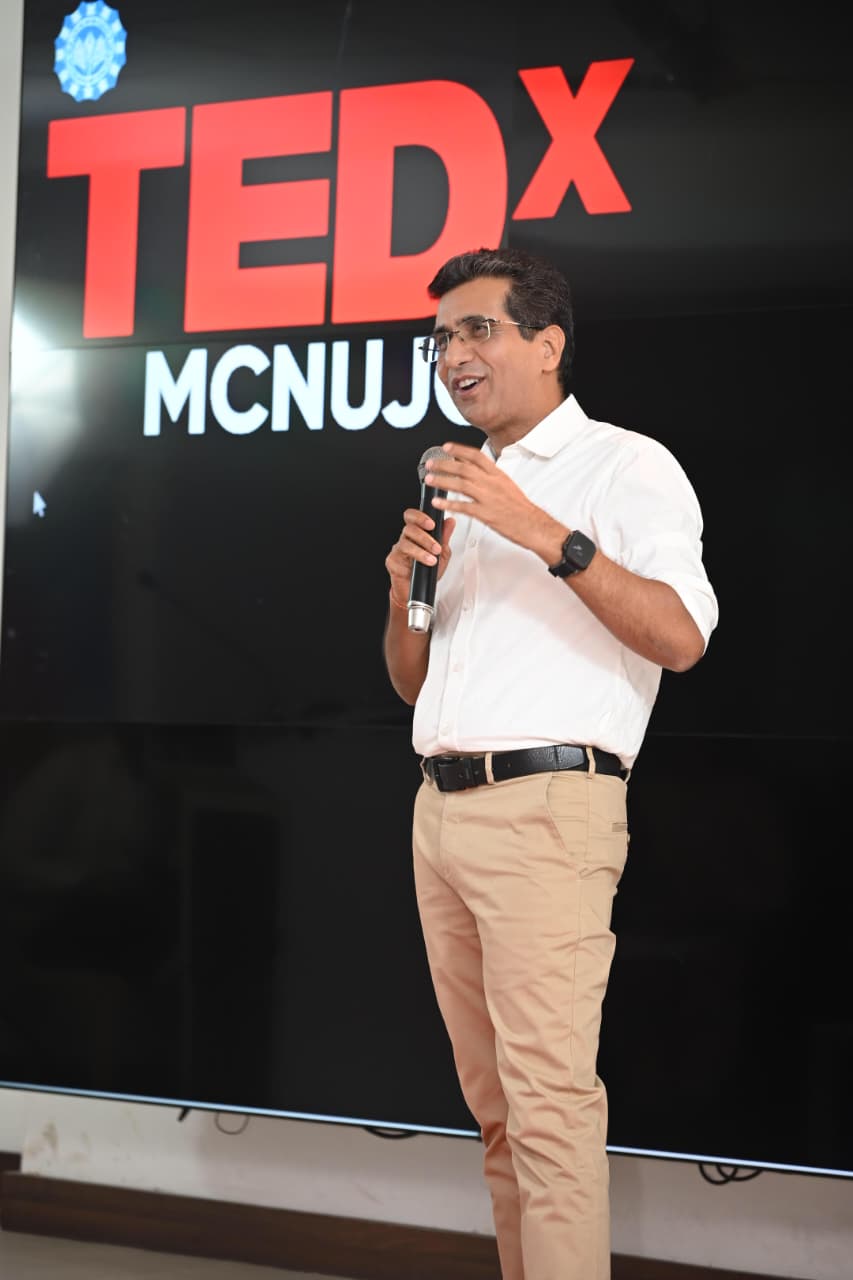
He said that in the Indian context, Shruti and Smriti represent our true oral tradition and culture. When script developed from Shruti, scripts gave language a grammatical form and bound it within a kind of discipline. After writing began, language moved from spiritual practice to an instrument. After the invention of printing, language moved from the written to the printed form, and in the digital era, amid various platforms, many changes are being felt in language.
He said language is a tradition that comes to us through inheritance. It brings values with it. Today, the entire world of human linguistic behaviour has changed. The changes taking place in language are not superficial. Referring to the standardisation of Hindi by Acharya Mahavir Prasad Dwivedi and Kamta Prasad Guru, Manoj Shrivastava said many words gained social acceptance through usage. He said digital expression has its own linguistic culture, marked by immediacy and informality. In the digital era, emoji are being accepted as language. Signs are returning. Languages have their own algorithms.
He said young people have a natural ease with things; the capacity of linguistic words has grown. In regional languages such as Maithili and Rajasthani, too, the capacity of language has expanded due to digitisation. Experimentation with language is a sign of its vitality. Today’s youth is the protagonist of language and is not merely making speeches.
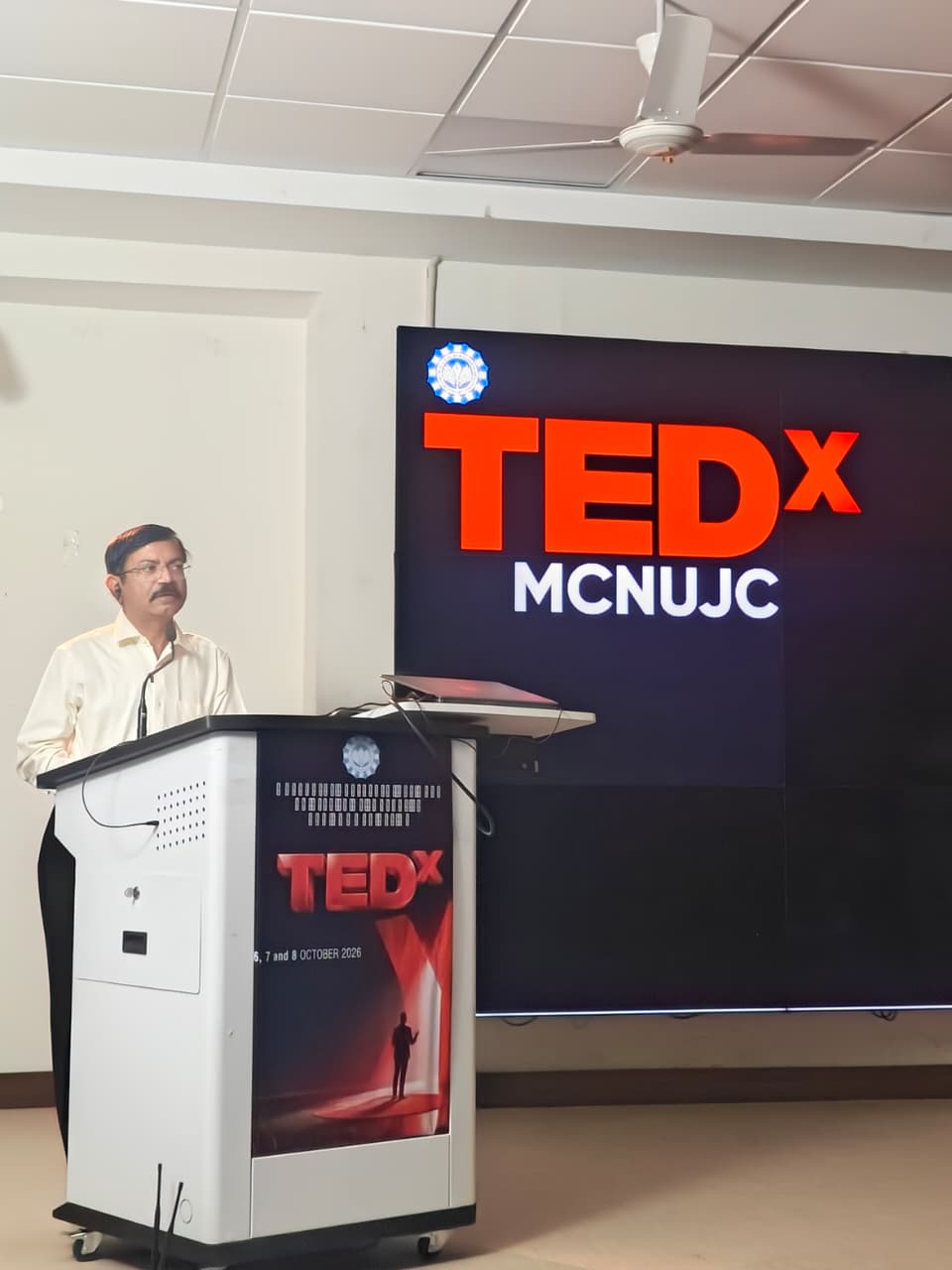
In the third session, keynote speaker and senior journalist Brajesh Rajput shared moving and powerful memoirs from his television journalism career on the theme “One Screen, Crores of Stories”. He said that while doing TV journalism, journalists encounter many stories every day. Every story has pain, joy, a question and a solution.
He won the hearts of the audience by narrating in an engaging style stories ranging from the demolition of Dushyant Kumar’s house to Billorani of Bundelkhand, from a newborn girl found in bushes to the reality of the Pradhan Mantri Awas Yojana. Brajesh gave words to the experience of a girl who saw the image of her mother in the smoke in a story on an electric crematorium. He also narrated the story of the sinking town of Harsud and said that in the world of TV, everything sells through emotion. “We were taught to put an arm around someone’s neck and draw out emotions,” he said.
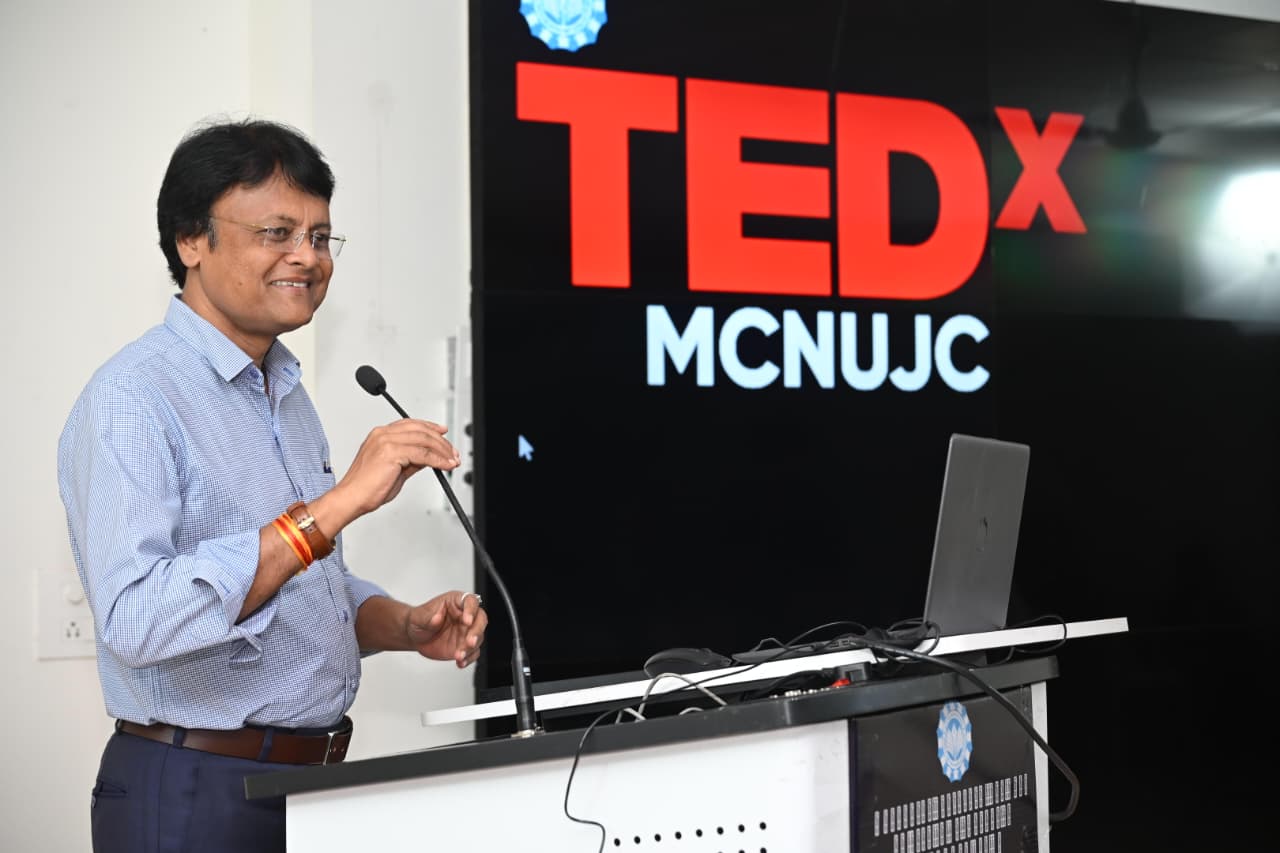
He said television journalism teaches not only how to see social concerns, sensitivity and social truth, but also the skill of showing them on screen. Here, your work is visible, but one mistake can also put you to shame, while good work can earn appreciation.
He said everyone has stories, but in television journalism it is important to learn the art of telling a story. He told students aspiring to enter television journalism that they must read “TV Reporter Ki Diary”. This diary can show how much hard work and dedication are needed behind a story.
The programme was organised by the Department of Advertising and Public Relations. It was coordinated by department head Pavitra Shrivastava, who also proposed the vote of thanks to the guests present. All sessions were conducted by Jaya Surjani of the department. Students and teachers from the departments of Mass Communication and Journalism, Electronic Media and Library were present at the programme.
Hashtags: #MadhyaPradesh #Bhopal #SadvidyanandSaraswati #MCU #TEDxTalk #Advaita #VijayManoharTiwari #ManojShrivastava #BrajeshRajput #OnenessIsTheEternal