


Bhopal:
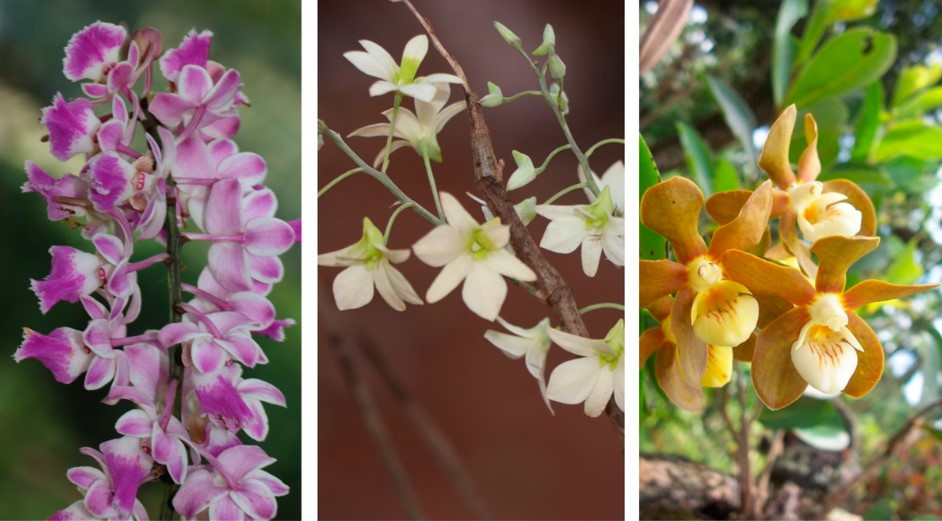
Thousands of rare orchids growing on trees in Kerala faced the threat of destruction due to road construction and widening projects. In a major conservation initiative, scientists and researchers rescued 27,324 native orchid plants from trees marked for removal and relocated them to safer locations. Remarkably, 71.4 per cent of the plants were found to be alive even one to two years after transplantation. The initiative has emerged as an important example of balancing infrastructure development with biodiversity conservation.
The rescued orchids were relocated to three sites in Kozhikode: Sarovaram Biopark, Malabar Botanical Garden and Kappad Beach. These locations were selected to assess how different environmental conditions influence the survival of the plants. Sarovaram offers a wetland and mangrove ecosystem, while Malabar Botanical Garden has shaded and marshy areas. Kappad Beach, in contrast, exposes plants to strong winds, sunlight and coastal salt.
The study covered 21 orchid species, including 12 regionally endemic varieties. Of the 27,324 plants relocated, 19,511 survived. Among these, 5,224 plants flowered, while 1,934 developed seed capsules, indicating successful growth and reproduction.
Researchers found that survival rates were influenced by several factors, including the species of host tree, root development, moisture levels and surrounding environmental conditions.
The initiative demonstrates that rare plants dependent on trees can be conserved through scientific relocation even when infrastructure projects require tree removal. Experts have emphasised the need for biodiversity surveys before road construction begins and timely conservation measures to protect vulnerable plant species.
Hashtags: #ScienceTechnology #Bhopal #Over #000 #Rare #Orchids #Rescued #Trees #Kerala #Over27



