


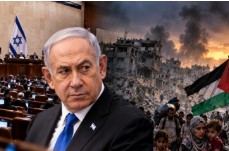
CNN Central News & Network-ITDC India Epress/ITDC News Bhopal: Jerusalem. The election scheduled in Israel for October 27 is being viewed in connection with Prime Minister Benjamin Netanyahu’s political future, but expectations of any major change in the condition of Palestinians after a change in power appear limited.
A key reason is that several major opposition leaders, including Netanyahu’s main rival Gadi Eisenkot, also do not support the creation of an independent Palestinian state. In such a situation, even if the government changes, questions linked to the occupied West Bank, Gaza and the political future of Palestinians may remain.
Lack of political consensus on an independent Palestine
In Israeli politics, the idea of creating a separate country for Palestine has weakened compared with the past. Netanyahu and Eisenkot both say Israel’s security control should remain over the area from the Jordan River to the Mediterranean Sea. In Gaza too, both leaders have opposed a complete withdrawal of the Israeli army before the disarmament of Hamas.
However, there are differences between the two on the issue of Jewish settlements in the West Bank. Right-wing allies in Netanyahu’s government support the annexation of occupied Palestinian territories, while Eisenkot talks about action against unauthorized settlements and the violence taking place there.
Priorities of left-wing parties have also changed
Left-wing politics in Israel, once seen as supporting peace talks and a two-state solution, is now focusing more on domestic political change and removing the Netanyahu government from power. “The Democrats,” formed from parts of the former Labor Party, is the main party among major Jewish political parties that supports a two-state solution for Palestine, but this issue too has remained relatively in the background during the election campaign.
According to analysts, the attacks of October 7, 2023, and the conflicts that followed have increased concerns over security in Israeli society. As a result, opposition parties are also presenting their position on the Palestinian issue cautiously in order to maintain support among voters.
Challenges will remain even if the government changes
The coalition structure of the government formed after the election could affect settlement policy in the West Bank and the future of Gaza. But in the absence of broad political consensus on the establishment of a Palestinian state, Israeli military control and permanent peace talks, the path to major change appears difficult.
Therefore, Netanyahu’s victory or defeat may change the leadership in Israeli politics, but a solution to Palestinians’ difficulties is not certain to come only through a change in power. For that, political will, security-related agreements and concrete talks on the future of an independent Palestinian nation will be necessary.
Hashtags: #WorldInternational #Bhopal #Netanyahu #Palestinians #IsraelElection #WestBank #Gaza #BenjaminNetanyahu #GadiEisenkot #TwoStateSolution



