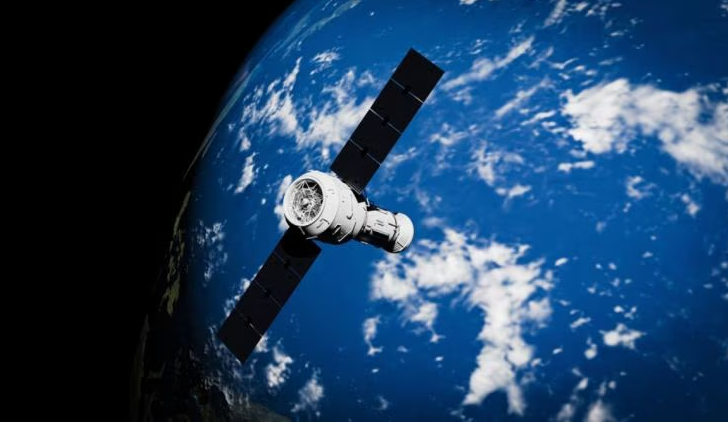
CNN Central News & Network–ITDC India Epress/ITDC News Bhopal: Pathfinder represents a new shift in space technology where satellites are no longer passive machines but intelligent systems capable of making decisions in orbit. With onboard processing and artificial intelligence, these advanced satellites can analyze data, adjust operations, and respond to changing conditions without waiting for instructions from Earth. This concept of giving satellites “their own brain” is transforming how space missions are designed, making them faster, more efficient, and more autonomous.
Traditionally, satellites relied heavily on ground stations for commands and control, which often caused delays and limited real-time responsiveness. Pathfinder-style systems aim to overcome these limitations by integrating machine learning, edge computing, and advanced sensors directly into the satellite architecture. This allows them to detect anomalies, optimize imaging, and even coordinate with other satellites in a networked constellation.
Such innovations could significantly improve disaster monitoring, climate observation, defense surveillance, and deep-space exploration. By reducing dependence on Earth-based intervention, these smart satellites can operate in environments where communication delays are critical.
As space becomes more congested and missions become more complex, autonomous satellites like Pathfinder could define the next generation of orbital intelligence, reshaping how humanity interacts with space-based infrastructure and data systems and global connectivity and networks evolution.
#Pathfinder #SmartSatellites #SpaceAI #Aerospace #Innovation #ArtificialIntelligence #SpaceTech #FutureOfSpace