


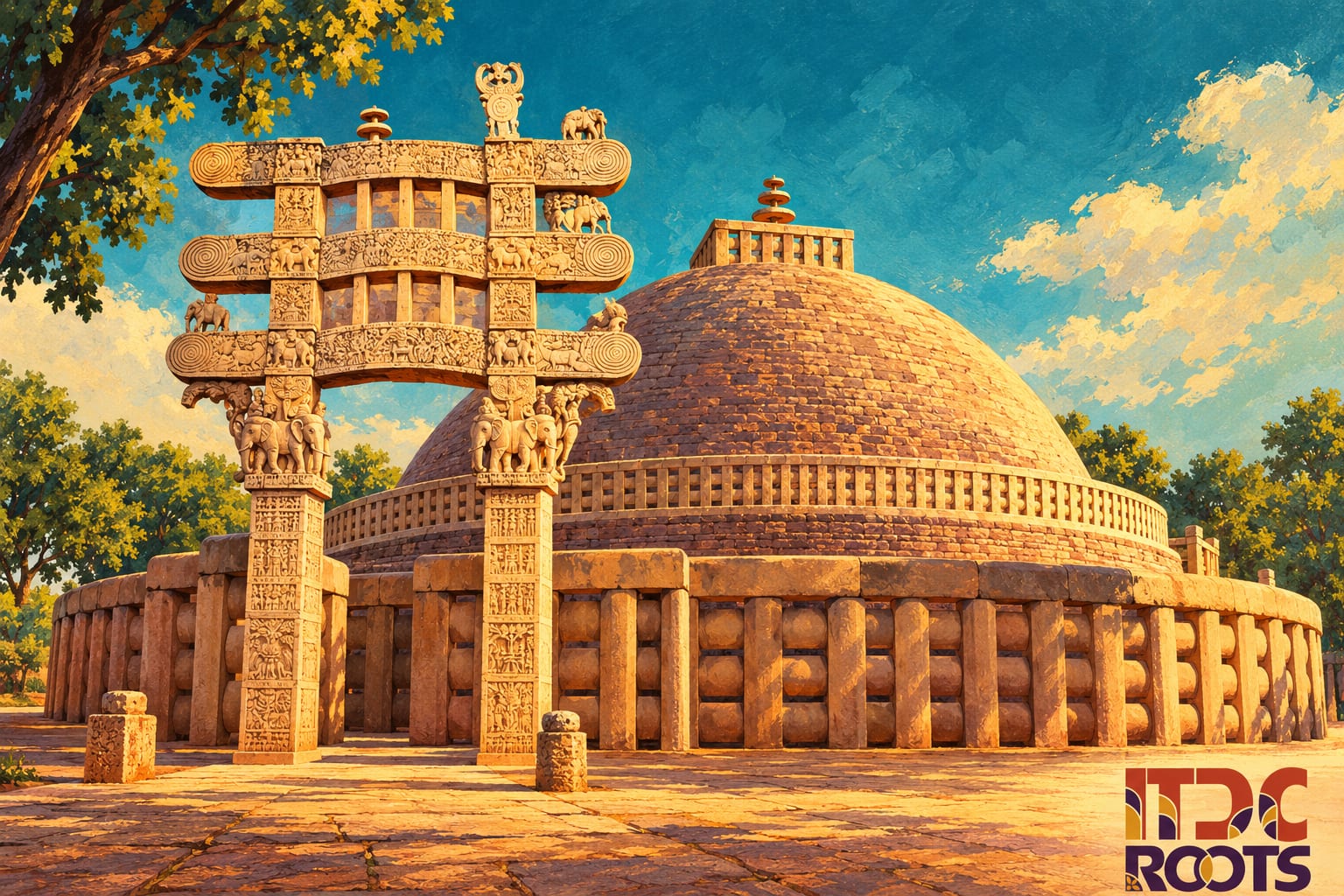
An emperor’s name is an easy way to remember Sanchi. The smaller names cut into its stone tell a more crowded story. Around the Buddhist stupas, inscriptions record gifts from people whose contributions helped pay for railings, pillars and sculptural decoration. The monument grew through many acts of giving.
One revealing record concerns ivory workers from nearby Vidisha. Their association with part of the Great Stupa’s southern gateway connects this hilltop sanctuary to a community of craftspeople. The surviving work is stone, yet the inscription remembers people identified by another material. It offers a glimpse of how workshop knowledge and religious patronage could meet across different trades.
Donative inscriptions at Buddhist sites also name women and men, monks and nuns. Some include a donor’s occupation, relatives or home town. These records preserve social connections that a royal chronicle might overlook. A gift could place an individual within a family, a profession and a religious community, all in a few words.
The form of the building helps explain this accumulation. A railing consists of separate uprights and crosspieces; a gateway combines pillars and horizontal beams. Such components made individual contributions legible within a larger architectural undertaking. No single inscription supplies a complete account of construction, and surviving records cannot tell us everyone who worked here. They nevertheless prevent the achievement from disappearing behind one patron’s reputation.
Sanchi’s long history extends from the Mauryan period through many later centuries. Its Great Stupa, gateways, temples and monasteries belong to different phases of that history. Looking closely therefore involves two kinds of attention: reading the sculpted Buddhist narratives and noticing the people who supported their making. Beside the expansive imagery, a short donor record returns the scale to a human contribution. The sanctuary’s grandeur becomes easier to appreciate when those smaller acts remain visible.



