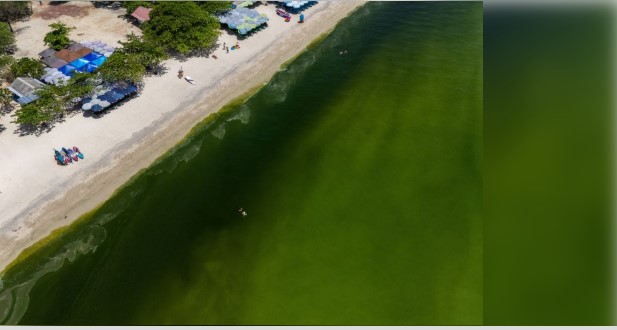
CNN Central News & Network-ITDC India Epress/ITDC News Bhopal: The waters around Thailand’s popular tourist island of Ko Lan turned bright green this week after heavy rains and flooding triggered a plankton bloom, leaving some visitors hesitant to enter the sea. Dense green patches were reported along parts of the coastline, while other stretches remained unaffected.
Researchers from Burapha University identified the visible discoloration as being associated with Noctiluca, a type of plankton. A research team has been collecting water samples and monitoring water quality to better understand the scale and characteristics of the bloom.
Scientists said plankton blooms are natural and recurring phenomena, but can become more intense when nutrient-rich runoff from fertilisers, wastewater and flooding enters coastal waters. Researchers also noted that warmer seas linked to climate change can contribute to worsening conditions.
The bloom generally lasts for a few days. However, when large quantities of plankton die, their decomposition can consume oxygen in the water and create hypoxic conditions, sometimes described as aquatic dead zones. Such low-oxygen conditions can threaten marine life, particularly organisms living near the seabed.
Researchers said this year’s monsoon conditions and El Niño could be contributing to the intensity of the bloom and associated low-oxygen conditions, although further research is needed to establish the connection. Recent flooding in Thailand has also increased freshwater flows into the Gulf of Thailand.
The unusual green colour has affected tourism in some parts of Ko Lan, with beach vendors reporting fewer customers and some visitors choosing unaffected areas or avoiding the water altogether. Authorities and researchers are continuing to monitor the phenomenon.
Hashtags: #ScienceTechnology #Bhopal #Desksource #Plankton #Bloom #Turns #DeskSource #Thailand #Lan #Waters